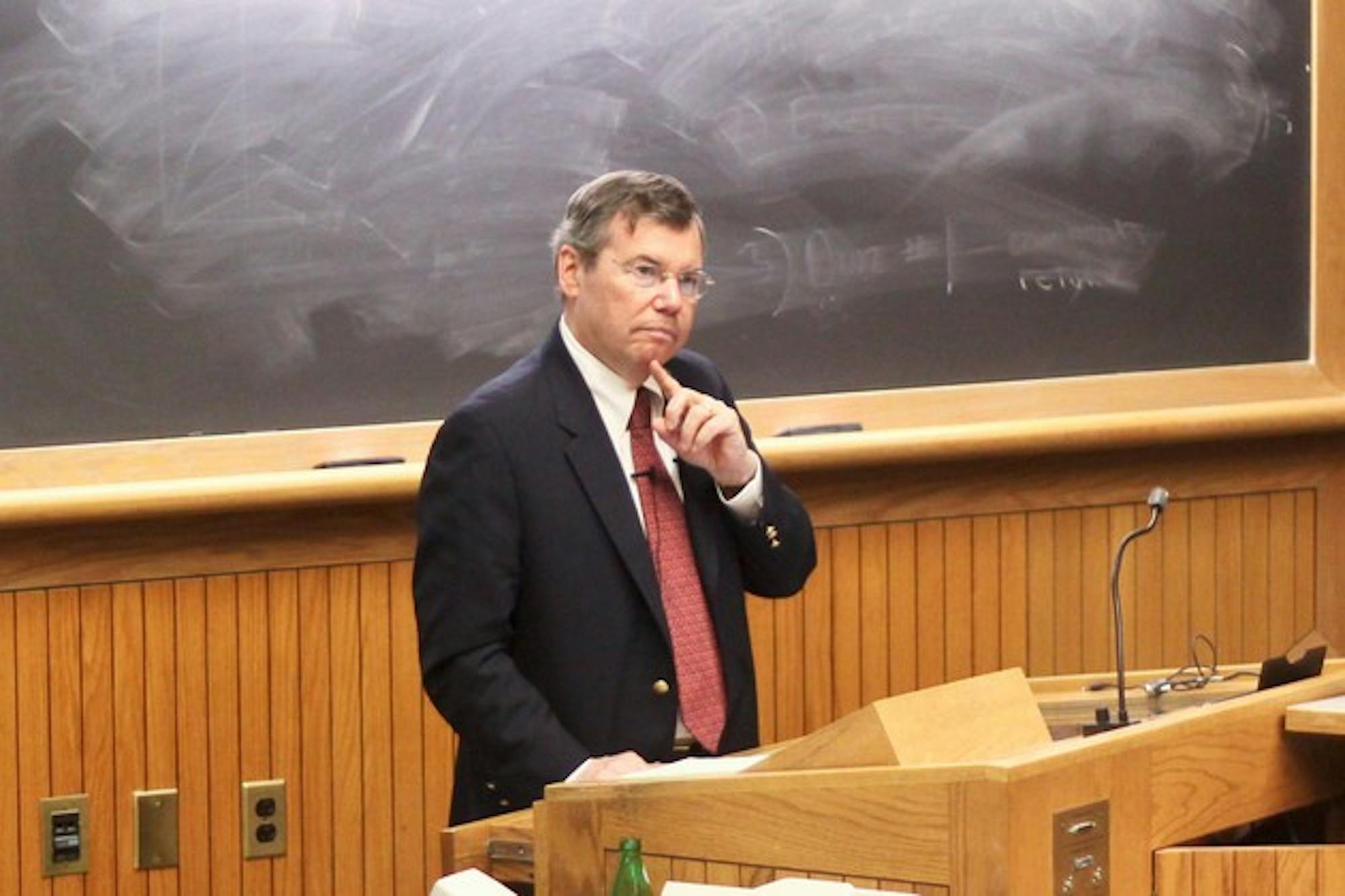
In his lecture, "Climate Change; The Population Connection," Musil explained how climate change and population growth deplete Earth's natural resources and how a failure to address both issues will create an untenable future for the environment and humans.
"We have to try and understand what it means to live in a world where population growth is a problem related not only to climate change, but to justice, social justice and energy," Musil said.
One of the problems with climate change advocacy is that the potential problems of climate change are associated only with animals and endangered species rather than how potential problems will affect people, according to Musil.
"It's not just penguins and polar bears who are affected by climate change," Musil said. "It's people, too."
Musil, who humorously described himself as the "poor man's Al Gore," said the issue of population growth has been frequently overlooked due to an unfair negative connotation associated with the topic.
"When people hear about the population connection to climate change, they hear population control, and then they think about government coercion," he said.
Despite the negative tone often associated with the issue of population stabilization, Musil said he believes the issue is making a comeback as people are becoming increasingly aware of "its connectedness with the issue of climate change."
The global population cannot continue to grow exponentially as it has done over the past 200 years, given longer life spans and lower infant mortality rates, Musil said. This growth, in combination with climate change, is now straining Earth's natural resources.
"We live in a fishbowl in which, increasingly, we are straining and using up our planet's resources," Musil said.
The solution that Musil offered in response is an increased effort to promote education and fertility regulation throughout the world.
This, he said, will allow people to make more responsible decisions regarding their family planning, a position he outlined in an his article "Condoms Capture Carbon."
Barriers in the past, most notably the "gag rule" initiated under President Ronald Reagan that prevented countries using U.S. foreign aid dollars to address issues of family planning in any way, have been standard policy for American presidents over the past 30 years and have prevented the U.S. from promoting fertility regulation policies that could have helped stabilize the global population, Musil said.
President Barack Obama ended this gag rule as one of his first actions as president in 2009, Musil said.
"We are responsible as citizens of the United States in many ways for some of these barriers that have been put in place to prevent fertility regulation," he said.
Musil cited population control efforts in Mexico as an example of how relatively simple changes in family planning policy, such as the increased education amongst women and the construction of condom factories, could dramatically affect the fertility rates of a country.
Fertility rates soared in Mexico during the 1970s, with an average total fertility rate of 6.8 children per mother, Musil said.
oday, after the introduction of several simple programs, Mexico has a far more reasonable fertility rate of 2.3 children per mother, he said.
"We tend to worry about immigration and all these kind of negative things with Mexico, but I think this is a good example of how concentration on family planning can yield some significant results," Musil said.
Musil urged the audience to become involved with groups and organizations that lobby in Washington as the best ways to affect change regarding issues of climate change and population growth.
"This is not a spectator sport," Musil said.
"This does not happen through charts on a wall or through pundits' opinions," she added.