"Even though there are challenges, within those challenges there are opportunities," Usih said.
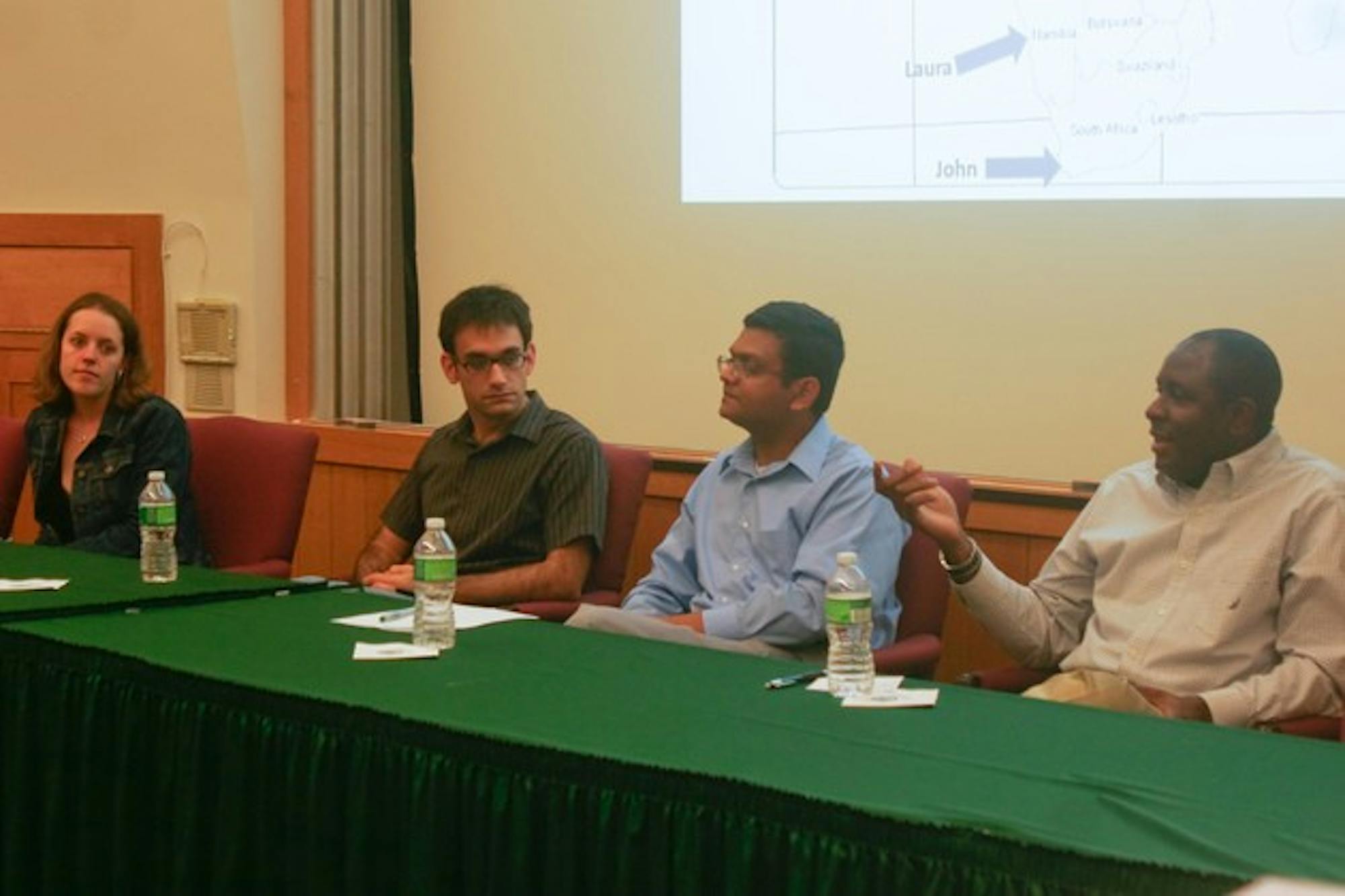
The four panelists, all of whom had prior work experience in Africa, discussed business trends on the continent, social interactions between expatriates and local populations and the challenges they faced working there.
As long as someone looking for business opportunities in Africa brings a skill set that is not found among the local population, there are opportunities available, according to the panelists. The panelists found they were able to attain leadership positions much more quickly working in Africa than other recent graduates working in the United States, they said.
One of the panelists' major difficulties was lack of infrastructure in parts of Africa, they said. Abhijit Ganguly Tu'10, who spent several years in Ghana as the head of West African operations for India-based equipment supplier Tega, described the challenges of driving on "roads that weren't really roads," and the lack of widespread Internet connectivity.
Chesnut discussed the complications of managing local interns in Namibia. She ran a training and outreach program at the Gobabeb Training and Research Center and then at the Desert Research Foundation of Namibia, a nongovernmental organization focused on energy efficiency and education. At first, she struggled to adjust to her leadership position, but after she befriended several local Namibians including one who she described as both a mentor and a "cultural translator" she found it much easier to interact with her local colleagues, she said.
"Really working hard to develop relationships, friendships with people who can help you see the country through their eyes is really important," Chestnut said.
The panelists also discussed various trends they noticed during their experiences. Ganguly, Chestnut and panelist John Cristando Tu'11, who founded Cristando & Associates, a consultant group focused on international development in southern Africa, all noted the trend among businesses towards catering to the needs of poor people.
Businesses have catered to the poor by keeping telephone rates low and allowing people to keep phone credits for a long time, Ganguly said, which has contributed to an "explosion" of cell phone use.
Businesses have also recently focused on making electricity more widely available, according to Cristando and Chestnut. It is now possible for some people to pay for only a day's worth of electricity at a time, according to Cristando.
Usih said he noticed a trend towards deregulation, and Chestnut cited the increasing tendency of businesses to hire more women and black employees than they had previously.
All of the panelists agreed their experiences working in Africa were positive and valuable learning experiences.
"It was fascinating to work in that culture, and I loved it," Chestnut said.
Many audience members asked the panelists to describe what living in Africa and adjusting to the culture was like. Several asked about security and health concerns, as well as interaction with local people.
Although the panelists did mention that they experienced some issues with crime and had to take extra health precautions, including malaria prevention drugs, overall they said that because they were aware of the issues and took precautions, they generally felt safe and comfortable.
"If I found the right career opportunity, I could definitely live in Africa for a long time," Cristando said.
The discussion was the last official event in a four-day series titled "Center for International Business Highlights: Africa." Tuck associate professor of business administration Phillip Stocken moderated the discussion.