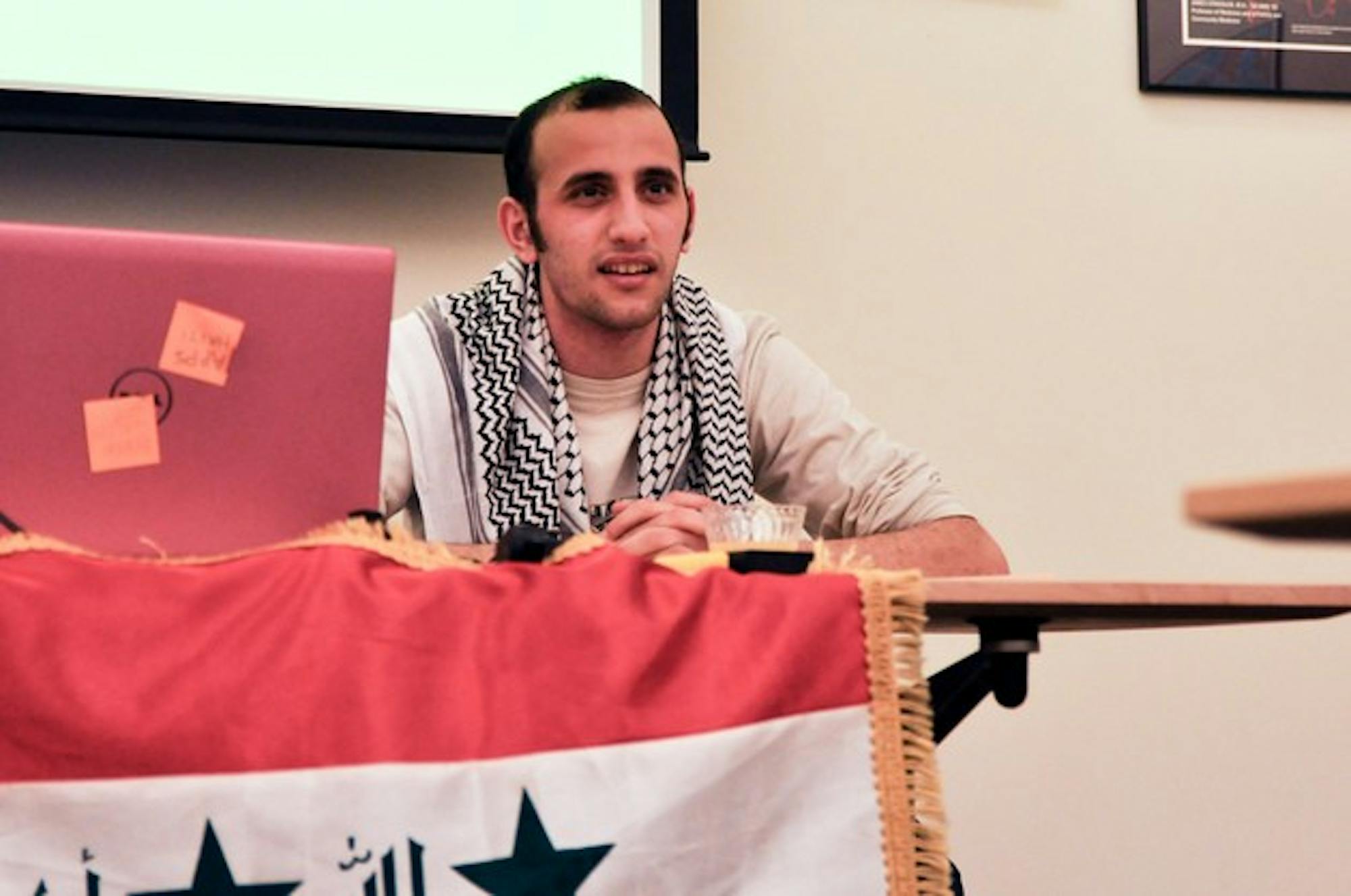
The beginning of the war changed "everything" in his daily life, Basri said. Whereas before the invasion he had lived like a "normal boy," he said, even the most routine of events became potentially life-threatening as American troops began to enter Iraq.
"It would be surprising if we went a day without seeing an explosion," Basri said. "Going back and forth from the house where I lived, I passed the airport with dead bodies all over the road and they would be there for two weeks or three weeks."
The walk to school would often take as much as one and a half hours, whereas a similar walk a few years earlier would only have taken 20 minutes, Basri said.
Once the war began, Basri said he constantly worried about his safety.
"I didn't want to sleep during war because I was afraid I would not wake up," he said.
Kidnapping was also a constant threat, he said, especially since Basri and his family were Christians in a predominantly Muslim Iraq.
"A group of terrorists tried to kidnap me," Basri recounted, "but I started to scream and they let me go. "
Christians are considered valuable targets for kidnapping, he said. Because Iraqis perceive Christians as "very rich," he said, terrorist groups often use them to extort large sums of ransom money.
While Saddam Hussein was not democratically elected, Basri remarked, life under his regime was often safer for some citizens.
"Under Saddam, no one came and forced you to do anything you don't want," Basri said.
He added Hussein's son Uday Hussein was the primary source of tyranny in Iraq.
"Uday was very childish and responsible for most of the crime and corruption in Iraq," according to Basri.
When asked about the future of Iraq, Basri said he was skeptical of the prospects for democracy in his home country.
"Before Saddam the presidents were all dictators," Basri said, "and before the presidents we were subjects to a king."
Basri said he was personally conflicted about the question of Iraqi independence.
"It will be hard for Iraqis to learn how to deal with freedom," Basri said. "Of course I want independence, but I care about Iraqi lives."
Over time, the continual threats to Basri and his family's security forced them to flee Iraq, he said. They migrated to Syria with hopes of finding steady employment and a source of education.
Life in Syria, however, proved harder than his family imagined, according to Basri. Enrolling as an Iraqi citizen in the private university in Damascus required him to pay extra fees, Basri said, which he and his family could not afford.
Because his parents were denied emigration to the United States and Canada, Basri said he thought he had run out of options.
"I thought everything was over," Basri said.
The Iraqi Student Project offered Basri a way to continue his education, however. The Iraqi Student Project "seeks to make undergraduate education possible for qualified students who were studying in Iraq but [are] unable to continue their education because of the violence" according to its mission statement.
Basri said he only had two days to prepare for the Iraqi Student Project's application, after which he had to apply for American colleges during only a few weeks.
Time was not his only obstacle in the process, Basri said, as he was only familiar with written not spoken English.
Basri said he now intends to pursue a career in medicine, citing his experience with the war as his primary motivation.
"After the war, I learned the meaning of life," Basri said. "And the value of saving a life is one of the best things in the world."