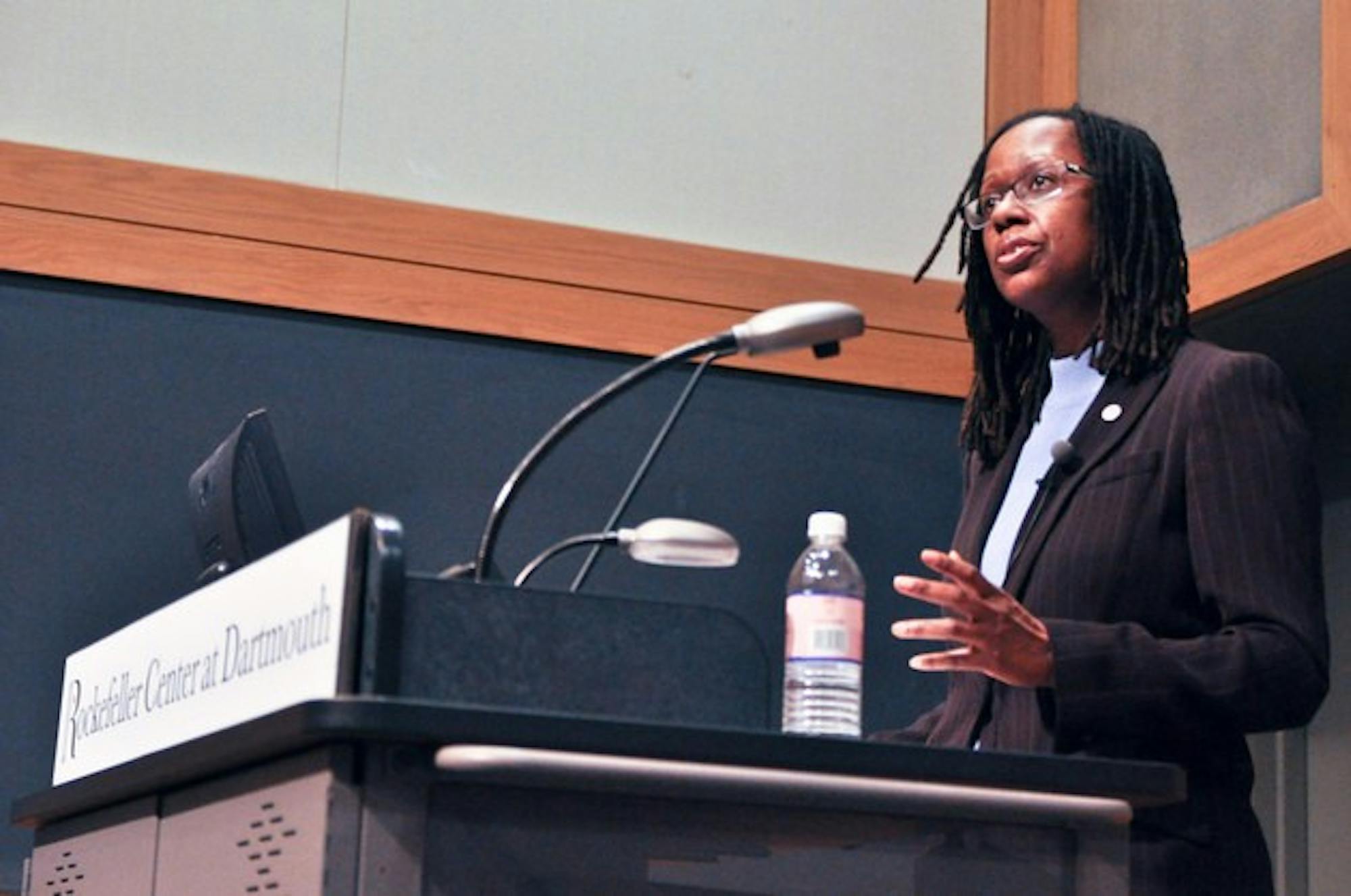
The American public has a generally negative perception of banks because they have been blamed for the economic crisis, according to McHenry. Even banks that have maintained proper business practices have come under scrutiny and may face obstacles that will hinder their future recovery, she said.
"As bankers, our jobs are challenging because what we do has become so politically charged," McHenry said. "Credit needs to flow now more than ever."
Community-focused banks like ShoreBank can lead the charge to recovery, McHenry said. She quoted Federal Reserve Chairman Ben Bernanke as saying that economic recovery is a "bottom-up" as well as "top-down" process.
By funding entrepreneurial efforts in low-income neighborhoods, community banks can make profits while promoting growth, McHenry said. In the case of the abandoned torpedo factory, for example, ShoreBank funded its transformation into a profitable commercial center with businesses, a charter school and a bank, McHenry said.
ShoreBank, which was founded in 1973, performs its own analyses of prospective borrowers. The bank verifies income, researches local markets and draws on its own property evaluation experts to evaluate customers, rather than simply relying on credit scores, McHenry said. More than half of ShoreBank's customers have sub-prime credit ratings of 620 or below.
"We do banking the old-fashioned way," she said. "If you want to borrow from us, we're going to get to know you."
Many of ShoreBank's most profitable loans assist borrowers in purchasing and renovating houses and apartment buildings in underdeveloped neighborhoods, McHenry said. ShoreBank keeps low overhead on property renovation for borrowers by maintaining and training a network of craftsman, including plumbers and carpenters, she added.
Borrowers eventually see profit returns by renting the property out as affordable housing units, according to McHenry.
"As buildings were restored and came back to life, so did shopkeepers, who opened their small businesses and retail outlets to service those residents," she said.
To complement its for-profit work, ShoreBank has established several non-profit organizations that provide job training and other services for aspiring entrepreneurs, McHenry said.
In the early 1990s, ShoreBank's directors added environmentally sustainable investment to their business model, McHenry said. Thirty percent of ShoreBank's loans are now funding environmentally sustainable projects, according to McHenry.
The sustainable projects ShoreBank has funded include free energy audits for customers, geothermal construction projects and a homeless shelter that teaches landscaping skills, McHenry said.
In the three states where ShoreBank operates Illinois, Michigan and Cleveland the company has helped create 12,000 jobs and 52,000 units of affordable housing through its investments, according to McHenry. ShoreBank, which has assets of more than $2 billion, is subject to the same capital and safety requirements and corporate governance rules as other banks.
ShoreBank's business model, which has been followed by 58 other banks in the community development financial industry, has been endangered by the economic crisis, McHenry said. The "triple threat" of declining home values, high unemployment and tight credit has harmed ShoreBank's ability to remain profitable, she said.
"This is not the first recession our bank has weathered," she said. "But the extensive impact of this financial crisis has been a game-changer."
Community-based banking is now more important than ever, because minority and impoverished communities that can often affect the economies of surrounding regions are having greater difficulty recovering from foreclosures, McHenry said.
McHenry encouraged students in the audience to consider a career in community-based banking or similar industries.
"There is a growing need for concerned business leaders who will create the world we will live in," she said.