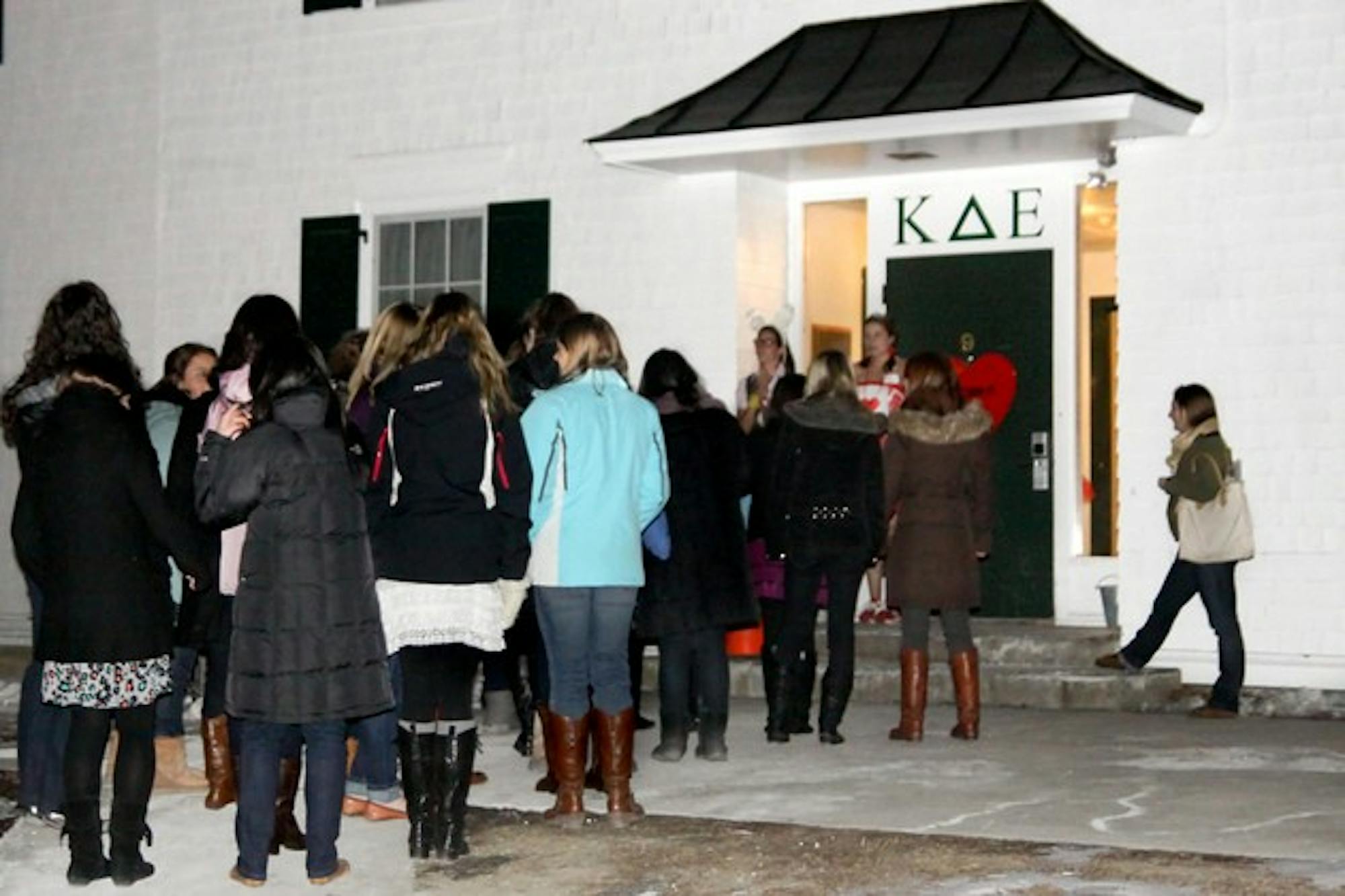
Alpha Phi sorority extended 15 bids; Alpha Xi Delta sorority, 11; Delta Delta Delta sorority, 9; Epsilon Kappa Theta sorority, 10; Kappa Delta sorority, 16; Kappa Delta Epsilon sorority, 7; Kappa Kappa Gamma sorority, 12; and Sigma Delta sorority, 11, according to members of each organization.
Panhell, which governs sorority rush, did not disclose how many bids each house extended, but Nneji said each house met its quota.
The week-long sorority rush process began Jan. 13 and ended Tuesday with bid night. Rush consists of several nights of meetings between current and potential new sorority members.
According to Nneji, 103 women rushed this winter term, or 15 more women than last year. Twelve women dropped out of the rush process.
Part of the increase is likely due to the unusually large number of women who dropped out during fall rush this year, according to Nneji. Over 80 women who began the rush process did not join a house in the fall, with a number opting to "suicide," or choose to indicate a final preference for a single house instead of the standard two.
"During the fall we saw a lot of hurt," Nneji said. In a survey Panhell sent out after rush ended, many women complained about a lack of information about the process, Nneji said.
In response, members of Panhell said they made an effort to increase the information potential new members receive about rush. Panhell created a web site which included information about what to expect during the rush process, policies on suiciding and advice on what kinds of Facebook pictures to have. Some of these policies "may not have been clear in the fall," Nneji said.
According to Nneji, Panhell also revamped the training program for recruitment counselors, or Rho Chis, making it more intensive. Nneji said the Rho Chis were important resources for women who had questions about the rush process.
"The [potential new members] had someone there the whole way to walk them through the process," she said.
Nneji said she believes these measures have been successful, with only a "handful" of women choosing to suicide this term. On its web site, Panhell advises women that suiciding significantly decreases their chances of receiving a bid from any house.
"The changes definitely had a positive impact," Nneji said.
The results of winter rush have put discussions about increasing penalties for suiciding "off the table," according to Nneji.
"It's best to strongly discourage it in other ways," she said.
Sigma Delta president Isabelle Schless '10 said she felt the women rushing this term had a better understanding of the rules and guidelines of rush.
"The girls had a much more realistic expectation [about rush]," she said.
In particular, Schless said the women rushing understood that suiciding would not help their chances of getting into a house, but would in fact decrease it. Last term, she said, this was not as clear.
Panhell Vice President of Public Relations Ashley Cartagena '10 said Panell will use the web site both for updates for the rest of the year and for rush next year.
Many women chose not to rush during Fall term because of athletic and academic conflicts, Cartagena said. Women who study abroad in the fall often rush during the winter, Nneji added. Also, some women who are hesitant to rush in the fall may rush in the winter after they hear positive things from their friends about the Greek system, she said.
Nneji said the new policies "revolutionized the way rush happened."
"The [potential new members] came in with open minds," Nneji said. "The sororities really showcased themselves."