
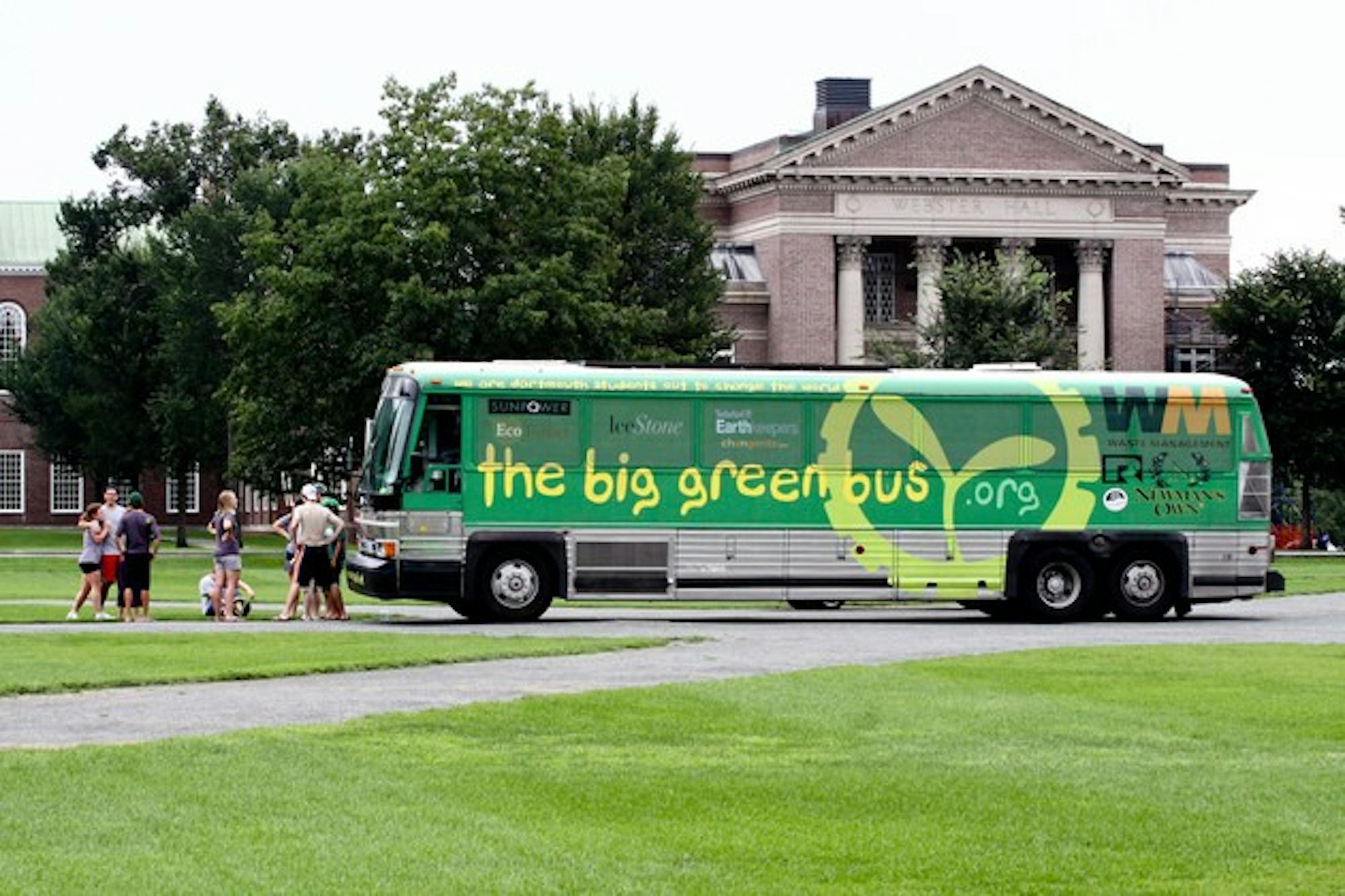
This year marked the first time that the Big Green Bus team did not receive any funding directly from the College. Instead, crew members depended on corporate sponsorships for roughly 70 percent of their budget, and donations for the remainder, crew member Mike Wood '10 said.
Before beginning the summer trek, some members of the team feared that the new bus used this year would look "too corporate," Wood said. The bus, however, was well-received at its stops, he said.
The new vehicle was fitted with a 270-gallon tank to hold the bus's vegetable oil, according to team member Sarah Rocio '10. The crew acquired fuel from any source available, including oil discarded in dumpsters and waste donated from restaurants. At one point, the Flamingo Las Vegas Hotel and Casino donated 150 gallons of fuel, she said.
The crew also used new, more efficient filters donated to them by Rosedale Industrial Filtration Company, as well as $12,000 worth of high-efficiency solar panels donated by Sun Power, Wood said.
"We were hoping for maybe one, but they gave us four new, top-of-the-line panels," he said.
The solar panels were used to power the bus's onboard appliances, including a refrigerator and air conditioning system, crew member Merritt Jenkins '10 said. This was the first year that the bus was outfitted with the air conditioning system, which relies on the solar panels while the bus engine is turned off, Wood said.
The team ran into problems licensing drivers earlier in the summer, crew member Rocio said. The four drivers for this year's trip were not able to obtain the special licenses required to drive the bus before the team reached Georgia. The team was thus forced to rely instead on the assistance of former drivers Anthony Arch '09 and Andrew Zabel '09 during the first several weeks of the trip.
The bus also suffered a major breakdown in west Texas six miles away from the nearest town, according to crew member Annabel Seymour '09. Crew members waited 10 hours on the side of the road for a replacement part to be delivered, at one point playing soccer on the roadway to pass the time, she added.
For next year's trip, the crew hopes to make multiple modifications to the bus. The team encountered some problems with the onboard vegetable oil tanks and have considered replacing them with custom-made tanks, Rocio said. Other plans include improving the solar power system's effectiveness, installing a plumbing system and a hot water heater for showers and repairing the bus's stove, she said.
Crew members also hope to do more with the Big Green Bus during the year, according to Jenkins, such as making trips to the Dartmouth Organic Farm and putting on events to educate the local community about sustainability. The bus was also used last year to take some first-year students on Dartmouth Outing Club trips, he said.
Year-round efforts involving the bus would be a way to include a greater number of students in environmental efforts, according to crew member Marissa Knodel '09, especially those who could not spend their entire summer on the bus's nationwide tour.
Staff writers Lauren Rosenbaum and Katie Paxton contributed reporting to this article.


