
Former Vermont Supreme Court Justice James Morse '62 voted in the court's unanimous 1999 decision in Baker v. State of Vermont. The court ruled that same-sex couples could not be denied the rights and benefits of marriage. Vermont attorney Beth Robinson '86, who had argued the case for the plaintiff, was the moderator for the Thursday panel.
Morse said the Vermont Supreme Court based its ruling on the state's constitution, pointing to the "common benefits clause," which states that "government is instituted for the common benefit, protection and security of the people, and not for the particular advantage of any single person, family or set of persons."
While the court determined that it could not deny the rights and benefits of marriage to same-sex couples, Morse said, it stopped short of granting the plaintiffs marriage licenses, leaving that decision to the state legislature.
"At the time, we didn't understand the issue of what the label [of marriage] meant," he said. "When you think about it, when you say, 'For the rest of us we'll call it marriage, but for you we'll call it something else,' that really is kind of a slap in the face."
Massachusetts Supreme Court Justice Robert Cordy '71 was the only panelist who had voted against legalizing same-sex marriage.
The plaintiffs in the case Cordy presided over brought two arguments before the court. First, the plaintiffs argued that the existing marriage statute should have applied to same-sex couples. The court rejected that argument, Cordy said, because "it was clear that the word marriage had a very specific meaning in the common law."
The second argument was that there was no "rational basis" to exclude homosexual and lesbian couples from the right to marry, Cordy said. The majority of the court agreed and ultimately ruled to redefine marriage so that it would apply to same-sex couples.
Cordy said he disagreed with the ruling because he believes the court does not have the right to redefine marriage. The debate was not about the issue of gay marriage itself, he said.
"I thought it was not my job to disagree with the legislature; as a judge it was not something that we should decide," Cordy said, pointing to clauses in the Massachusetts State Constitution that emphasize the separation of powers between different branches of the government.
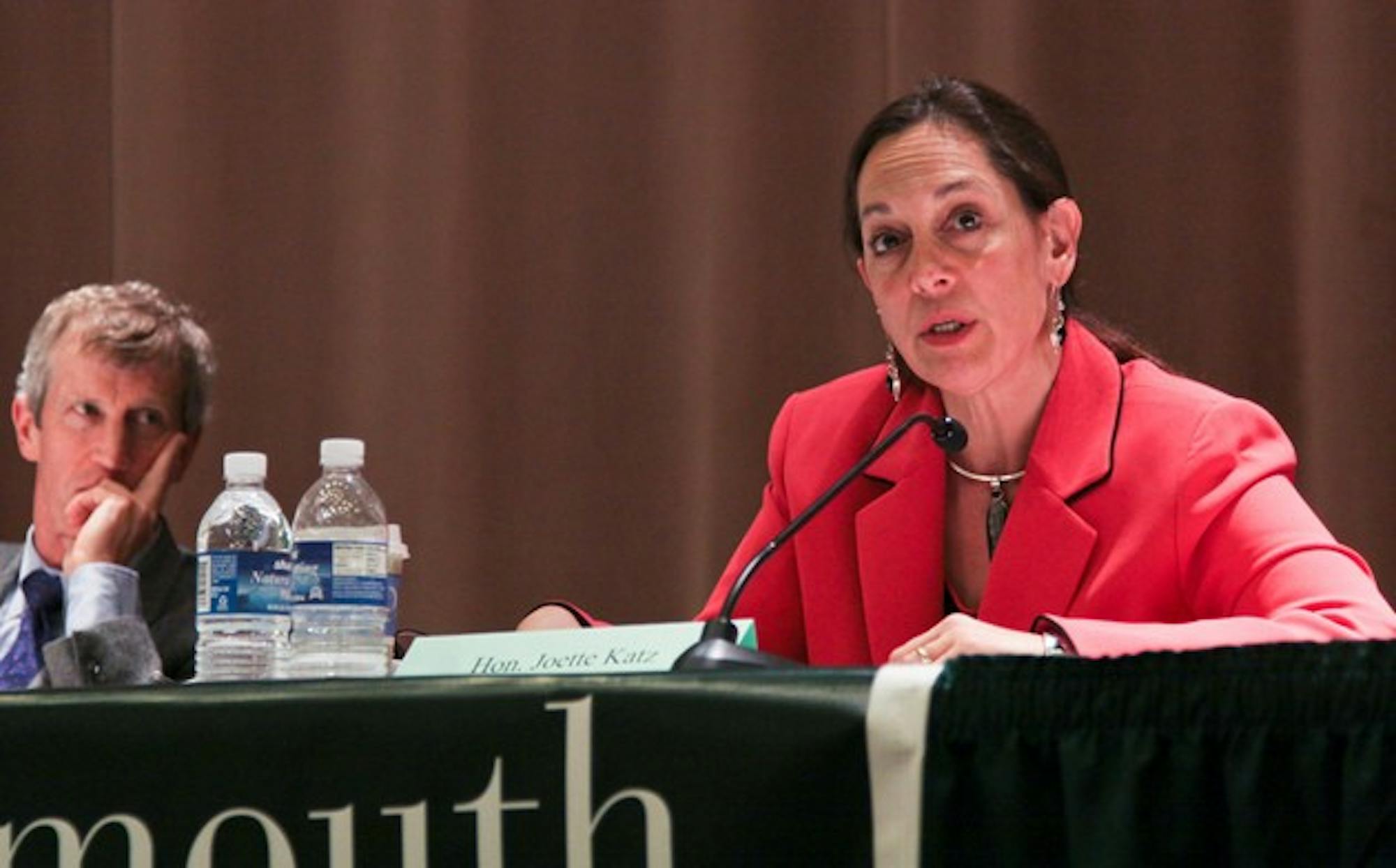
The third panelist, Connecticut Supreme Court Justice Joette Katz, ruled in the majority of a 4-3 opinion establishing same-sex marriage in her state. The Connecticut case was distinct from the other states' judicial efforts because by the time the case got to the state supreme court, the legislature had already legalized civil unions for same-sex couples, Katz said. As a result, the sole decision before the court was whether same-sex partnerships could be called marriages.
Katz said the court considered the history of discrimination against same-sex couples, the premise that being homosexual does not affect an individual's ability to contribute to society and the "political powerlessness" of the gay population.
"There was a risk that the discrimination would not be rectified sooner rather than later solely as a result of the democratic process," Katz said.
The panel discussion was part of a series of events centered on the issue of same-sex marriage for Law Week.
The Law Week events were organized by the Legal Studies program and funded by the program and the Dartmouth Lawyers Association.
"I strongly believe that this is the civil rights issue of our time," said Native American studies professor Bruce Duthu, who coordinates the Legal Studies program and organized the Law Week events. "These issues are ideally suited for discussion at a liberal arts schools. It permeates our entire society."
The three panelists also participated with members of the Dartmouth Lawyers Association in a "Careers in the Legal Profession" panel earlier on Thursday.


