
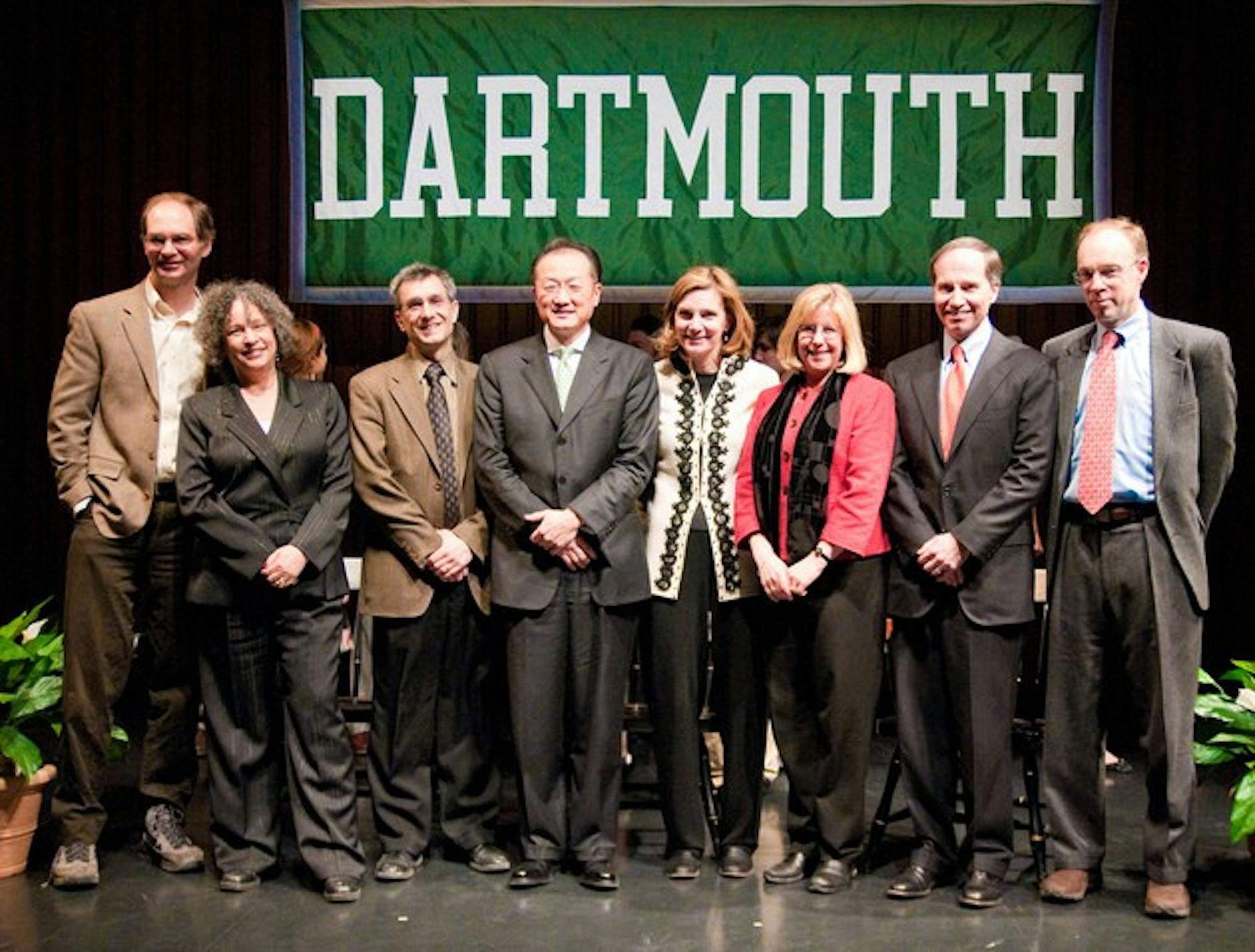
Mulley encouraged Kim in early November to apply for Dartmouth's presidency, Kim said in a previous interview with The Dartmouth. Kim and Mulley were both members of the Harvard Medical School faculty, though they had not met until a few weeks before Mulley spoke to Kim about interviewing.
Finalists in the selection process, numbered between 10 and 14 candidates, Mulley said, though he declined to name the individuals. Mulley said that the search committee had composed a diverse slate of potential candidates that drew from college administrations and academic departments nationwide.
"We certainly wanted some people with presidential experience," Mulley said. "We also wanted people who had strong academic backgrounds and experience in the world. So, I would say that we were really looking for leadership, and we didn't want to focus too tightly on any specific leadership quality."
The search committee, which consisted of trustees, faculty, an alumna and a student, initially considered more than 400 candidates for the College presidency.
"From the beginning, [the search committee] was very aggressively doing research -- gathering informed gossip, if you will," he said.
Between September and December of 2008, smaller groups within the committee made more than 25 trips to different parts of the country for informal meetings with candidates, Mulley said. Those conferences allowed the search committee to refine its list of candidates, producing roughly a dozen individuals who were selected for detailed interviews in January, he said.
Kim described the formal interview process as "by far the most rigorous" that he had participated in. The committee made a point of drilling Kim on how he would handle some of the more difficult and controversial issues currently facing the College, Kim said in a previous interview.
"They asked tough questions," he said. "I think everyone in the community can be assured that the search committee and the Board of Trustees took this search very seriously, and asked questions, and probed into my background and experiences in, frankly, a way that I didn't think was possible."
The committee was not looking for an individual who would fulfill a specific purpose, Mulley said. Rather, committee members viewed the search as a way to find individuals with leadership qualities that resonated with the committee's criteria, which included "a knowledge of academic medical centers" and the ability to more fully integrate the graduate schools and the College.
"When we listed those 13 qualifications, or qualities of leadership, people would often ask us to rank them," Mulley said. "It doesn't work that way. These are attributes that are attached to real people."
Applicants for the presidency faced strong competition, Board Chairman Ed Haldeman '70 said in an interview. Haldeman attributed the rigor of the selection process to Dartmouth's strong financial and academic standing among its peer institutions.
"It was a very sought-after position, and it has to do with the fact that so many good things have gone on at Dartmouth," Haldeman said. "I think the fact that we had such a strong group is an indication of how highly regarded Dartmouth is in the higher education community."
Dean of the Faculty Carol Folt was widely considered one of the stronger candidates from within the College during the search process. Folt confirmed in an interview that her name had been submitted to the search committee, but said she decided not to apply for the position formally.
"I never went into the process," she said. She was flattered to have been nominated, she said, but felt that she could serve Dartmouth better in her current capacity.
Staff writers Turia Lahlou and Fan Zhang contributed to the reporting of this article.


