
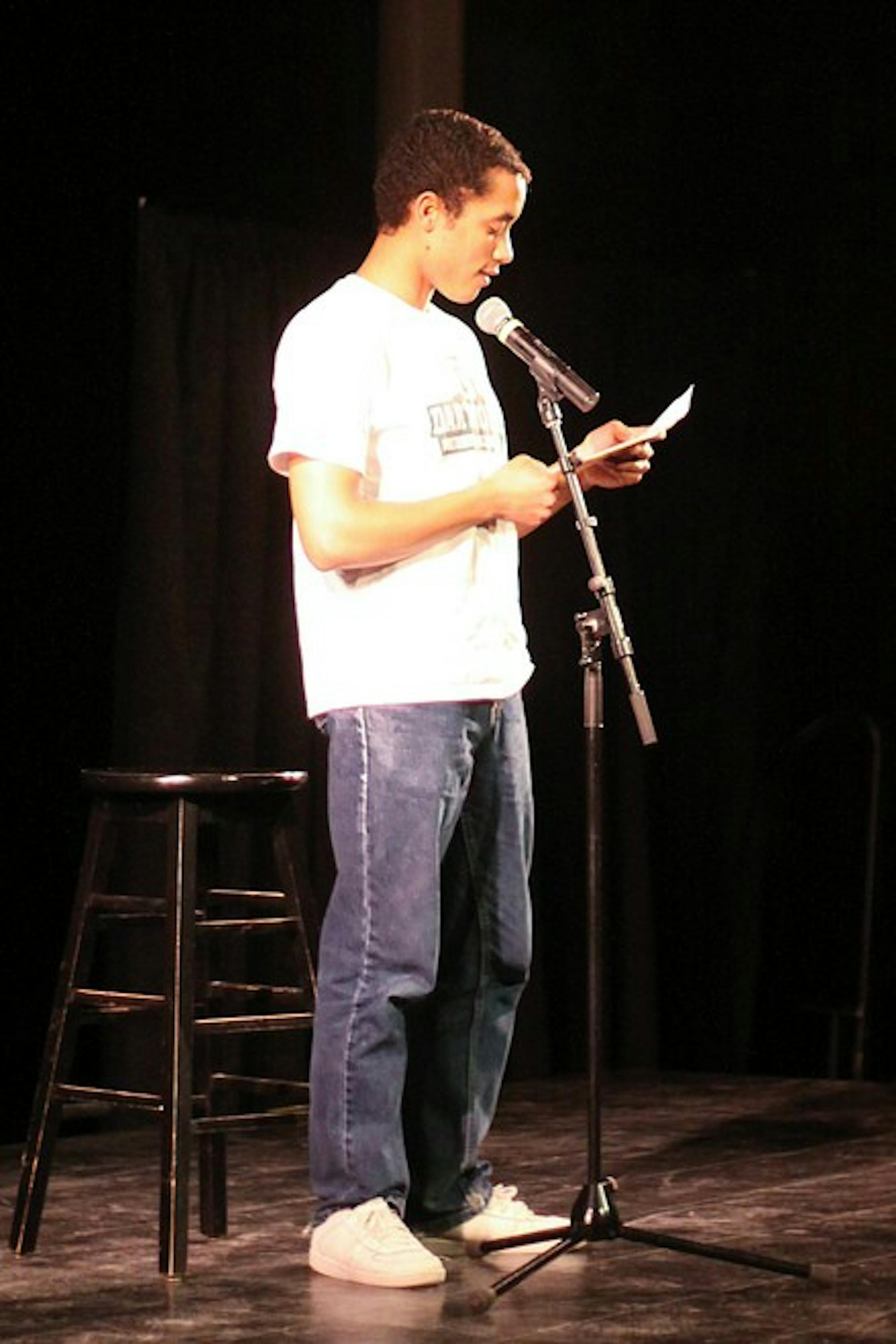
"The fact that we as a society accept the degree of violence that occurs, that we do not recognize it as extraordinary, shocking, obscene -- that is part of the problem," one of the 13 presenters at the event said, reading from an anonymous letter. "Speaking out is one way of making it extraordinary."
Some of the presenters shared their own stories, while others read submissions from other people. The presenters wished to remain anonymous due to the sensitive nature of the topics discussed.
All of the presenters wore a piece of Dartmouth apparel to represent the community's support for victims of sexual assault and to remind the audience that sexual violence is a serious concern at the College, according to Zoe Shtasel-Gottlieb '10, a sexual abuse peer advisor and one of the event's three organizers.
Although female students wrote or presented most of the submissions, a College administrator submitted an anonymous letter, and two male presenters read their own stories and poems.
"I have two little sisters that I love more dearly than anyone else," one of the male readers said. "When I see the images and am able to look into the eyes of the victims of these terrors, I realize that it is only through a very peculiar set of circumstances that the victim is not one of my little sisters."
Both men stressed the equal role men and women should play in eliminating harmful attitudes that excuse sexual assault and stigmatize victims.
"Sexual violence is not merely a women's issue," the same presenter said. "It is an issue of human rights."
Several of the presenters described instances of sexual assault involving the College's Greek system.
One presenter read the story of a female member of a coed fraternity who said peershe was assaulted by a member of the same organization. The story stressed the need for openness in the Greek system and for members of Greek organizations to take more action to prevent sexual assault.
"The well-intentioned idea that a brother in your house will always be a brother is not justification for taking no action to acknowledge and support another [member] who was victimized," the presenter read. "That policy is more than misguided -- it is hypocrisy."
Many of the submissions addressed the inner torment victims experience after suffering assault. When victims are not believed or supported by family, friends, law enforcement officials or their community, they often experience increased confusion and humiliation, according to submissions read by the presenters.
"It is so hard to describe what it feels like to live a completely normal, successful life on the surface, only to go home and feel like you are having a nervous breakdown," the College administrator, who was raped as a teenager and was a victim of sexual abuse as a child, wrote in her letter, which was presented by a student. "I felt like I had no one I could trust to talk to without being judged."
Several submissions discussed how community members should respond to such violence. All agreed that a more honest, accepting dialogue is necessary to support victims and prevent future assault.
"Pitying me robs me of the one positive thing I can take away of having these horrific things happen to me," the administrator wrote in her letter. "It robs me of my perseverance."
Another submission recounted the perpetual confusion a student felt after being raped by her boyfriend. Although she suffered for many years, having the courage to admit what happened has helped her overcome the trauma, she wrote in her letter.
"By admitting to myself what happened and understanding it, I have become empowered," the student wrote. "Life feels great now, and I'm strong."
Many writers and speakers said they had found a way to use their traumatic experiences to further their personal growth, but stressed the importance of events like "Speak Out" and resources like the SAPA program to help victims cope with their experiences.
"Your support and acknowledgement of the crime really does make all the difference," one letter stated. "When [sexual assault] happens, please don't turn away."
Although event organizers, Shtasel-Gottlieb, Amanda Cohen '09 and Alexandra Arnold '10, are all SAPAs, the event was not sponsored by any one organization.
Participants could submit their anonymous letters or poems to the organizers via e-mail or campus mail.
Cohen is a former member of The Dartmouth Senior Staff.


