
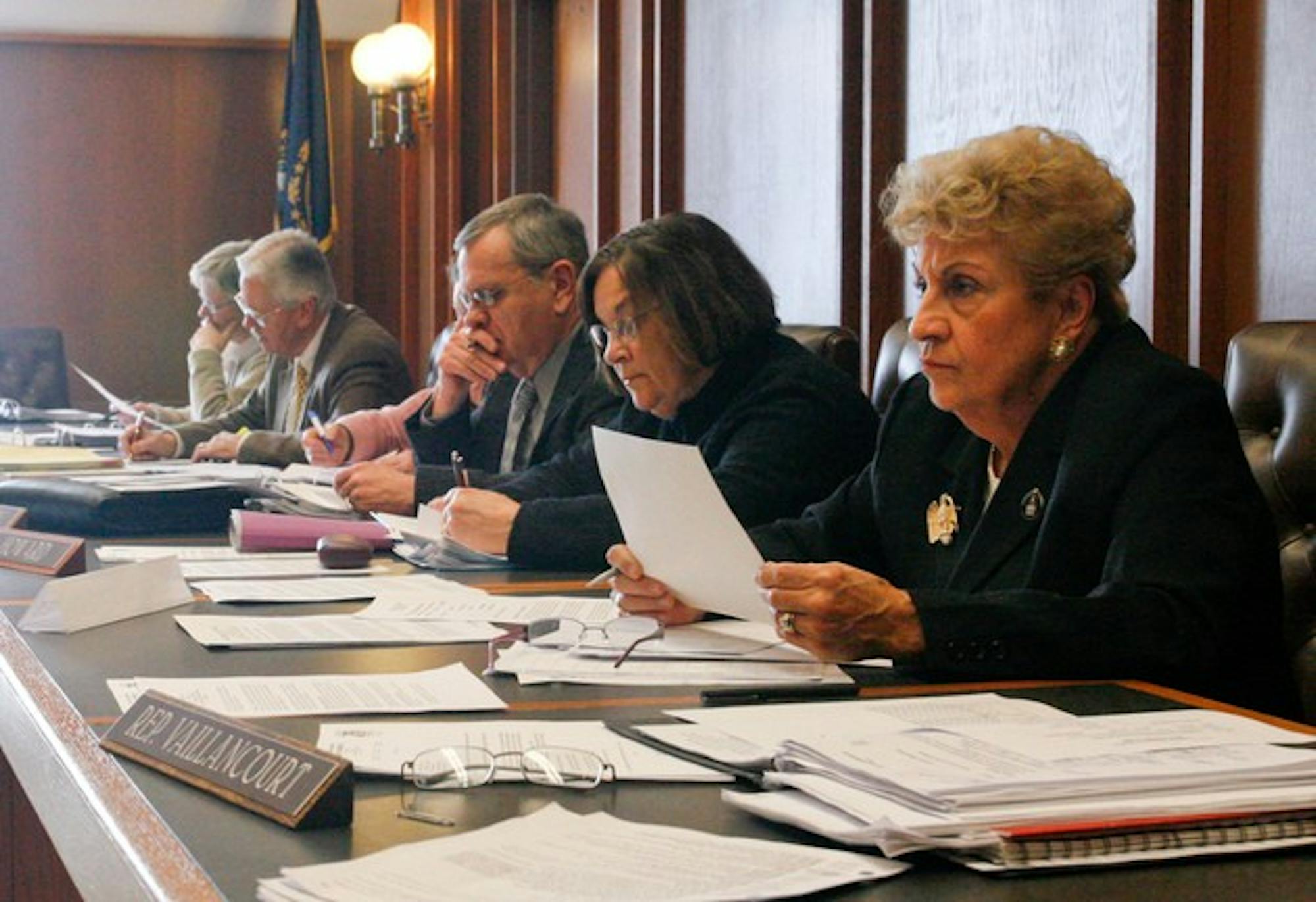
The current alcohol policy has been ineffective in preventing underage drinking among college and high school students, according to Rep. Timothy Robertson, D-Cheshire, who sponsored the bill. Students face social pressure to drink, especially those at colleges with popular Greek systems.
"Living in a small city with a college in it, there seems to be plenty of alcohol consumed by local college students," he said at the hearing.
Robertson testified before the Local and Regulated Revenues Committee that lowering the drinking age would allow young adults to learn to consume alcohol responsibly from their parents in a safe environment, rather than from their peers in an unsupervised situation.
"We ought to learn about the evils of alcohol when we're with parents and our parents aren't scared the police will come," he said.
In August 2008, the Amethyst Initiative, a national coalition of college presidents, gained widespread media attention for urging a reexamination of the current legal drinking age. College President James Wright is one of the initiative's signatories.
Wright was not available for comment on the proposed bill on Thursday, according to the College's Office of Public Affairs.
Under present New Hampshire law, parents can be sent to jail for allowing their children to drink with friends at home, according to Robertson.
Robertson said he believed that societal pressures are to blame for the ineffectiveness of current drinking laws. Young adults are influenced by alcohol advertisements and pressure from older peers to conform to an adult world of drinking, he said.
The new bill would address the inconsistencies between the legal privileges of 18-year-olds and 21-year-olds, according to Robertson. If 18-year-olds can get married, join the military and smoke, they should also be able to drink, he said.
"We live in a society in which drinking is what you do when you become a grown-up, and yet when we push the 18- or 19-year-old out into the work force or higher education, we still treat him as a child," he said.
Robertson, in response to a question from a member of the House committee, said he would be open to an amendment to the bill that would change the proposed drinking age to 19 instead of 18.
Several representatives of law enforcement agencies and non-profit groups testified against the proposal at the hearing.
Earl Sweeney, assistant commissioner of the New Hampshire Department of Safety, testified that the bill would have "pernicious" ramifications if passed and suggested that a lower drinking age would result in increased drunk driving, binge drinking, juvenile delinquency and suicide.
"This idea is being advocated by a renegade group of highly paid college presidents with the selfish goal of having to do less work in supervising dormitories and social events at their schools with no fear or regard for the devastating effects it will have on the rest of society," he said.
Another person who testified before the committee, Peter Thomson, coordinator of the New Hampshire Highway Safety Agency, raised concerns over the bill's fiscal effects.
The National Minimum Drinking Age Act of 1984 stipulates that if states do not enforce a minimum drinking age of 21, they will be subjected to a 10-percent reduction in federal funding for their highway programs.
New Hampshire could lose a total of $16.9 million annually in federal funds if the bill is passed, Thomson said.
Thomson argued that more should be done to educate young adults about the risks of drinking rather than campaigning for a lower drinking age.
"We can't give up on promoting the fact that [underage drinking] is not the thing to do," he said.
Seddon Savage, director of the Center on Addiction Recovery and Education at Dartmouth Medical School, testified that the bill could have a negative effect on public health, leading to an increased risk of alcoholism for people who began to use alcohol at an earlier age.
Eddie Edwards, chief of the New Hampshire liquor commission, stated that a lower drinking age would lead to increased property damage, hospital and insurance costs and loss of work productivity.
"This issue comes up every year, but we can't be the first generation to change the laws at an enormous cost to our young people," he said.
A similar bill to lower the drinking age for members of the armed forces was introduced in 2006 but was quickly defeated in the New Hampshire House.


