
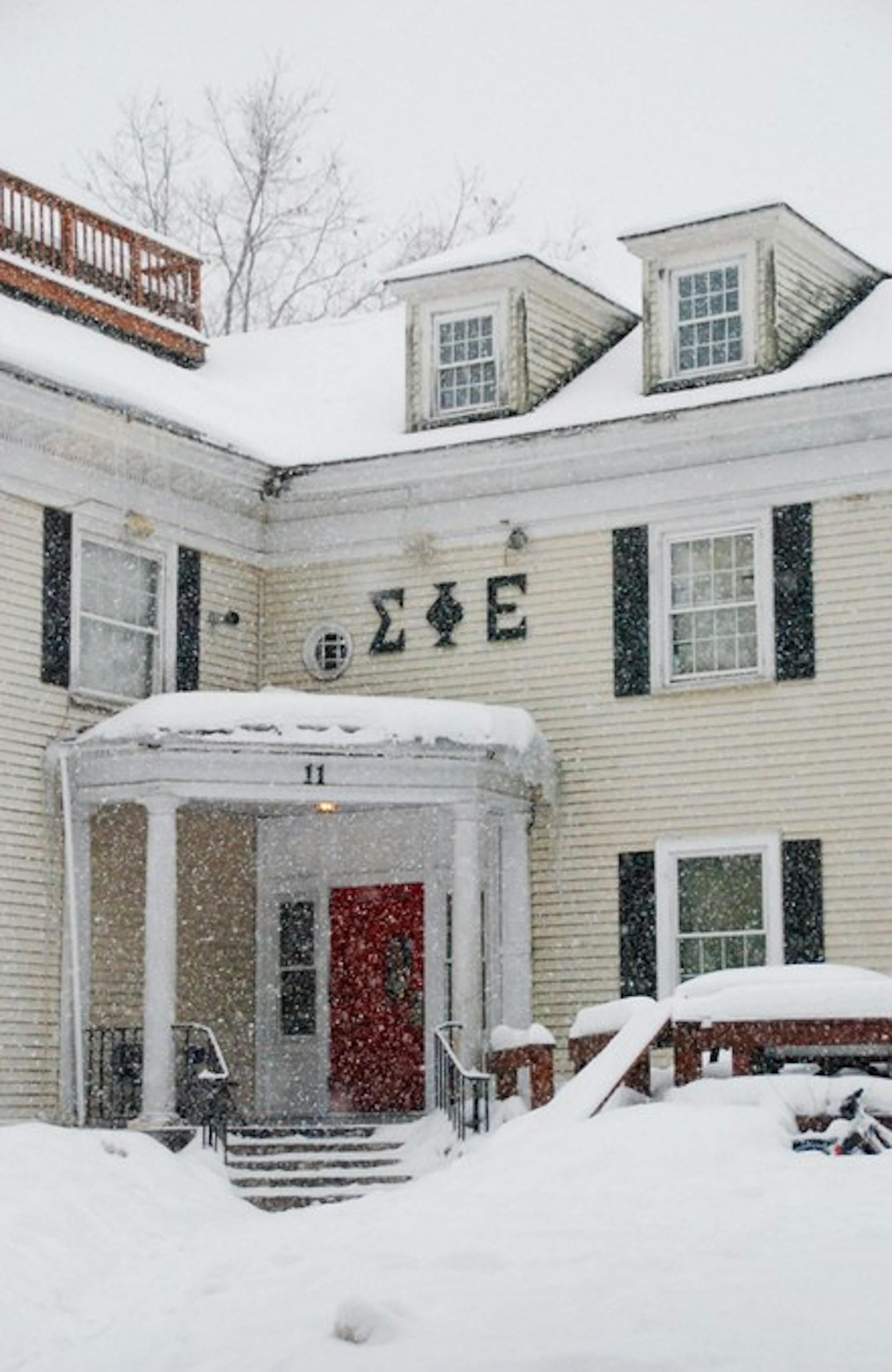
Three of the probations stem from allegations of improper behavior at Fall term formals.
Sigma Delta sorority was placed on social probation for four weeks and prohibited from holding an off-campus formal for two terms, Sigma Delt President Kristen Rounds '09 said.
The sanctions stem from charges that the sorority broke the College's disorderly conduct standard at its Fall -term formal at the Dartmouth Skiway, Rounds said. Safety and Security officers escorted two students from the party, and several students got sick in the bathrooms and left food around the Skiway, which the students did not clean after the event.
"There was a misunderstanding in our contract," Rounds said. "We didn't understand that we had to clean up after ourselves."
Sigma Delt will write apologies to the Skiway and the bus company that transported the students, Rounds said. The sorority is required to pay the Skiway's cleaning costs by Feb. 1, but has not yet received a list of damages, she said.
The sorority will also work with the Greek Leadership Council to write a set of "Best Practices" guidelines for off-campus social events, she said, adding that Sigma Phi Epsilon fraternity and Delta Delta Delta sorority, which were also charged for incidents at their formals, will be involved in the process.
Sigma Delt has decided not to appeal the OAC decision, Rounds said.
"I don't actually think it's terrible, but it's understandable why people are upset," she said. "I'm just looking out for the best of Sigma Delt."
Sig Ep was also placed on probation for four weeks and cannot hold formals off-campus for the next two terms, Rounds said.
Sig Ep President Kevin Scully '09 was unable to give details about the status of the fraternity's case, except to confirm in an e-mail that the organization is "currently on probation for a violation of the College's standards policy, for a formal incident" and that Sig Ep has submitted a request for reconsideration to the College.
Tri-Delt was also sanctioned after the conclusion of its OAC hearing, Tri-Delt President Meg Montgoris '09 said.
"There are several sanctions that have been imposed, including a request to form a Best Practices document for the behavior of students and risk management at off-campus events," Montgoris said in an e-mail.
Tri-Delt has until next Wednesday to appeal the decision, but has not decided whether to do so, she said.
Rounds said she believes the College did not adequately consider precedent when reviewing the three cases. The College sought to make an example of the three organizations, she said, to demonstrate that organizations are responsible for their members' behavior.
"There's some kind of flaw somewhere," she said, adding that other organizations have had more serious event infractions in the past, but were given comparatively minimal punishments.
Kappa Kappa Kappa fraternity could face up to three weeks' probation for an incident involving two students taken to Dick's House, Tri-Kap President Andrew Jean-Louis '09 said in an interview. The students claimed they had been drinking at Tri-Kap, but Jean-Louis said the fraternity was not responsible.
"We don't know whether we're on probation or not," he said. "It's kind of a toss-up. It depends on whether [the OAC] believes us or not."
Chi Heorot fraternity also faces probation proceedings, Jamal Sabky, president of the fraternity, said in an e-mail to The Dartmouth. Sabky declined to comment further, citing the house's ongoing appeal.
Special assistant to the Dean of the College Katherine Burke, who managed the OAC hearings, declined to comment, saying she could not discuss the cases until they are officially concluded.
The level of the offense typically determines whether an organization has a hearing before the full OAC, Nathan Miller, assistant director of Undergraduate Judicial Affairs, said in an interview. Organizations, however, have some leeway in determining how their cases are heard.
"[Organizations] can request to have an OAC chair hear the case, instead of the whole committee," Miller said. "If an allegation doesn't rise to the level that would warrant an OAC hearing, the only option is to be heard by an OAC chair."
Groups eligible for a full committee hearing may only choose to go before an OAC chair if they are willing to give a statement admitting responsibility for the infraction in question, he said.
Following a hearing, the chair's decision is final, according to the Student Handbook. Organizations may appeal the decision if a procedural error has occurred or if new information comes to light.
The hearings for at least three of the five organizations -- Tri-Delt, Sigma Delt and Sig Ep -- were heard solely by an OAC chair.


