
Whether Dartmouth will benefit from the bill remains uncertain, Sustainability Coordinator Kathy Lambert said.
"We have been tracking the bill and are aware of the provisions," Lambert said. "It's very exciting to see such a strong commitment to energy efficiency. We're actively investigating to see if such funding would fit with our program at Dartmouth, and we hope that they do."
Although the College may be eligible for funding under the terms of the bill, Lambert said it is important to remember that the bill is only the first step in passing the stimulus package.
"In terms of what it means for Dartmouth, it's important to see what the Senate version looks like and what ultimately makes it to President [Barack] Obama's desk," she said.
Any funding from the stimulus package will likely go towards accelerating the pace of projects that have already been planned, Shadford said, including a proposed $12.5-million energy conservation and efficiency program that aims to evaluate, renovate and upgrade all campus buildings to make them more energy efficient.
"If we had more money, we could do this more quickly," Shadford said. "Having a larger staff to manage and do the projects would be extremely beneficial to us. We're limited in our human resources to actually do this work."
The bill gives priority consideration for grants to institutions with proposed projects dedicated to improving energy efficiency and compliance with the Leadership in Energy and Environmental Design Green Building rating system.
Dartmouth may be well-positioned to benefit from the funding because it is already in the process of developing several environmentally conscious projects.
The U.S. Green Building Council has recognized several buildings on campus for being environmental sustainable. Both the McLaughlin Cluster and Fahey-McLane Residence Cluster have received gold LEED certifications. The Haldeman Center and Kemeny Hall received silver LEED certifications.
The Class of 1978 Life Sciences Center and the Visual Arts Center, which are currently under development, are on track to achieve gold LEED certifications as well, Shadford said.
Additional funding and grants would allow the College to put more resources into increasing these buildings' energy efficiency, Shadford said. Increased financial resources would particularly benefit the Life Sciences Center, since laboratory buildings by nature consume large quantities of energy, Shadford said. The current design of the building includes solar panels, which are expensive, Shadford said, explaining that as the College reviews the plans and cuts costs, it will likely remove the panels from the design.
"Some extra dollars would make it a lot easier for us to make the decision to incorporate renewable energy sources," Shadford said.
Dartmouth is also developing a campus-wide energy metering system to monitor energy use and share information about energy consumption with students, faculty and staff, Shadford said.
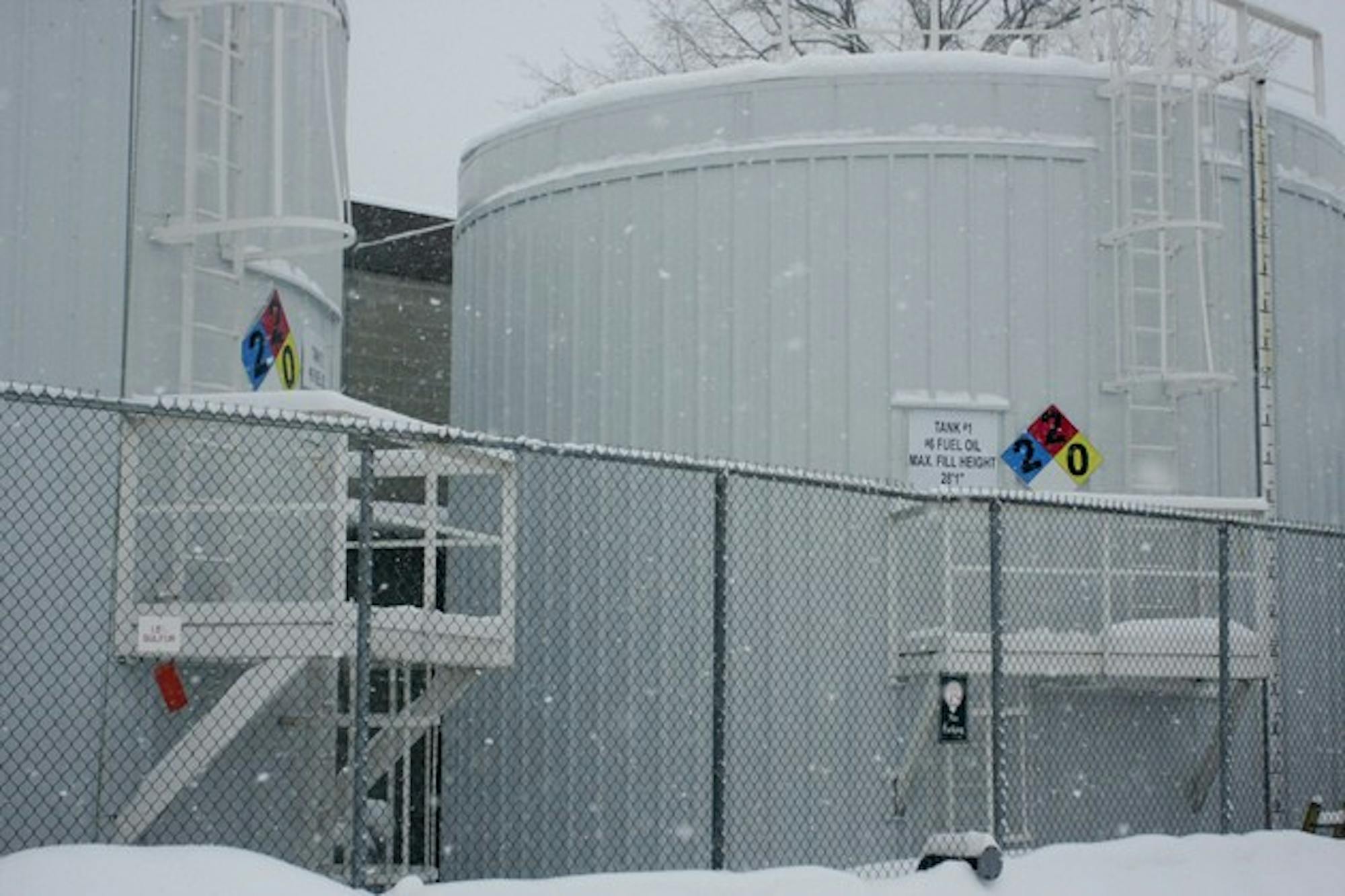
Extra funding could also allow the College to pursue alternate sources of energy. Dartmouth currently generates heat by burning fuel oil to produce steam, and does not have the option to use other resources, such as natural gas, because of its rural location. Although the College generates about 40 percent of its own electricity as a by-product of burning the oil, fuel oil is a non-renewable resource and puts Dartmouth in a vulnerable position both from an energy standpoint and a risk-management standpoint, Shadford said.
"It would be very nice to have some other options, or partial options," Shadford explained, citing burning woodchips and deep geo-thermal energy as examples of alternative energy resources that the College could investigate if it had more funds.


