
"I basically felt like a full-time translator," she said. "Growing up I sometimes felt that I was raising my family as much as they were raising me."
The program, titled "Bridging Two Worlds: The Children of Immigrants," featured six student panelists who shared stories detailing the challenges of dealing with family obligations, language barriers and forging an identity.
Growing up in Brooklyn, N.Y., panelist Raymond Rodriguez '09 said that he often found himself acting as a translator and a mediator for his parents, who are from Honduras and the Dominican Republic. As an only child, he said he feels pressure from his parents to become the "breadwinner" of the family after graduating college.
"I'm kind of expected to bring in a certain amount of income when I graduate," he said.
Rodriguez said he is openly gay at Dartmouth but has not told his parents because he fears that, because of their age and native culture, they will not understand.
"I'm not out to my family, and that's because I don't really know how to go about doing that," he said. "My biggest fear is that my parents will pass away and not come to know me for who I am."
Panelist Hee Won Shin '05, who emigrated to the United States from Korea in 1989, said her parents pressured her and her brother to succeed so that they could help the family financially, and her struggles to please them led her to become depressed.
"I was the good daughter, I did everything I was told out of fear," she said. "I was just a time bomb waiting to implode."
For panelist Syam Palakurthy '09, his multi-cultural identity has helped him to gain a balanced approach to many situations. He cited one occasion in which he was able to mediate in a discussion between two friends, one born in India and another who's family lived in Iowa for generations. The two students were debating the idea of arranged marriages, and Palakurthy said that his strong ties to Indian and American culture meant that both students were able to trust him so that they were able to make headway in the discussion.
Lydia Chammas '09 discussed the challenges of holding on to her cultural roots as she becomes more and more acclimated to American culture. Chammas, whose father and mother's grandparents are from Lebanon, said that even though she identifies herself as a "strong Lebanese-American woman," she has felt more and more detached from her Lebanese heritage since her family stopped taking regular trips to Lebanon because of violence there.
"In protecting us there's a loss," she said. "There's a little hole somewhere and you just kind of wish you had that real connection."
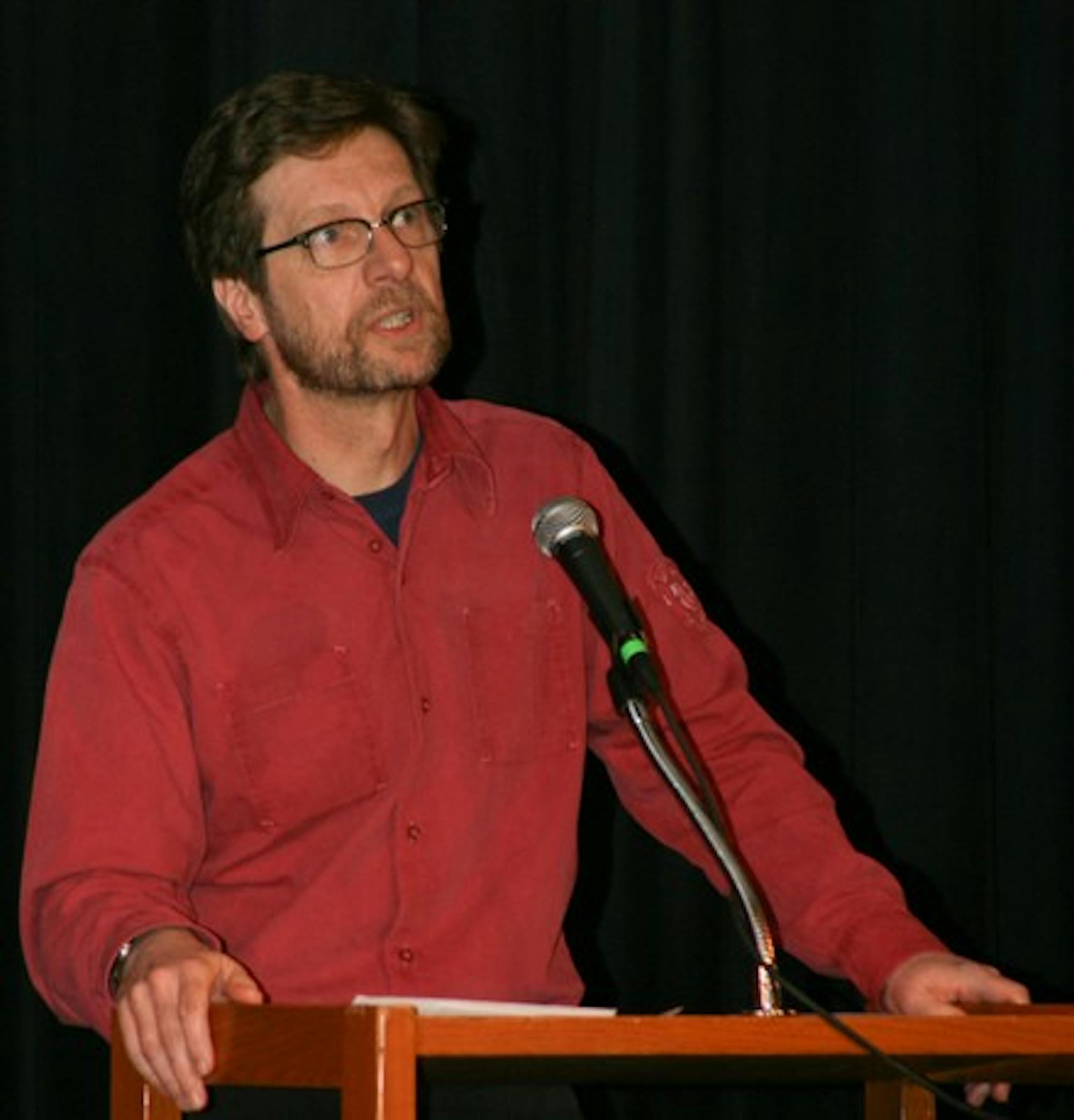
Geography professor Richard Wright, who spoke before the panel began, stressed that the student panelists were not representatives of a certain population and that no generalizations about the experiences of other children of immigrants should be drawn from them.
The dinner was organized by the Pan Asian Council interns Alex Chan '10, Elaine Lee '08, Sindhura Kodali '08, and Ariel Xue '08. Chan said that in choosing the student presenters, they looked for students who the rest of campus looked up to and who had a wide range of experiences.
"We chose students who would have great stories to tell," Chan said.


