
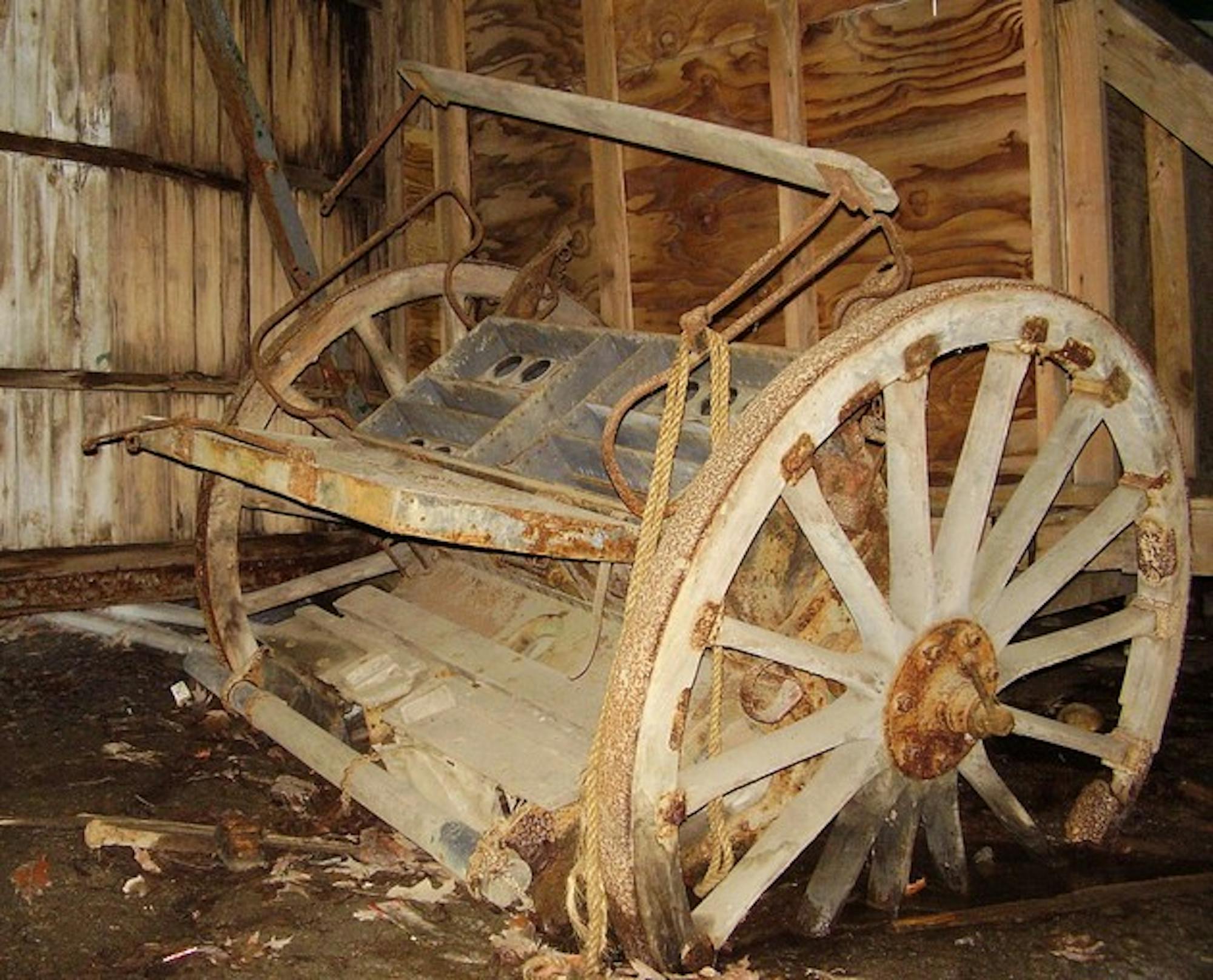
Hanover Police officer Richard Paulsen recently located a chipped and rusted ammunition carriage deep beneath the bleachers of Memorial Field, down a pitch-dark path of mud and ice, giving credence to a rumor that, unbeknownst to the countless students that have frequented the stadium, a World War 1"era cannon lies below field.
Paulsen learned of the cannon rumor at a football game this fall, when an alumnus casually asked Paulsen what the town intends to do with the cannon when the field is renovated in the future. The tipster learned of the cannon from another alumnus who, before passing away, claimed to have helped bury the cannon. This was the first Paulsen had heard of the cannon.
According to the rumor, a group of Dartmouth students in the early 1960s stole a cannon and its ammunition carriage from the Vermont Veterans' Home in Bennington, Vt., as a prank. The students paraded the cannon along Webster Avenue, attracting the attention of the Hanover Police Department, but the students had buried the cannon by the time the police department inquired about its origins.
Upon learning of the rumor, Paulsen took the cannon mystery on as his "pet project" out of sheer curiosity, he said.
"It wasn't like I was going to pull a cold case file," Paulsen said.
Based on the location of the cannon's reported burial, construction workers who worked on the field would never have stumbled upon it during renovation, according to Randy Meck, assistant director of operations and facilities for athletics and recreation at Dartmouth. The ammunition carriage that Paulsen located was likely moved from its original site because construction took place near the spot where the carriage was found, Meck said. The carriage was likely moved by uninterested construction workers, he added.
Paulsen contacted Bennington law enforcement, but said they could not provide him with useful information. Instead, Paulsen received assistance from the Veterans' Home.
When Paulsen introduced the story to Michele Burgess, head of activities at the Veterans' Home, she began searching through scrapbooks and postcards, looking for photos of the cannon. Eventually, she came across a picture of a French World War I cannon that had disappeared from the home, she said.
Burgess was puzzled by the logistics of the heist, she said. Bennington is a little over 100 miles southwest of Hanover.
"How," she asked, "from Bennington -- to there?"
Though originally doubtful, Burgess came to believe that the legend of the cannon could not have been fabricated. She and Paulsen both believe the photograph depicts the cannon purportedly buried below Dartmouth's football field.
"Why would [the confessor] have said it if it weren't true?" Burgess wondered.
Still unconfirmed, the presence of the cannon beneath Memorial Field remains a rumor, Paulsen stressed.
Paulsen also noted that there are several other theories about the origins and location of the cannon.
It is possible the cannon was never buried, Paulsen said, and instead a local gun dealer took the cannon from the students in the 1960s.
Another conjecture suggests that a pawn shop owner dug up the cannon and sold it, according to Meck.
Complicating matters further is the introduction of another potential lost cannon. Meck said he has heard speculation that the College received a cannon from France, although the existence of this cannon has not been confirmed. The French cannon may be the same cannon as the one allegedly stolen from the Veterans' Home.
Paulsen hopes to settle the matter later this spring, he said. He is collaborating with earth sciences professor Leslie Sonder, who will investigate the field with her Geophysics class later in the Spring term.
If a cannon is uncovered, Paulsen said he would like to see it restored and returned to its original home.
"Eventually, it will go back to Bennington," he said.
Even if the cannon is unearthed, there are some questions that will never be answered, Paulsen acknowledged.
"I would love to talk to [the alumni] and put the whole story to rest," Paulsen said.


