
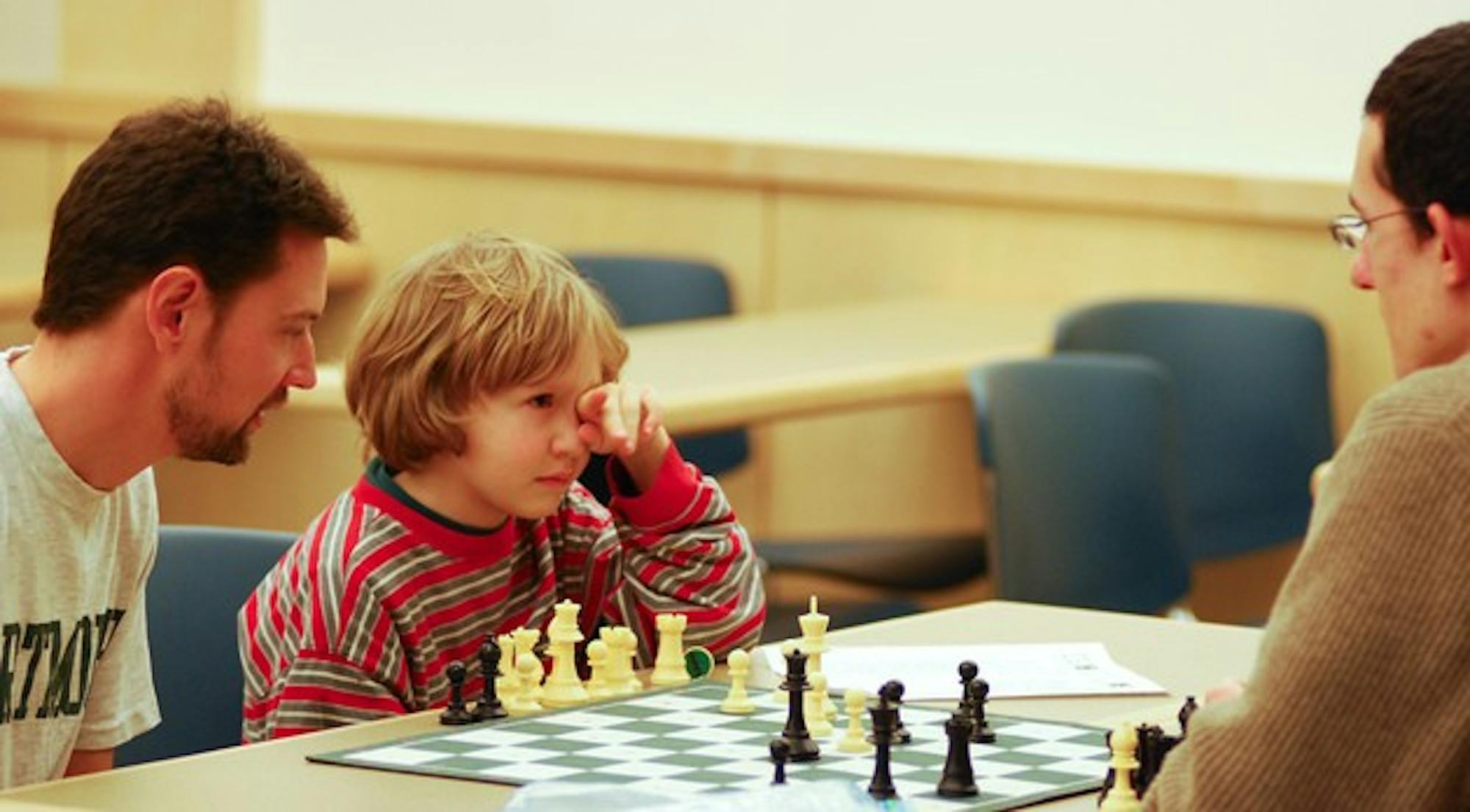
Shulman visited the College as part of the Dartmouth Chess Club's tournament for students and residents of the Hanover area this weekend.
Eight players participated in the competition, and Robert Cousins '09 finished in first place.
Given the small scope of the competition, participants played each other regardless of rank -- in larger tournaments, opponents are assigned according to skill level.
Dartmouth's competition was organized in a "tournament style," in which contestants gained one point for each game they won and one half point for games ending in a draw.
The player with the most points at the end won.
Shulman, who gives private chess lessons and workshops, made a special appearance at the tournament and reviewed participants' games.
He is ranked 150th in the world at the highest level of chess, which consists of approximately 500 Grandmasters worldwide.
Sethi, who has played chess since the fourth grade, is a certified tournament coordinator.
He has trained with Shulman since he was 11 years old, and the two cowrote "Chess -- Lessons From A Grandmaster" as a guide to organizing the lessons that they give to competitors.
Sethi and Shulman have tried to use chess as an educational tool for underprivileged youth. The pair hosts tournaments and workshops for underpriveliged children and has donated chess sets to communities across the globe -- their work has included efforts in Mexico, the Marshall Islands and Malaysia.
Sethi commented on the contrasts between learning to play chess and a musical instrument.
"There's so many different parts of chess: openings, end games, middle games, positions," he said. "You have to be focusing on what you want to improve, and a bigger purpose of what you're studying."
Daniel Leung '09, the founding member of the Dartmouth Chess Club, said that playing chess allows one to learn valuable lessons and develop a way of thinking that contributes to a person's overall education.
"[Chess] takes you to a different place than anything else in every day life," Leung said. "You just sit down in front of a chess board, and you're transported somewhere else."
He continued to say that, like math, each step in chess influences the next.
"In chess, you have these ideas and start implementing them by moving your pieces," he said. "You need a general strategy and then implementing that strategy is really important."
The idea for last weekend's tournament originated when Dartmouth competed in the Pan American Intercollegiate Chess Tournament over winter break.
Dartmouth's team, which included Leung and Cousins, competed for the first time since the 1960s.
Though Dartmouth once had a strong chess program, it has been almost 25 years since Dartmouth last sent a team to the tournament, according to Leung.
The Class of 2011 has several tournament players, so the Chess Club brought a strong team to this year's PanAm Tournament, Leung said.
Currently, the Dartmouth Chess Club is working to organize a children's tournament that would take place next year.
"Hopefully, the kids will know the Dartmouth Chess Club name, and it will build our program," Leung said.


