
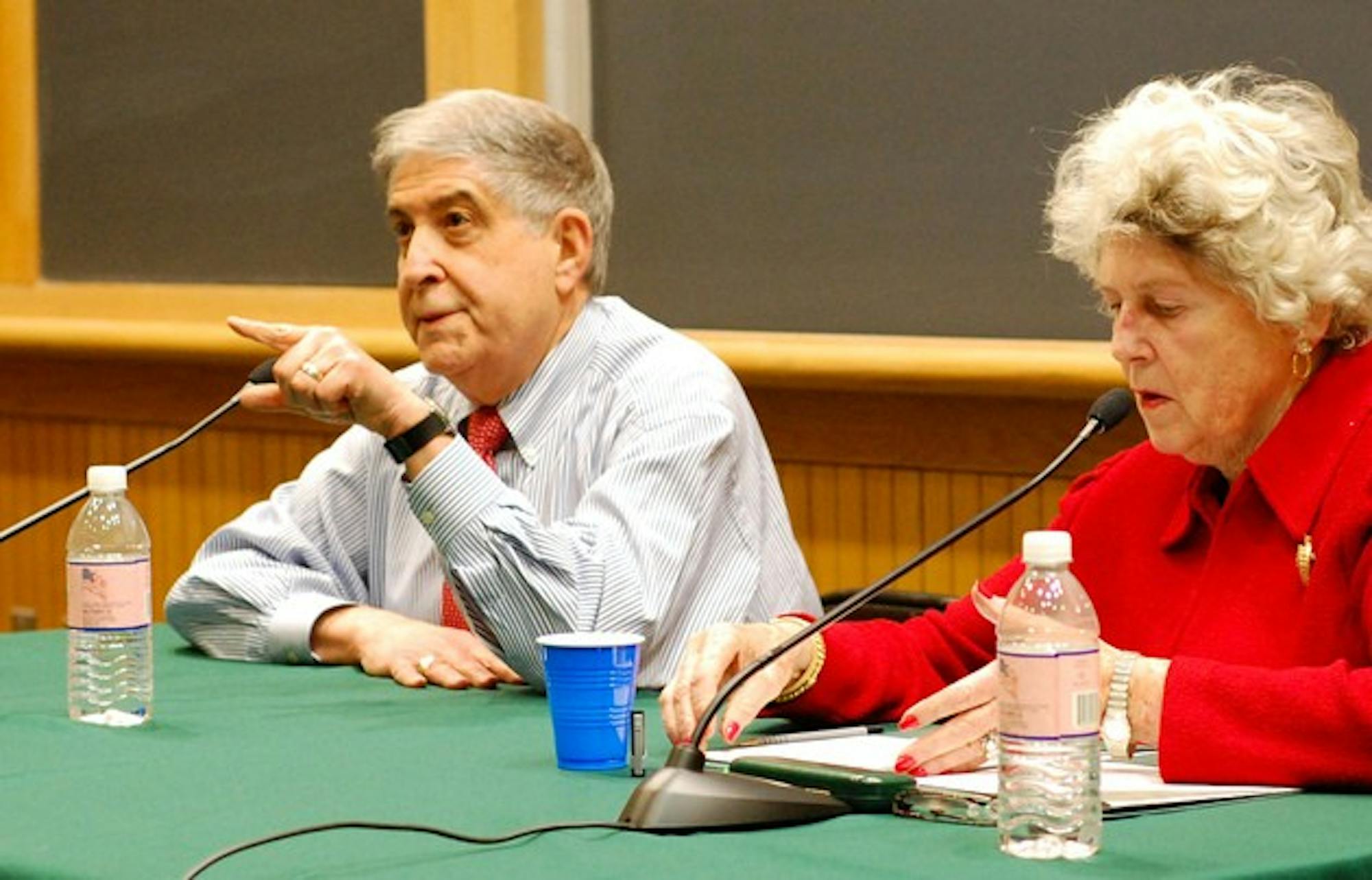
Former members of Congress Rep. Mickey Edwards, R- Okla., and Rep. Beverly Byron, D-Md., strongly criticized the recent growth of partisanship both within Congress and throughout the country to a crowd of approximately 30 students in the Rockefeller Center on Monday. Harkening back 15 years, they spoke nostalgically about their time in the House of Representatives when members of both parties worked together to pass beneficial legislation, they said.
"Our Congress believed that when you took the oath of office you were stepping across a line, you went from a candidate for office to a member of Congress, and your job became that of a legislator in the most powerful legislative body in the world," Edwards, who served Oklahoma's fifth district from 1977 to 1993, said. "Today, people don't cross that line. The minute Republicans get to Congress, their job becomes beating Democrats."
Byron shared Edward's critical view of the partisan nature of Congress today. During her time in Congress from 1977 to 1993, she could turn to members of either party for advice on complicated issues and get an honest answer, she said. Today, such cooperation rarely occurs, she said.
Edwards blamed former Speaker of the House Newt Gingrich, R-Ga., who used wedge issues to divide the parties and forced many moderate representatives to conform to the party platform, preventing Congress from coming to a consensus on important issues, according to Edwards.
"Al Qaeda threatens the lives of a lot of Americans, but the current trends in American politics threaten the very nature of our government, of what it's about," Edwards added.
Edwards and Byron also expressed concern about a recent lack of citizen participation in government. Byron lost in her congressional primary to a more extreme challenger because few moderates came to vote. Her challenger went on to lose in the general election.
Despite her defeat and the challenges of a political career, Byron encouraged students to run for higher office. Byron said she went straight from being a housewife to a representative in Congress, after her husband, the district's former representative, died of a heart attack. With little party support, no money and no education, Byron said she was still able to win.
"My point is, anyone can run for the House and win -- it can be about how hard you work knocking on doors, not just money and connections," she added.
During the question and answer session, one audience member asked angrily if Edwards thought President Bush, through his circumnavigation of legislation prohibiting torture, was violating the Constitution. Edwards criticized Bush, but added that torture is indicative of a larger issue. Congress and the American public are equally guilty of inaction, he said. They have failed to constrain the executive branch's abuse of power, he said, neglecting even to compel White House aides to respond to congressional subpoenas.
Both speakers, however, remained optimistic about the coming presidential election, though neither has endorsed a candidate.
"I don't remember an election year where we have had so many young people coming out," Byron said. "I hope they will continue to come out, and we will find some future candidates and public servants."
Edwards and Byron are both regular participants in the Congress to Campus program, which sends bipartisan pairs of former members of Congress to visit college, university and community college campuses around the country and sometimes internationally, according to Judith Fothergill, events coordinator for The Rockefeller Center.
The Rockefeller Center and the government department have hosted the program for three years. When the former Congressmen come to campus, they spend two days conducting classes, holding forums and meeting informally with students and faculty.
The original version of this article incorrectly referred to Representatives Edwards and Byron as members of the Senate.


