"I had to make a very hard decision to walk away from that funding," Ghanotakis said.
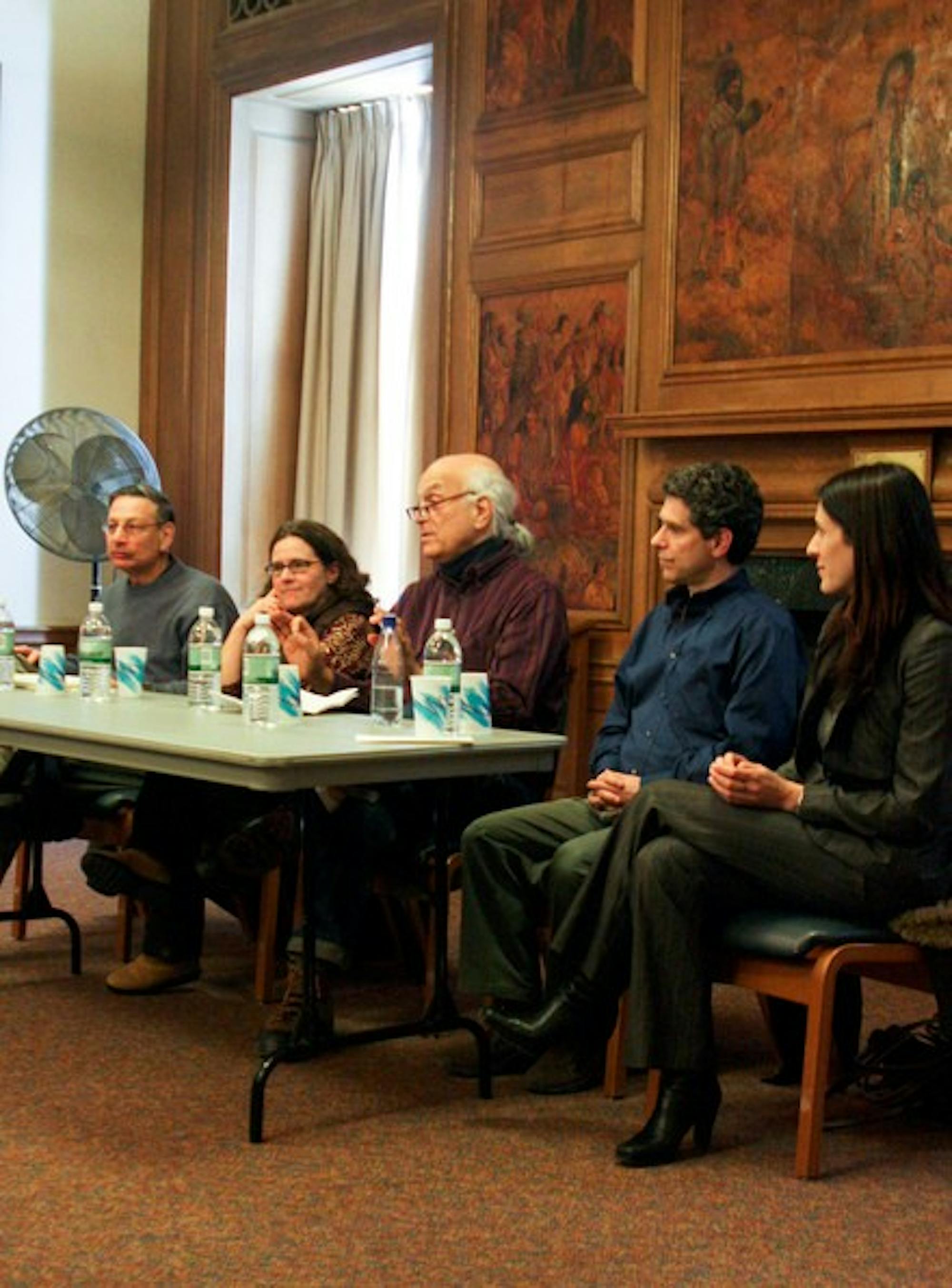
Ghanotakis' account served as an example of the intersection and occasional conflict between academics and creativity at the "Panel on Creativity in Art and Research" held in Tindle Lounge on Thursday. The panel was composed of Ghanotakis and three Dartmouth professors, and was moderated by film and television studies professor David Ehrlich.
At the event, each panelist commented on the difficulties of trying to showcase their academic research in a creative manner.
Biology professor Mary Lou Guerinot addressed the compromises academics must sometimes make to receive support for their research.
"It would be nice to say you can just take your best idea and it would be funded, but you have to shape it," Guerinot said.
Government professor Ned Lebow takes a creative approach to his political psychology research, moving it outside of a laboratory.
Lebow develops "counter-facutals" or "what if" statements he uses to analyze political theories. For example: What if Elian Gonzales had drowned? Janet Reno would not have sent him back to Cuba, fewer people would have voted Republican, George Bush would not have been elected, and we would not have a war in Iraq.
Lebow said he also expresses his creativity through his hobby of fictional writing, such as his short story involving Richard Nixon in hell.
The clash between rigid academics and creativity in his life began as early as first grade, Lebow said.
"For me the biggest obstacle has always been school," he said. "It was a most unpleasant place. For the first 20 years of my life I was consistently punished for doing what I do now."
Ehrlich also asked the panelists to explain where "creative and courageous" researchers get their ideas.
In environmental science, creativity can result from reworking past experiments, according to panelist Andrew Friedland, an environmental science professor.
"Take what you did ten years ago and do it again, and that's creative," Friedland said.
Guerinot said the sparks for some of her best propositions are drawn from other academics.
"Sometimes I get my best ideas when I go to someone else's talk," Guerinot said.
The panelists also provided the audience with insight on how to acknowledge when their creative or research project was complete.
"It's never finished, but at some point you have to let go." Lebow said. "It's about finding the balance between the academic and non-academic parts of your life."