
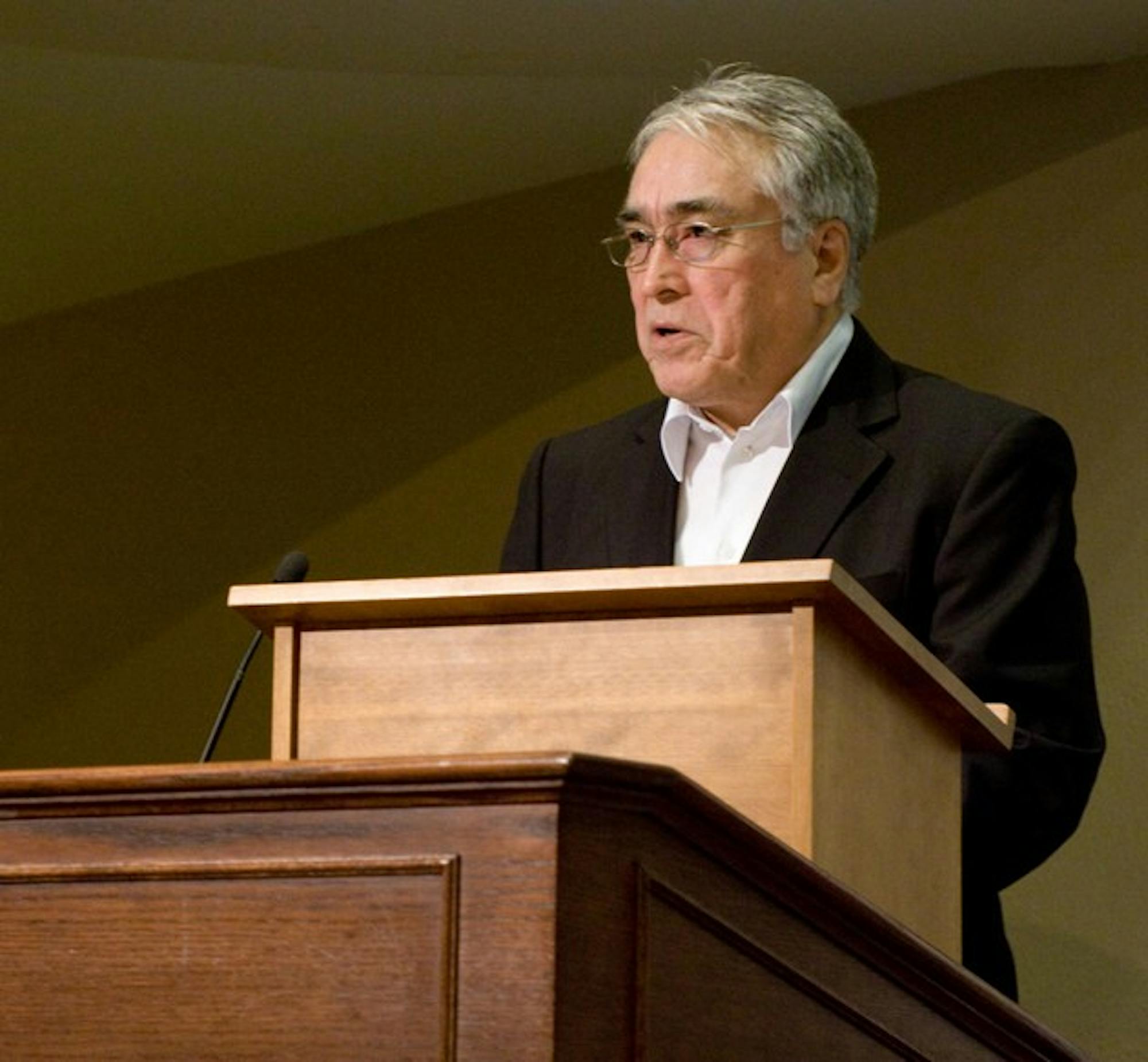
Climate change is paramount to the Inuit because they are the first to experience its effects, Lynge said.
"Climate change is not just a theory to us," he said.
The effects are felt much more intensely in the Arctic, he said, as the change in temperature there is double that of the rest of the world.
Lynge, who has promoted awareness of the issue since the 1970s, repeatedly criticized the exclusion of Inuit peoples from decision making that affects their territories, which include regions in the Arctic, northern Canada, Greenland and Russia, but said he was pleased to see that legislators are beginning to consult indigenous people and incorporate their "traditional knowledge" into policy.
"It's all about connection and working collectivity, not just research and scientific commitment," he said.
It is important to acknowledge the troubled history between policy makers and the Inuit worldwide in the last century, according to Lynge.
"If scientists and policy makers are to include indigenous peoples in the discussion, they have to look back in time and understand who they are," he said.
Before the 1950s, governments worldwide ignored the Inuit, Lynge said, deciding the people impeded their political plans and that it would be too difficult to integrate them into society by providing food, health care and equal rights. The Inuit were forced to organize themselves and fight for their rights after the governments forced Inuit children into boarding schools and seized Inuit territory, Lynge said.
"They took away ancestral hunting grounds and homes, and we were given tents and told to go away" he said. "This paternalistic attitude spread like wildfire, and this forcible relocation and assimilation was the tipping point."
In the 1970s, "a global movement of indigenous peoples was born that can never be silenced," Lynge said, as delegates from all Inuit territories convened to organize the Inuit people.
Lynge, a human rights activist, politician and poet, has previously worked with a group from the Dickey Center that visited Greenland to improve international collaboration about environmental issues.
Lynge is active in the United Nations' Permanent Forum on Indigenous Issues.
The lecture, which took place in Dartmouth Hall, was sponsored by the Dickey Center and the Dartmouth Institute of Arctic Studies as part of a series of events that analyze the scientific and political implications of climate change.


