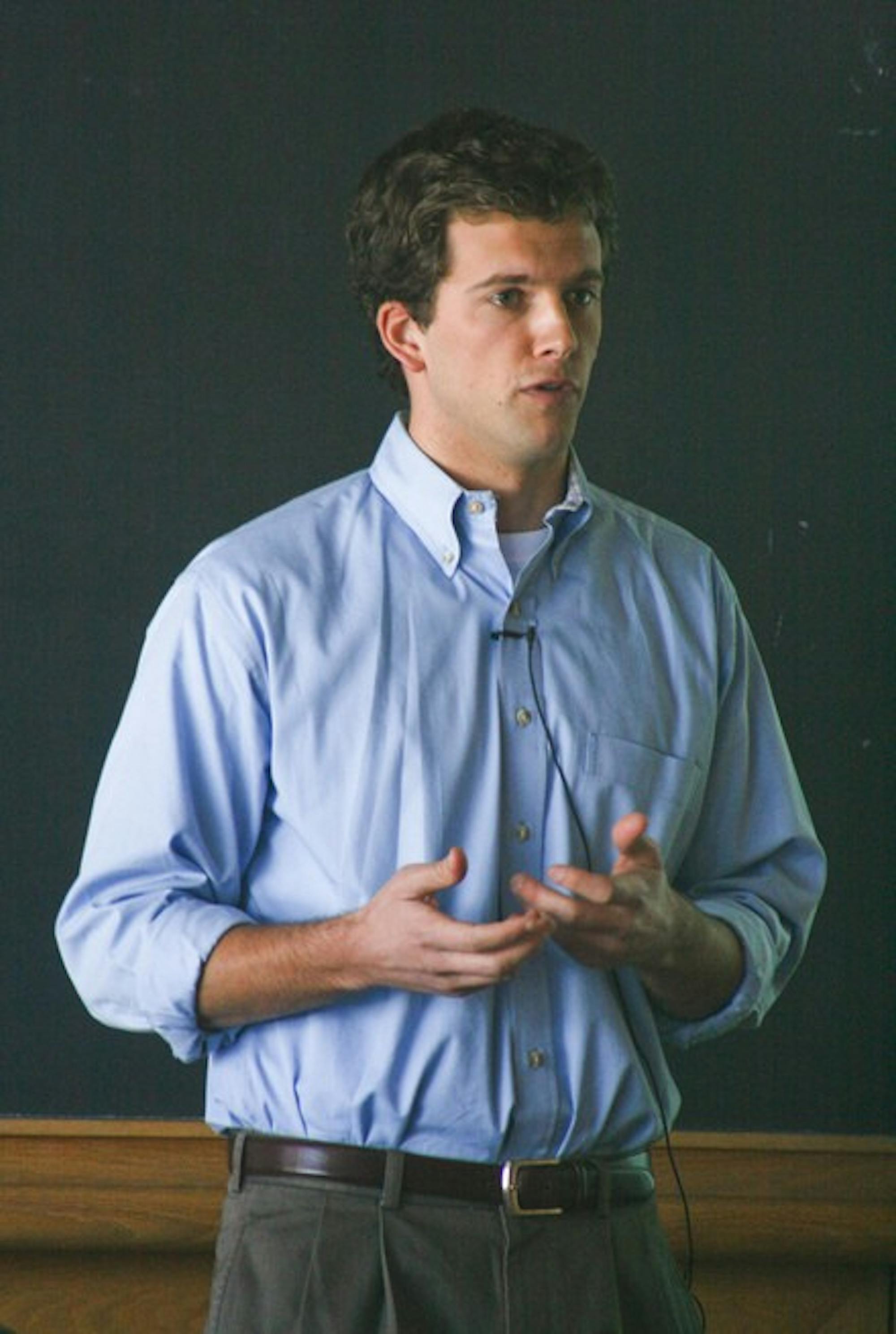
Cunningham described the brain as a computer which sends out signals through the spinal cord, which then acts as the computer's wires and prompts movement. In victims of paralysis, the brain is completely functional, he said, but the "wires" connecting the brain to motor functions are cut. Cunningham's research looked at the moment after the brain has decided to act but before the body begins to obey, a period called "reach preparation."
The goal of Cunningham's research is to decode the initial brain signal and re-encode it mathematically. The algorithms could be used to create a brain-machine interface where wires physically connected to the brain can read its messages and carry out the brain's functions.
"We're doing this with the hope that we can improve the quality of life of the many thousands of people who can't move or communicate properly due to spinal cord injuries or certain diseases," he said.
By studying lab tests with rhesus monkeys, Cunningham and other researchers at Stanford have been able to effectively decode aspects of brain activity during reach preparation. Algorithms derived from these tests allowed the researchers to understand where or how the monkey intended to move, even before any physical movement occurred. Cunningham implied that researchers can apply this principle to a human brain-machine interface, allowing a prosthesis to react to the same neural activity witnessed in the monkeys.
Cunningham said the newness of this field of research may lead some people associate his findings with science fiction. He stressed how meaningful, but poorly understood the brain's activity is regarding what occurs before and during the course of movement.
Monday's lecture was sponsored by the William H. Neukom Institute for Computational Science. Understanding the brain's computations requires a collaboration between fields such as robotics, computer science and mathematics, Richard Granger, the institute's director, said.
"The Neukom Center is at the crossroads of these disciplines," Granger said.