
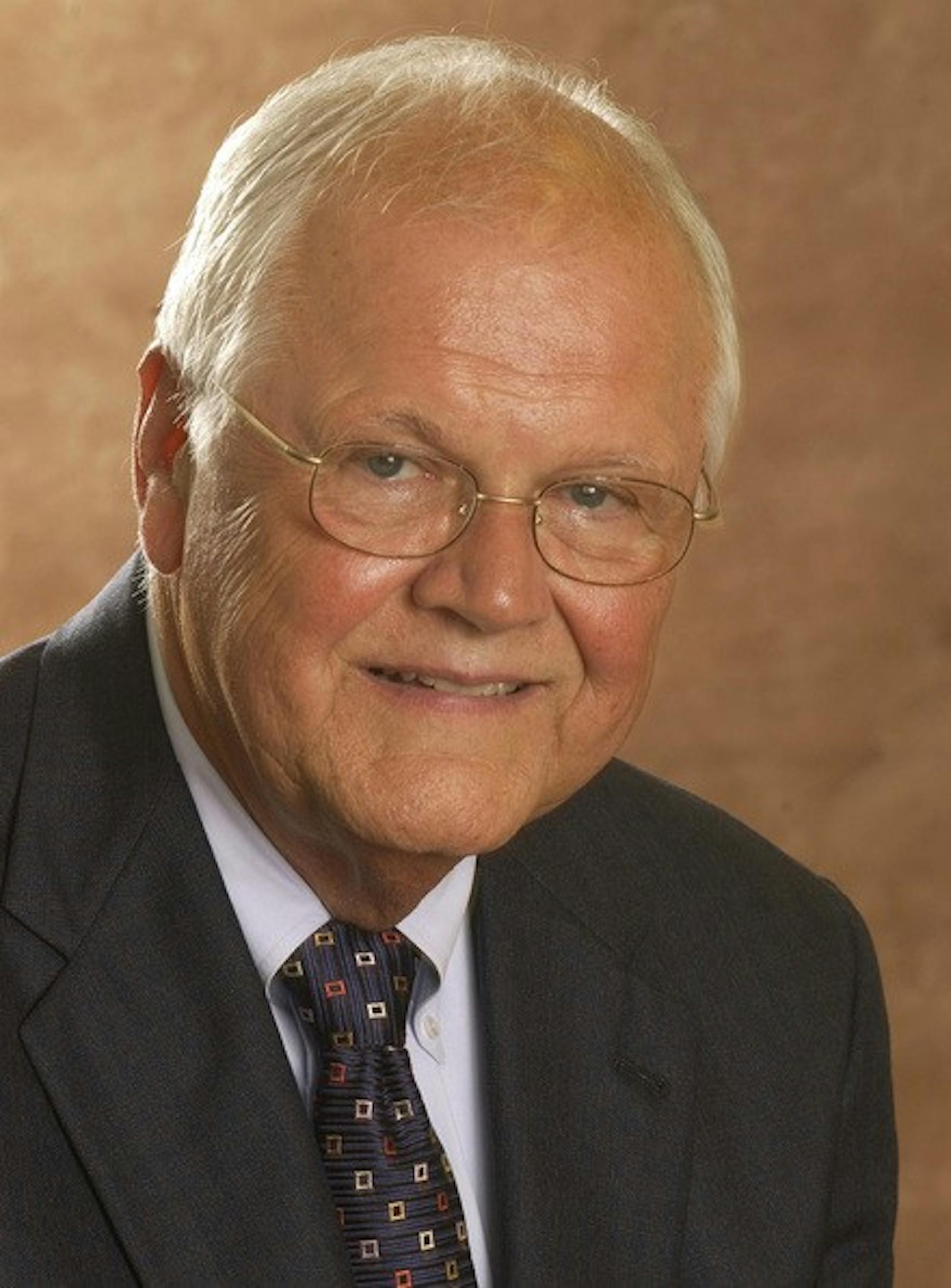
Wright began discussing his departure with chairman of the College's Board of Trustees Ed Haldeman '70 in late fall 2007 and finalized his decision to leave the College during winter break, Wright said in an interview with The Dartmouth.
"'2009 has always come up to me as an appropriate time," Wright said. "I've been able to move ahead with most of the initiatives that I've undertaken."
Although he originally considered withholding the announcement of his decision until this spring, Wright said he decided to push up the date in order to allow the Board to begin formulating a search process to determine his successor at its March meeting. The Board hopes to secure a successor by the time of Wright's departure in 16 months, Haldeman said.
Recent controversy surrounding Dartmouth's alumni governance did not affect his decision to leave the College, Wright said, noting that he has tried to avoid becoming entangled in the alumni debate. The controversy has pitted Dartmouth's Association of Alumni against the College over the issue of parity between alumni-elected and board-selected trustees.
"I think that we're working our way through that," Wright said in reference to the governance controversy. "Obviously there are still some issues to be addressed, including litigation. I don't like to walk away from things that are undone."
Haldeman declined to comment on what the Board will look for in a new president without first discussing the issue with the other members of the Board. He did note, however, that the process would involve the input of Dartmouth faculty, staff, students and alumni.
"That's one of the things that we want to be talking about with the full Board: what are the characteristics that we're looking for?" Haldeman said. "At this point, I don't want to define the candidate pool narrowly."
The search process will be "comprehensive" and consider both internal and external candidates, Haldeman said. He declined to specify who would lead the search and whether the College would seek outside consultation during the process.
Wright said he will not be involved in the search process, though he would be more than willing to help the Board recruit potential candidates. He added that he hopes his successor will be smart, imaginative and have a love for students that rivals his own.
"I think that we need somebody who can put their arms around the special qualities of Dartmouth, embrace them fully and take the College to the next level," Wright said.
His successor will need to specifically address the issues of diversity and community, which have been at the center of debate at the College in recent years, Wright said.
"I'm not at all satisfied that we've done enough," Wright said. "That will clearly be an ongoing challenge for the president."
Other points of focus for the College's next president should be the engagement of the College's professional schools with the undergraduate community and the continued recruitment of high-quality students and faculty, Wright said.
"Dartmouth is going to have to continue to evolve and think, perhaps even more dramatically, about being a global institution and about how it prepares graduates to be leaders in a global society," he said.
Wright also said that the College should find imaginative ways to create "opportunities" for faculty spouses and partners in Hanover.
Haldeman highlighted the work Wright has done for the Campaign for the Dartmouth Experience -- the College's ongoing capital campaign -- as well as significant building and renovation on campus, as some of Wright's most notable achievements as president.
"The Board is very supportive of Jim and the work that he's done," Haldeman said. "By the time he leaves Dartmouth, he will have been president for 11 years and will have accomplished, in large part, what anyone could have expected a president to accomplish."
Wright pointed to recent progress on financial aid, an increase in applications for admission and concurrent growth in the size and compensation of Dartmouth's faculty as some of his key accomplishments at the College.
"At a place like this, it's about the quality and the energy and the enthusiasm of the students and faculty," Wright said. "I'm pleased that we've continued to build up the Dartmouth tradition in that regard."
Increased student diversity has been one of the most important and significant changes at the College during his nearly 40-year tenure, Wright said. Greater diversity, he said, has been coupled with expansion of Dartmouth's foreign study programs and the increasing stature of its graduate schools.
A sense of community and students' attachment to the College are qualities that have endured throughout his time at Dartmouth, Wright noted.
"This was the Dartmouth that I was attracted to in 1969, and it's the Dartmouth that I think survives despite all these changes," he said. "Dartmouth is anchored in values and knows well what its purposes are, and yet adapts and changes in ways such that it can always be competing in an evolving world."
Over the next 16 months, Wright plans to continue working for the capital campaign and developing his recent proposals to alter the College's sophomore summer program.
"I still have some things that I really want to accomplish," he said. "I don't intend to be a lame duck in any circumstance."
Following recent controversy about inequalities in male- and female-dominated social spaces, Wright said he plans to work closely on this issue in his remaining time at the College.
"I'm pleased at the work that [Dean of the College] Tom Crady and [Student Assembly President] Travis Green '08 have set out to do, and I've encouraged them to think outside the box," Wright said.
After his departure, Wright plans to continue his work with wounded veterans Wright also intends to spend time with his family and further pursue his studies in history, but is otherwise unsure of his plans.


