
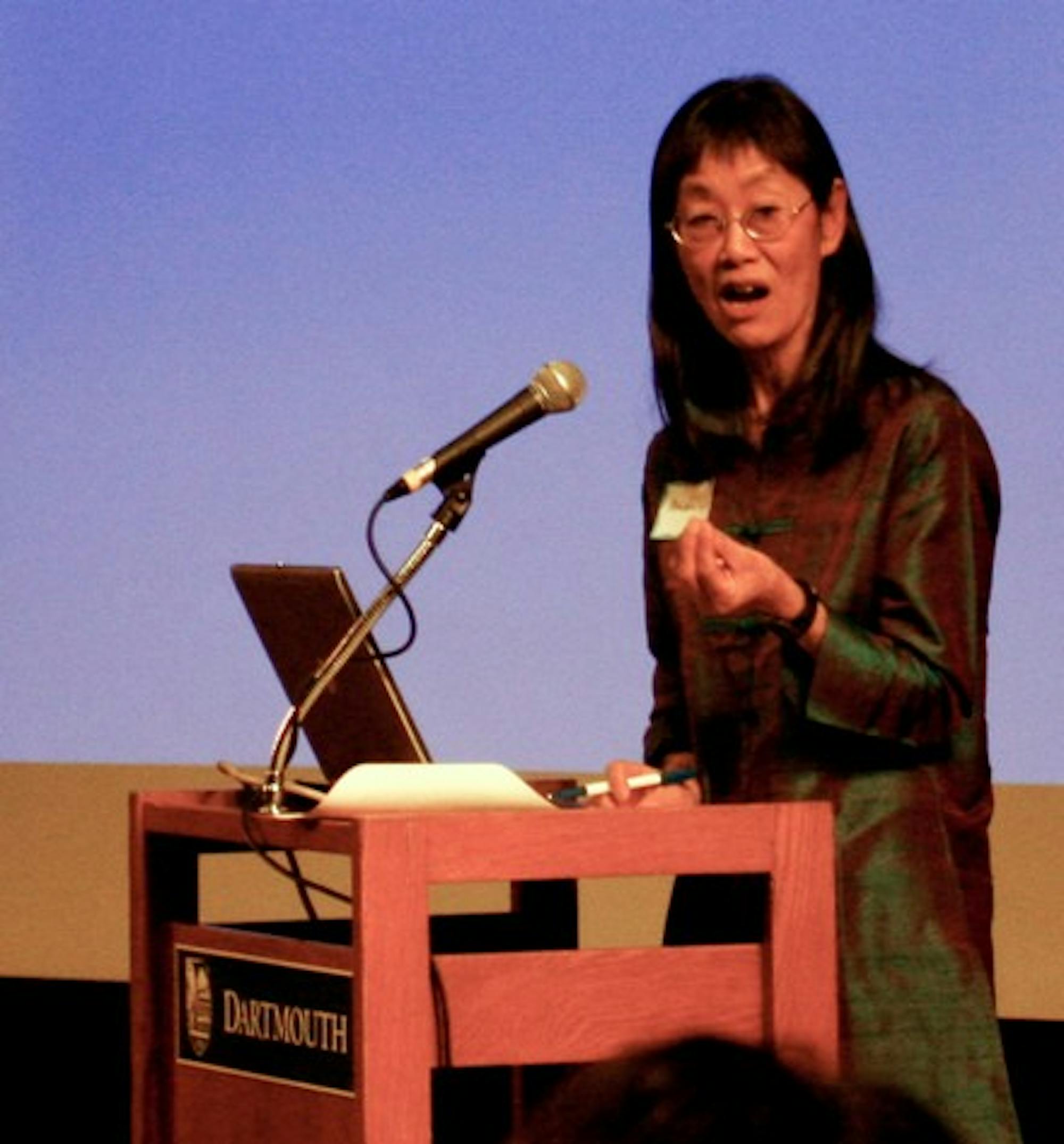
During her speech, Lui argued that economic disparities should be measured by differences of wealth rather than income. While income measures only the size of a person's paycheck, wealth accounts for how much remains after necessary expenses.
"Inheritance is the main way race and class privilege is passed on," Lui said. "When you look at income, it's like a snapshot. When you look at wealth, it is a movie. You have to see how wealth is passed on from one to another."
When you consider wealth instead of income the economic disparity between different racial groups widens, Lui said. The median net worth of a white household is $140,700, while for blacks and Latinos it is approximately $20,000, she said. 75 percent of these minorities would run out of their life savings if they were unemployed for three months, she added.
Wealth disparity is only growing, Lui said, noting that in the 1990's the wealthiest one percent of Americans owned roughly 25 percent of the country's wealth, while today they own 33 percent.
According to Lui, many Americans believe that poverty is the result of laziness and culture. Much of the economic disparity between Americans, however, has to do with luck and the former racist policies of the U.S. government, she said, noting that if slaves had been paid wages for their work, there would be an additional 4 trillion dollars in the black community.
Lui also highlighted income disparity between different racial groups. In 1968, at the height of the Civil Rights movement, blacks earned 55 cents for every dollar a white man earned. Forty years later, they are now making 58 cents for every dollar, she said. At this rate it would take 362 years for the races to reach parity, she added.
Lui laid out some policies to combat income inequality in America, specifically suggesting that the government tax all forms of wealth equally. Currently, profits from stock sales are taxed at a lower rate than income from salaries. She also advocated keeping the estate tax, which taxes the inheritances of the wealthy.
"We need to invest in the base of the economy" Lui said. "Trickle-down economics doesn't work. If you invest in the base it percolates up."
Lui is optimistic for the future, however, noting that politicians and newspapers are beginning to discuss poverty. She called upon the audience and a new generation of young activists to help bring greater racial and economic equality to America.
"The super rich are not going to give up because it's the right thing to do," she said. "Martin Luther King said there's nothing new about poverty and equality, what is different now is that we have the resources to end poverty. All we need is the will."
Lui said that she decided to devote her life to issues of racial inequality after becoming a single mother and taking a job at Dunkin' Donuts. She was surprised when her boss told her "you Chinese" are really hard workers, and later found out that male doughnut-makers were earning more money than their females counterparts.
Lui is the co-author of "The Color of Wealth: The Story Behind the U.S. Racial Wealth Divide" and the former executive director of United for a Fair Economy.


