
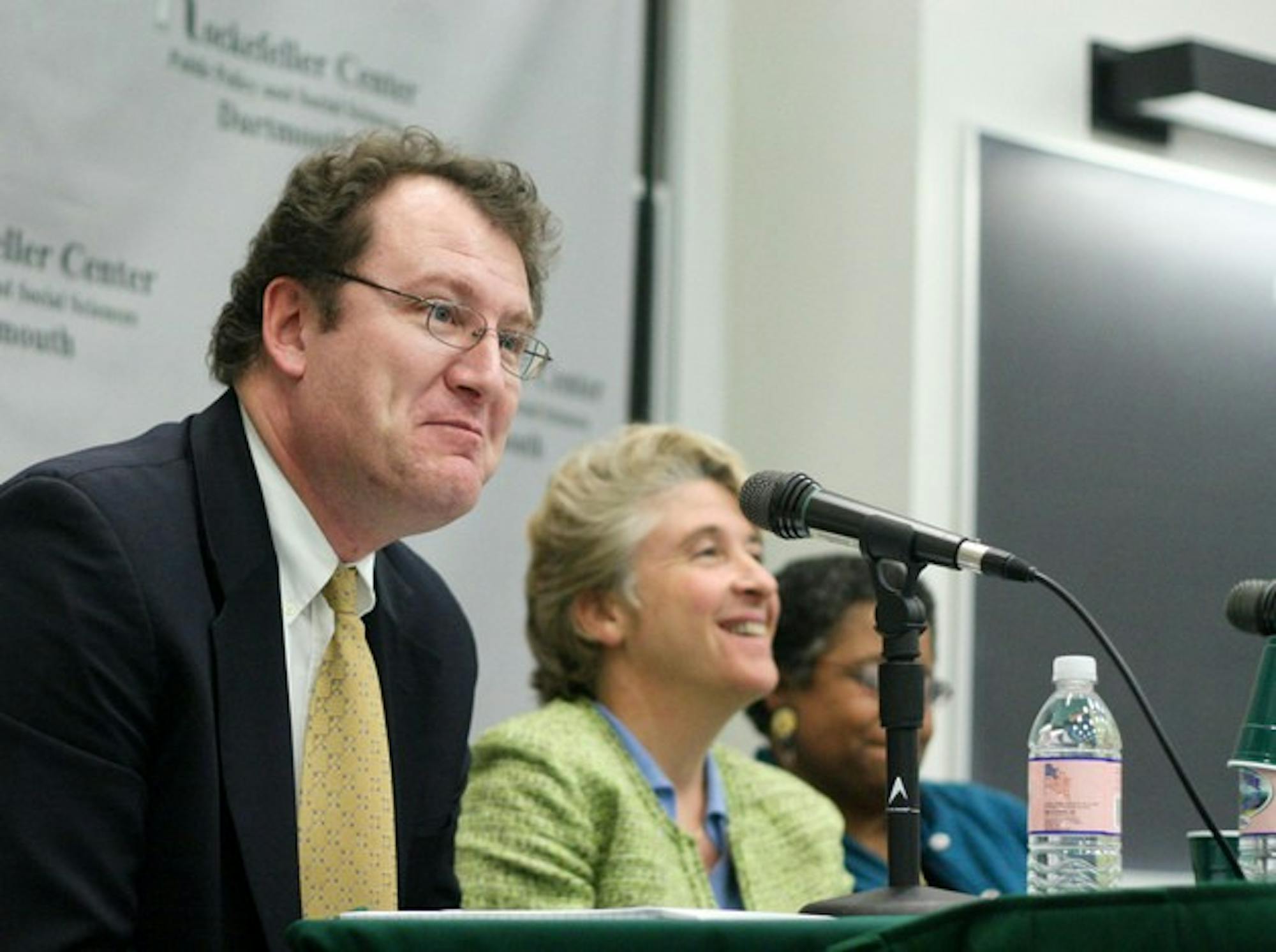
Orleck, one of three professors who spoke on the panel, titled "Class and Racial Divisions: Challenges and Oppurtunities," advocated government funding of programs to help the poor.
"I think we have so thoroughly been imbued with the idea that government is bad that we find it hard to accept that it can be effective," she said.
Sociology professor Deborah King spoke about the problem of home ownership for racial and ethnic minorities in the face of the subprime lending crisis. King said the policies undertaken by the Bush administration to promote housing ownership among impoverished groups encouraged predatory lending practices in the long run, which aggravated the problem.
"We're all quite familiar with the housing bust and the rapid, rampant foreclosure happening across the country." she said.
The lending crisis hurt minority communities more than other communities, King added.
"Even when we hold class constant, racial and ethnic minorities were more likely to be subject to predatory lending," she said
Anthropology professor Lourdes Gutierrez Najera discussed the problems faced by farm workers in the United States. These workers, 83 percent of whom are Latino, she said, receive much less governmental protection than workers in almost any other industry.
"Farmwork has been described as one of the most dangerous occupations in the United States," she said, adding that the life expectancy of a farmworker is 49 years, compared to 75 years for the average American.
Najera recalled growing up with her father, a farmworker who was exposed to pesticides every day. She noted that farmworkers are exposed to pesticides more than in any other occupation and that 90 percent of fungicides and 18 percent of insecticides are carcinogenic.
In spite of these dangers, Najera said there were few laws protecting farmworkers from harmful pesticides. When asked whether pesticide restrictions would be financially viable, Najera replied that "rather than seeing it as an issue that just pertains to these communities, we need to consider how it affects us, too."
The panelists agreed that activism was necessary for the government to take steps to fight poverty and discrimination.
"We need a concerted effort to promote equity and equality," King said. "It doesn't just happen spontaneously."
The panel was part of a series of events sponsored by the Rockefeller center in support of their 2008 theme "Class Divide." Peter Burns, a research associate at the Rockefeller center, moderated the event.


