
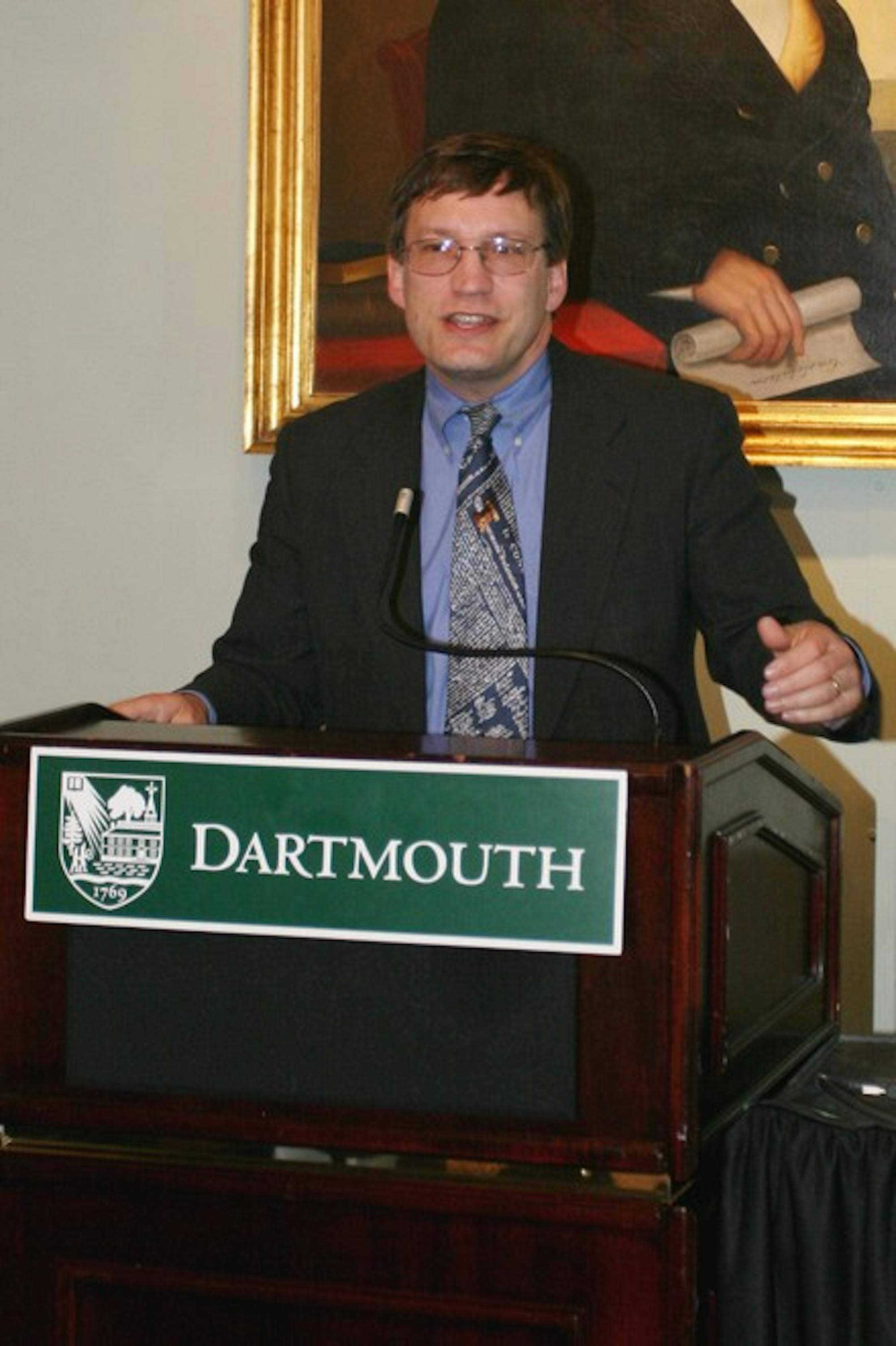
Smith defended the practice of private contributors, such as corporate entities and individuals, to freely donate money to political candidates. In his argument, he denied that such donations are corrupt or unfair.
"The fact is that political contributions are not used to buy a house or a yacht," Smith said. "They are given, for the most part, by individuals and by people who care very deeply about the election, the candidates and the issues they are concerned with."
Smith outlined three main points to defend his beliefs. First, he said that money is a form of speech or a necessary facilitator of speech. Next, he said that money promotes ideas and competition as well as equality in politics. Finally, he said money does not corrupt politics, and that it is dangerous to bestow the government with control over the sources of political money.
"New ideas need someone who will come along and say, 'yes, that is a good idea, and we will back it,'" Smith said in reference to his argument that monetary donations help to promote ideas. "If we take money out of the system, it makes it more likely that fewer ideas will be heard, because we have fewer people in a position to promote issues."
Smith said that in certain situations money acts as an "equalizer" along the campaign trail.
"Suppose I were a more ugly guy running for Congress," Smith said. "We know the American people are a bunch of superficial louts. If I have money, I can get my teeth straightened, get a makeover. The substance of my case can come through."
Additionally, Smith was critical of the current practice of releasing details about citizens' campaign contributions to a government database.
"They want to disclose who those voters are," Smith said. "They want to know that I'm the one who asked him to give 500 [dollars] to that candidate."
Smith said that such disclosures pose a threat to voters' civil liberties, and attributed the plummeting public confidence in government partially to government intervention in campaign politics. Because most people can only participate in politics through their monetary donations and actual casting of votes, government intervention leads people to feel disconnected from the political process.
"Our goal should not be to get money out of politics, but to preserve pride in the fact that we have the best democracy in the world," he said.
Friday's lecture was presented by the Milton and Miriam Handler Foundation's Program in Politics and Law and sponsored by the government department.


