
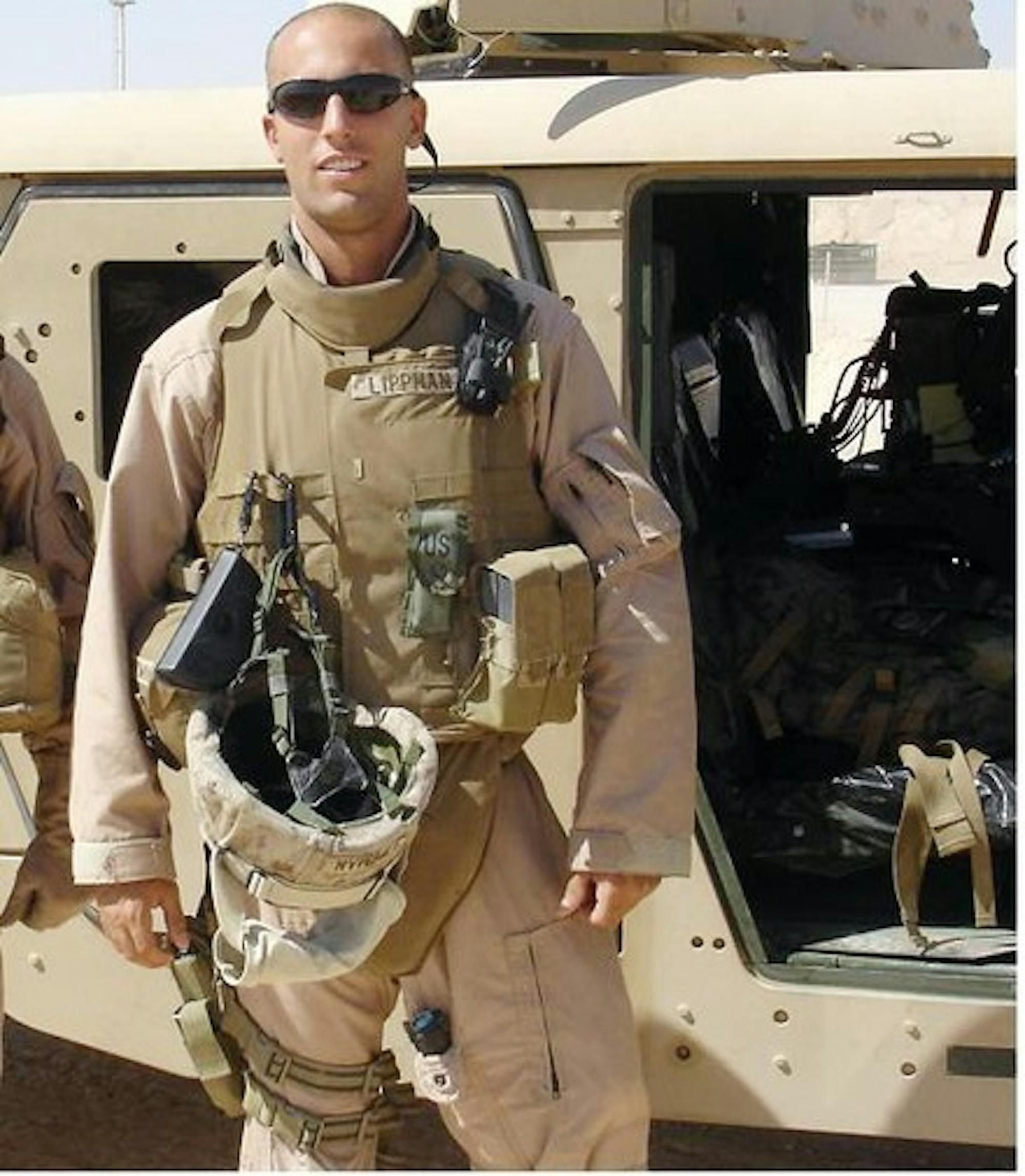
Like many a Dartmouth graduate, Wes Lippman '03 landed a job in commercial real estate after graduation. But Lippman grew tired of the business world, and felt something was missing from his life.
"I just kept thinking about the situation in Iraq and in the world at the time," Lippman said. "It was something that kept nagging me. 'I'm able to do this -- why am I not?'"
After struggling with this question for several months, placing phone calls to friends in the military and considering his options, Lippman traded in his business suit for military fatigues, joining the Marines in the fall of 2004.
Conor Jarvis '02, who joined the Marines after graduation, was one of the people Lippman contacted during his decision process.
"I was [surprised] when I first heard it, just because it's a lot easier to get into this lifestyle right out of college," Jarvis said. "People get corporate jobs, and then they tend to get sucked in."
Lippman decided to make the break, entering into the operating forces at California's Camp Pendleton in March 2006. Just five months later, in August 2006, he was deployed to Al-Asad, Iraq.
He said that his living conditions in Iraq were good, complimenting the food and describing his housing as "kind of like a really, really bad college dorm."
Despite these comforts, Lippman's base, like any other, was under constant threat.
"As much as sometimes it feels as if you're at home, you always have to keep that level of vigilance," Lippman said. "It's almost like two worlds."
Lippman's days in Iraq were split between conducting convoys, which could cover anywhere from 90 to 400 miles, and training and planning back at base.
Before this exposure, the military had not always been on Lippman's radar screen.
Aside from his grandfather's tour of duty during World War II, Lippman said, his family doesn't have an extensive military tradition.
Growing up in Darien, Conn., joining the military "wasn't something that a lot of people did."
"I'd never really considered the military," Lippman said. "It's something I kind of came to later in life."
Likewise, while at Dartmouth Lippman encountered few students whose five-year plans included stints in the armed forces.
Despite this, Lippman felt himself pulled toward service by a feeling of patriotism, and a sense of personal challenge.
"I'd be lying if I said there wasn't a personal aspect to it -- Hey, I want to see if I can do this,'" Lippman said.
Lippman enlisted in a 10-week Officer Candidate's School in January 2005. After a screening process, Lippman headed to six months of basic school, and then to a 10-week military occupational specialization course, which for Lippman consisted of training in logistics.
Peter Lilly '04, who played lacrosse and was a member of Theta Delta Chi fraternity with Lippman at Dartmouth, said that Lippman's work in logistics was appropriate for his active spirit.
"I would describe him as someone who likes to be in the thick of things," Lilly said of Lippman. "Wes is definitely a guy that thrives in the team concept."
Lilly said that, on the lacrosse team, Lippman led with a positive and inclusive attitude.
"It would be the coldest day of our first winter practices in February, and Wes would be out there in shorts, showing off those lovely legs and just smiling every minute about it just to be out there," Lilly said.
Lippman, for his part, pointed to interaction with his troops as one of the highlights of his service.
"To know that we got all this stuff and all these people from point A to point B and back again safely, that's a hugely rewarding feeling," Lippman said.
Unlike the opposing lacrosse team, the enemies Lippman and his team faced in Iraq posed a real threat.
On Sept. 30, 2006, while on a mission, Lippman's humvee was hit by an improvised explosive device.
The blast threw the vehicle into the air and flipped it over backwards.
The attack left Lippman, one of four passengers, with a broken back, fractured arm, shattered feet and other injuries.
The three other Marines assisted Lippman until he was evacuated by helicopter back to base, where he underwent emergency surgery.
From there, Lippman was sent to an air force base outside Baghdad, on to Germany, and finally to Bethesda National Naval Medical Center, where he stayed for about three months. Lippman estimated he underwent between 15 and 20 surgeries.
Lippman was joined at the hospital by his parents, and occasionally his brother, who works in Atlanta. His sister, Alexandra Lippman '08, was on an off-term in London at the time of Lippman's injury.
"My whole communication with him was calling him every night on the phone," she said.
Lippman said the support of his family and friends has been important to him throughout his experience.
"It's nice to have the support of people back home. As someone fighting over there for your country," he said, "that's probably the most you can ask for."
Now out of the hospital, Lippman has resided in Florida since late December 2006, where he continues to recuperate from his injuries.
Lippman's plans for returning to Iraq depend upon how his recovery proceeds. While he still has time left on his contract with the Marines, he may be medically separated because of his injuries.
"I'd much prefer to get better," Lippman said. "And return and finish up what I started."
Lippmann will be appearing on a panel of Dartmouth military veterans speaking on military service on May 7. The event will be hosted by the Dickey Center for International Understanding.


