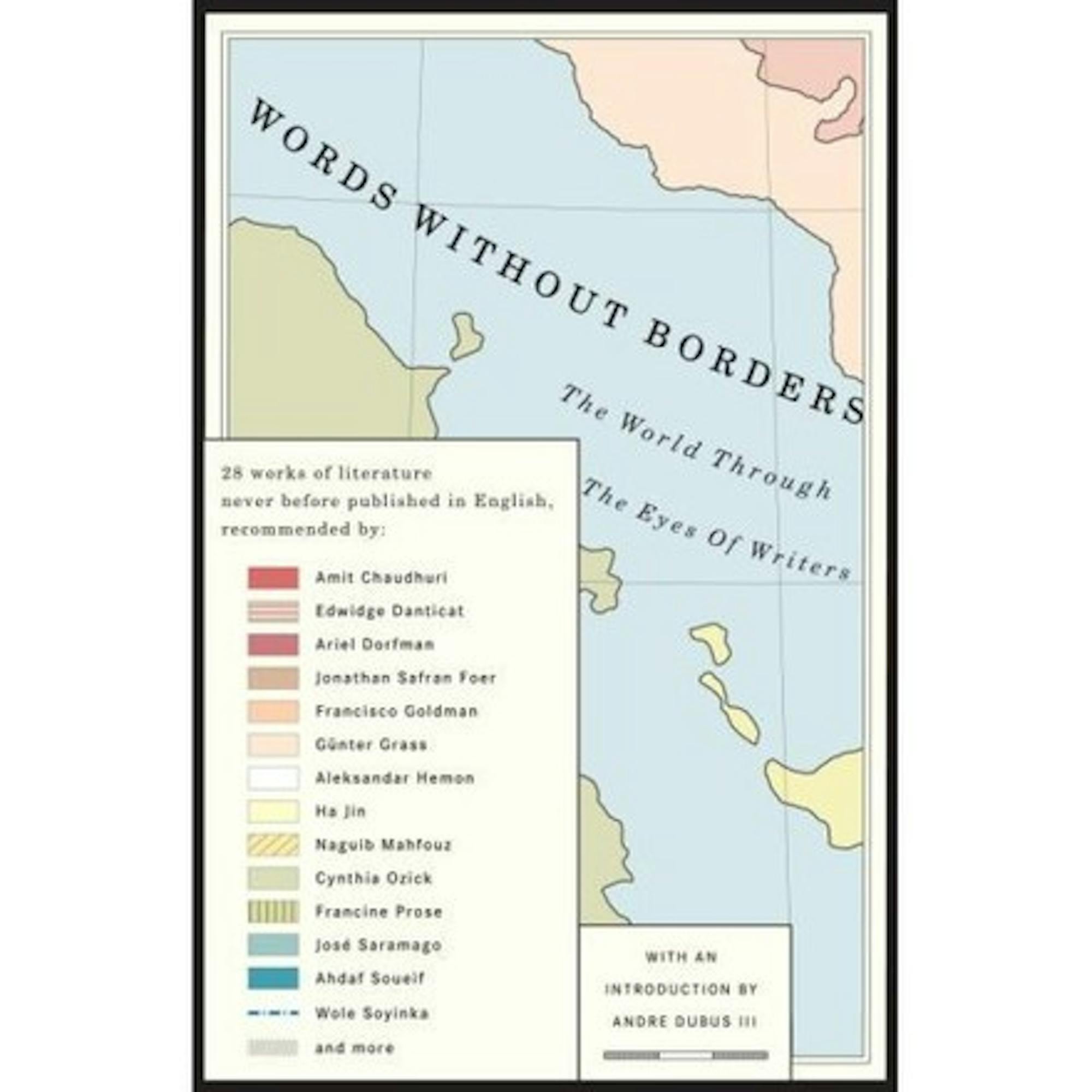
The translator, author and reader come into a transcontinental triad that overrides all political barriers. Although many of these stories are fictional, they are charged with political and cultural weight. Stories from Argentina, Bosnia, China, Bengali and Nigeria, to cite only a few, allow readers to witness history through the writers' eyes.
Just as the writers in this collection represent a broad range of countries, their work addresses a wide span of subjects. Subject matter ranges from an overbooked Iran Air flight, to a day in Argentina, to the inefficiency of hospitals. The variety in this collection keeps each chapter fresh, but also forces the reader to consider the diverse perspectives and experiences presented. These insights identify how isolated the United States has become from the populations and cultures that essentially shaped the country. The cultural elements that make up the famous American melting pot have been de-recognized in exchange for a homogenized American standard.
We have forgotten how the experiences of people in Mexico, Palestine and Poland, for example, are still pertinent to us. Author Akinwumi Isola addresses the "imperialism" of the English language and its colonial after-effects in a country like Nigeria. In line with what we see on television, many Americans disregard the particulars of life in war-torn countries. A human record of the wars in Sarajevo, Iraq and Iran appear in "Words Without Borders," conveying to readers a more intimate connection to war than do the statistics listed by the media. Saniyya Saleh, a female Arab poet, speaks to her unborn daughter in a poem, wishing her a more peaceful life.
In this collection, we are made to feel the anguish of losing one's identification card as a refugee; the loss of identification can mean the loss of self. After reading about the experience of a Bosnian soldier, we learn to see the body as a war offering; eating, showering and masturbation become ritual homage to the body given in sacrifice to one's country. The stories that make up this collection conjure images and ideas immediately relevant to other countries, and force us to confront realities less comfortable than our own.
In "Words Without Borers," writers from the Middle East to Latin America, Africa to Eastern Europe, share stories from a time when estranging barriers kept us apart. This book helps to regenerate our relation to the world outside the United States. Our comprehension of politics and culture is heightened by this lyrical documentation of human history; without collections such as this one, an international exchange of ideas is limited to only the upper echelons of intellectual conversation.