
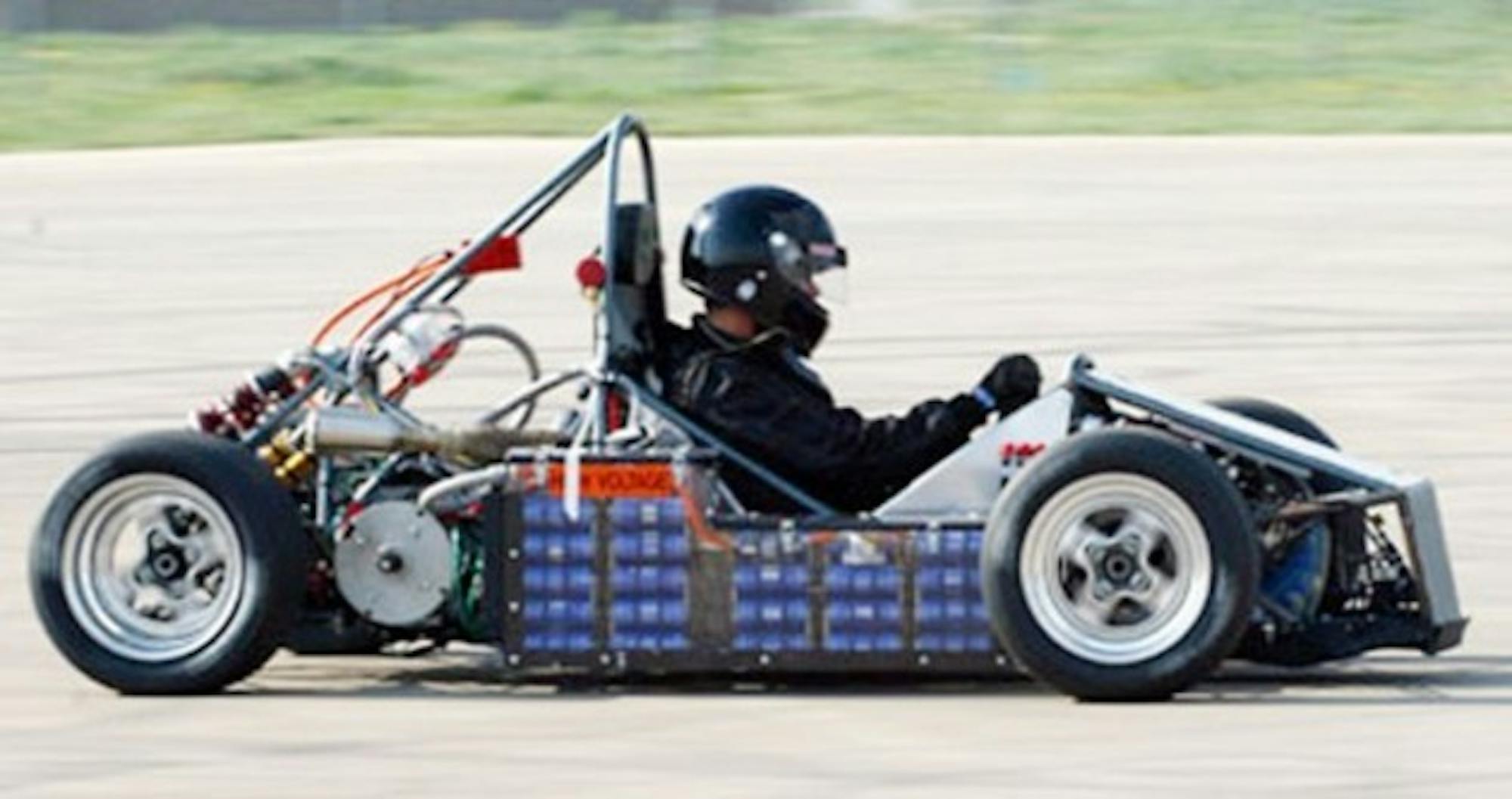
"We want to show that you can have fast cars and they can be fuel-efficient," Formula Hybrid co-captain Abigail Davidson '05 said. "Performance does not have to come at the expense of the environment."
This competition is based on the annual Formula Society of Automotive Engineers competition, which challenges engineering students to design small formula-style racecars subject to certain engine and frame size restrictions. The cars are then judged according to a number of criteria, from the car's design and presentation to the speed with which it accelerates. Students receive two terms of class credit for their efforts.
The Formula Hybrid Competition, while following this basic template, will only allow cars with gas-electric hybrid drive trains to enter the competition. And, the tournament will focus much more on fuel economy than the original competition.
In the Formula SAE competition, fuel economy only accounted for five percent of a team's points. The Formula Hybrid Competition, however, maintains that each team will only be allowed to use a limited amount of fuel during the entire competition.
The focus on hybrid technology in the competition could perhaps lead to technological developments outside of the tournament, Davidson said.
"Part of what's so great about competition is that a lot can filter up from student arena to influence, say, Formula One or eventually to the consumer world," Davidson said. "The success of competition would be great for that."
The idea to focus a competition on hybrid technology originated with Fraser. While preparing for the Formula SAE competition in Detroit two years ago, Fraser decided to try to gain an advantage in the competition by adding an electric motor to the car the students were working on. When checking the rulebook for the tournament, however, Fraser found that hybrid cars were prohibited from the tournament. Without a tournament to enter, Fraser decided to establish a tournament in which only hybrid cars would race.
"As far as we know, Dartmouth has been one of the first schools to use hybrid cars," Davidson said. "Universities in Europe are doing similar things, but not many in the U.S."
The first prototype car for the competition was built in 2005. Last year, in order to publicize the event, the Dartmouth team took one such car to the Formula SAE tournament in Detroit, a move that generated some interest from other American universities, Davidson said.
This year's tournament will likely be much smaller than its counterpart in Detroit. While over 100 teams enter the competition in Detroit, only 10 teams have registered for the Formula Hybrid competition, Formula Hybrid co-captain Dana Haffner '06 said. The hope is that this tournament will raise the level of interest and knowledge of hybrid technology, she added.
Though sales of hybrid cars have been on the rise, consumers do not generally associate hybrid cars with the more mainstream high performance sports cars, Haffner said.
"Americans love their cars," Haffner said. "We want to show that you can have a high performance car that's hybrid."


