
Loeb lives at Cobb Hill, a Hartland, Vt., housing community focused on sustainable living. The 60 residents of Cobb Hill co-own the 270 acres of land and all help to take care of the farm and manage the single wood-powered heating system that provides heat to all 22 houses.
"It's really great living at Cobb Hill, especially now as more and more people become aware of the environment," Loeb said. "It's great to have worked on that for a while and already made good choices."
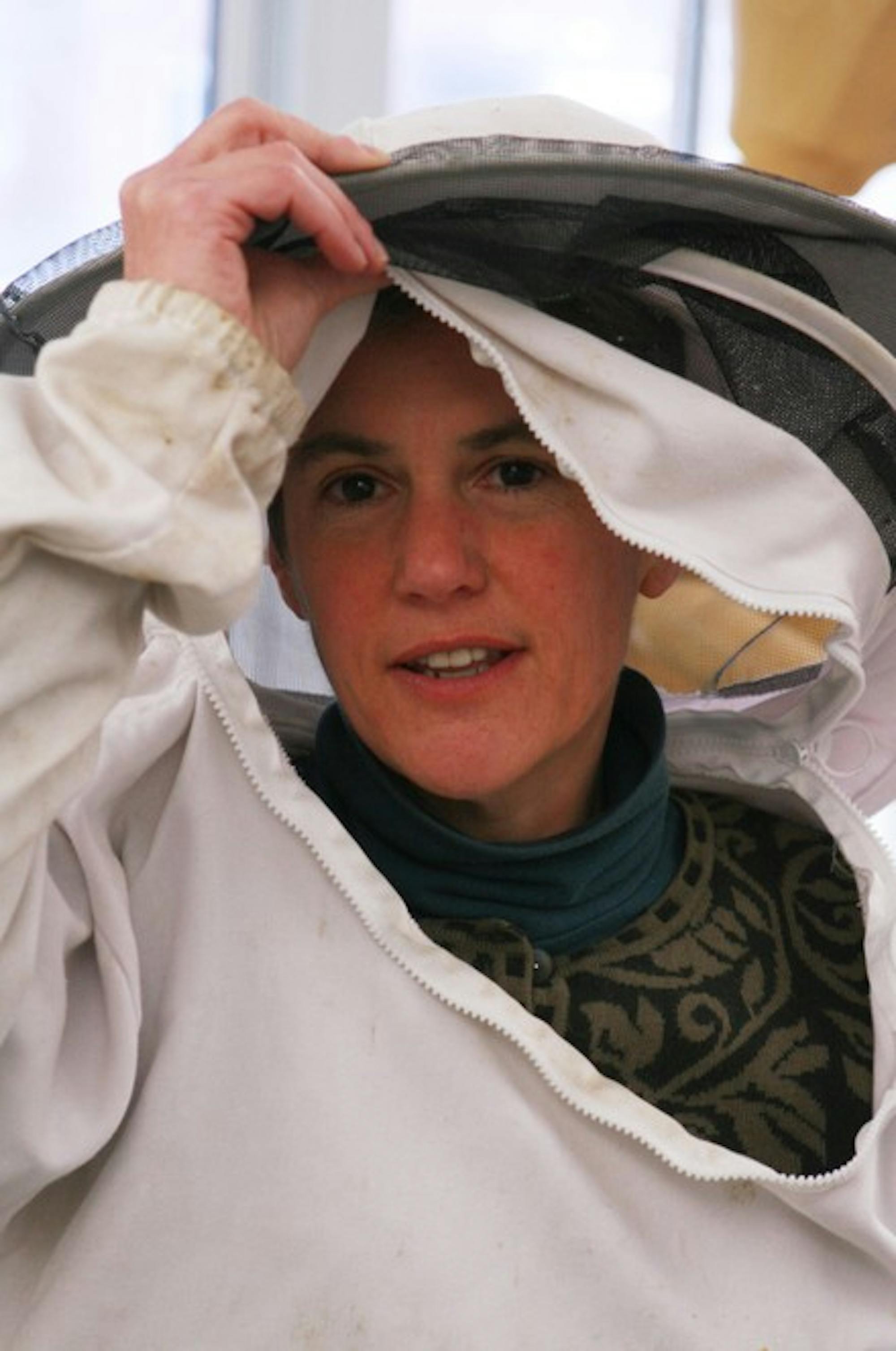
Loeb's main contribution to Cobb Hill has been her work with the community's beekeeping operation during the last four years. She was always intrigued by beekeeping and was excited to get involved upon her arrival at Cobb Hill.
Most of Loeb's work with the hives occurs during the spring and summer, when she and the four other beekeepers must keep the bees healthy to ensure the honey-making process. During the colder months, the job demands decrease significantly.
"In the winter, the bees hunker down," Loeb said. "I like to picture them knitting scarves and drinking hot cocoa, but they have to huddle together and help keep the queen's body temperature above 90 degrees."
When not working with the bees, Loeb's other tasks at Cobb Hill include weeding, working at the dairy farm and helping the farmers in the fields.
"The agriculture on the farm is community-supported," Loeb said. "Anybody can buy a share in it, so you get a basket every week that is fresh-picked. My family works off the cost of a basket by working on the farm in the summer."
Loeb has also had to herd escaped animals back into their pens, a job that can prove quite taxing because the farm's residents include sheep, chickens, turkeys, Norwegian fjord horses, Jersey cows and one faithful sheep-guarding llama named Effie.
One of the greatest challenges of beekeeping is trying to keep the bees alive, Loeb explained. She said that climate fluctuations are harmful to bee populations because warm weather encourages them to begin to fly but when cold temperatures return, the insects can freeze because they are no longer clustered together.
"Bees are so critical. They keep everything on the farm going - the flowers, the plants, the vegetables - but there are lots of things that are killing off bees in large numbers," she said.
With passion, Loeb recounted her favorite part of beekeeping, explaining that when the queen bee grows old or the hive becomes too crowded, tens of thousands of bees fly away together to find a new home.
"I remember the bees flew over the houses, and I was running as fast as I could, seeing where they would land, or I was climbing a tree where they had gotten stuck to put them in a box and bring them back to a hive," Loeb said. "It's quite dramatic and fun."
Loeb decided to move to Cobb Hill five and a half years ago when she learned about the development from a Dartmouth professor. At the time, Loeb - who has also lived in New York City for 15 years - was teaching at Stanford, and her family was ready for a change.
Loeb lives at Cobb Hill with her husband Tom Roberts, her children Annabelle, 13 and Paul, 11, her cat Mango and her gecko Pedro. She has worked on film projects that have been screened all over the world and have won numerous awards, including two Emmys.


