
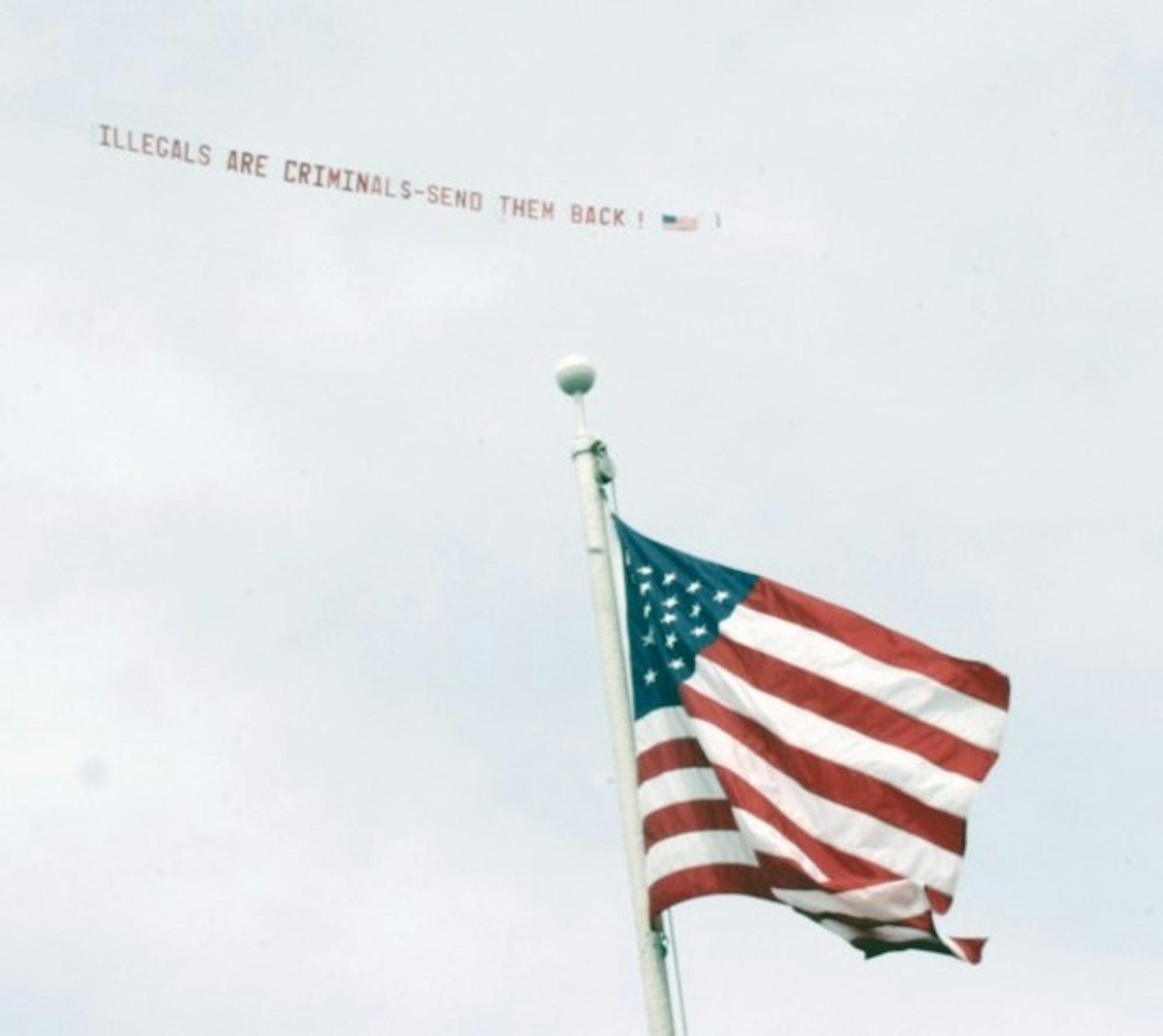
While the morning march, attended by 200 people, was relatively calm, the rally, disrupted by a plane towing an anti-illegal immigrant banner message, helped fuel the friction that evolved into hostility at the evening moderated discussion.
After daytime activities concluded, 150 students turned out for the discussion, resulting in the last-minute decision to relocate it from Rockefeller 2 to the more spacious 105 Dartmouth Hall.
In addition to the banner, anti-immigrant flyers and impassioned mass blitzes perhaps drove some students to attend who may have otherwise chosen not to.
The immigration supporters who marched, rallied and spoke throughout the day were just a few of the hundreds of thousands of immigrants and their supporters across the country who participated in demonstrations and economic boycotts aimed at demonstrating the impact of undocumented immigrants on the national economy.
HR 4437, also known as the Sensenbrenner Bill after its Wisconsin sponsor, Rep. James Sensenbrenner (R), was passed by the House of Representatives in December and has since sparked a national debate. The bill would make it a felony for the 11 million undocumented immigrants to remain in the United States, having social, cultural and economic repercussions.
The Dartmouth campus is a microcosm of the nationwide debate, with student viewpoints toward immigrants varying widely. Some students believe that leaders in Washington and other supporters of HR 4437 underestimate the massive economic contributions that undocumented immigrants make to this country and are hypocritical in the sense that they want the low prices which their low-cost labor provides, yet do not want them living in America.
Elizabeth Mendoza '08, a coordinator for the rally, urged those who do not support undocumented workers to "put [their] money where [their] mouths are" and stop eating the produce harvested by and meat packed by illegal immigrants. "In other words, don't eat, America," she said.
"Personally, I think it's a crime that we have 11 million undocumented workers that contribute $7 million to Social Security, $1.5 billion to Medicare and they receive no benefits," she said during her speech at the rally, referring to undocumented workers who pay into the Social Security system using fake numbers.
Others view the conflict from a human rights perspective and believe that people have the right to migrate and flee from poverty and oppression regardless of how much they will contribute to our national economy.
Many opponents, even those who sympathize with people living in impoverished conditions elsewhere, do not feel that it is the United States' job to take in everyone who seeks assistance, and advocate trying to do so legally.
A more common sentiment expressed has been one consistent with the United States' historical context as a nation of immigrants. At Dartmouth, a school with a legacy of educating Native Americans, many students view the predominately Caucasian proponents of HR 4437 as hypocrites because European Americans are immigrants themselves, even if they arrived on the Mayflower.
Ken Leslie, who operates a blog for Upper Valley residents and has lived with the area for 10 years, called the march "the largest protest [he has] seen in the Upper Valley." Despite the large turnout, participants had mixed responses about what the impact of their march and other similar demonstrations across America would be.
"It's hard to determine the impact; people say marching can't do anything, but if you look at the civil rights and women's movements, their marches were celebrated after -- no one asks permission to march," Tucker Dean Stuart Lord said.
Although ralliers for the most part exhibited accord, the issue of establishing a guest-worker program created a particular division among immigrant-supporters.
Visiting Latin American, Latino, and Caribbean Studies professor Rodolfo Suriano-Nuez advocated a guest worker program, arguing that it is the best solution for his home country, Mexico.
History professor Annelise Orleck, on the other hand, stressed that under that policy, guest workers would be given no rights and excluded from unions in what she called "legalized slavery."
Although students, even those who support immigration, often view themselves as isolated from the potential effects of HR 4437, if the bill were passed, it would dramatically impact undocumented students, including those who attend Dartmouth.
"I think a lot of people don't realize that their frat brother or sister, their classmate could be undocumented," said Tina Catalian '03, who helped run the event.
While the tone of the march was positive overall, as the day progressed, fervor erupted among both supporters and opponents of immigration.
When an airplane towing an American flag and banner reading "Illegals are criminals -- Send them back," came into view during the rally on the Green, the crowd erupted in a roar of boos. One observer shouted, "Shoot it!"
Some who gave speeches at the event directly addressed those who hired the plane, later revealed to be The Dartmouth Review.
"These xenophobes flying their planes around only prove they have money," Catalian said, reminding the students, faculty and community members gathered that their presence was more significant.
That Catalian reported receiving harsh comments from several of her peers while hanging up signs for the march attests to the presence of negative sentiment on campus toward immigration. Some of those students hung posters of their own, which many considered offensive.
"A number of the posters were not ours...they were not organizationally supported," said president of the College Republicans Rahul Sangwan '07 at the evening discussion.
College Republicans were asked about one particular poster which read "Remember when illegal meant illegal?" and displayed a family crossing a street, implying that cars would have to stop for fleeing Mexicans crossing the border.
"That poster was meant to be provocative, not offensive," Sangwan said.
While Sangwan claimed that he was merely trying to spark discussion and encourage people to attend the College Republicans meeting, others chastised him for doing so in a way that infuriated pro-immigration students and was disrespectful.
Thiago Olivera '06 and Sangwan sent warring mass BiltzMail messages to many students Monday afternoon that debated the issue, which spilled over into the evening's discussion.
Although the first 30 minutes of the evening discussion consisted of geography professor Richard Wright and anthropology professor Lourdes Gutierrez-Najera calmly answering student questions, after one student directly confronted the College Republicans for their sensationalist tactics, the audience erupted and many students verbally attacked each other.
Wright, who expressed frustration toward students who continued to stereotype groups well into the second hour of the debate, advised against using the word "illegal immigrant," as he felt that it targeted Latinos as a racial stereotype and failed to address a diverse group of people who realistically comprise undocumented immigrants. He noted that about half of the undocumented immigrants in this country's visas have expired and that they are not the border-jumping Mexican stereotype.


