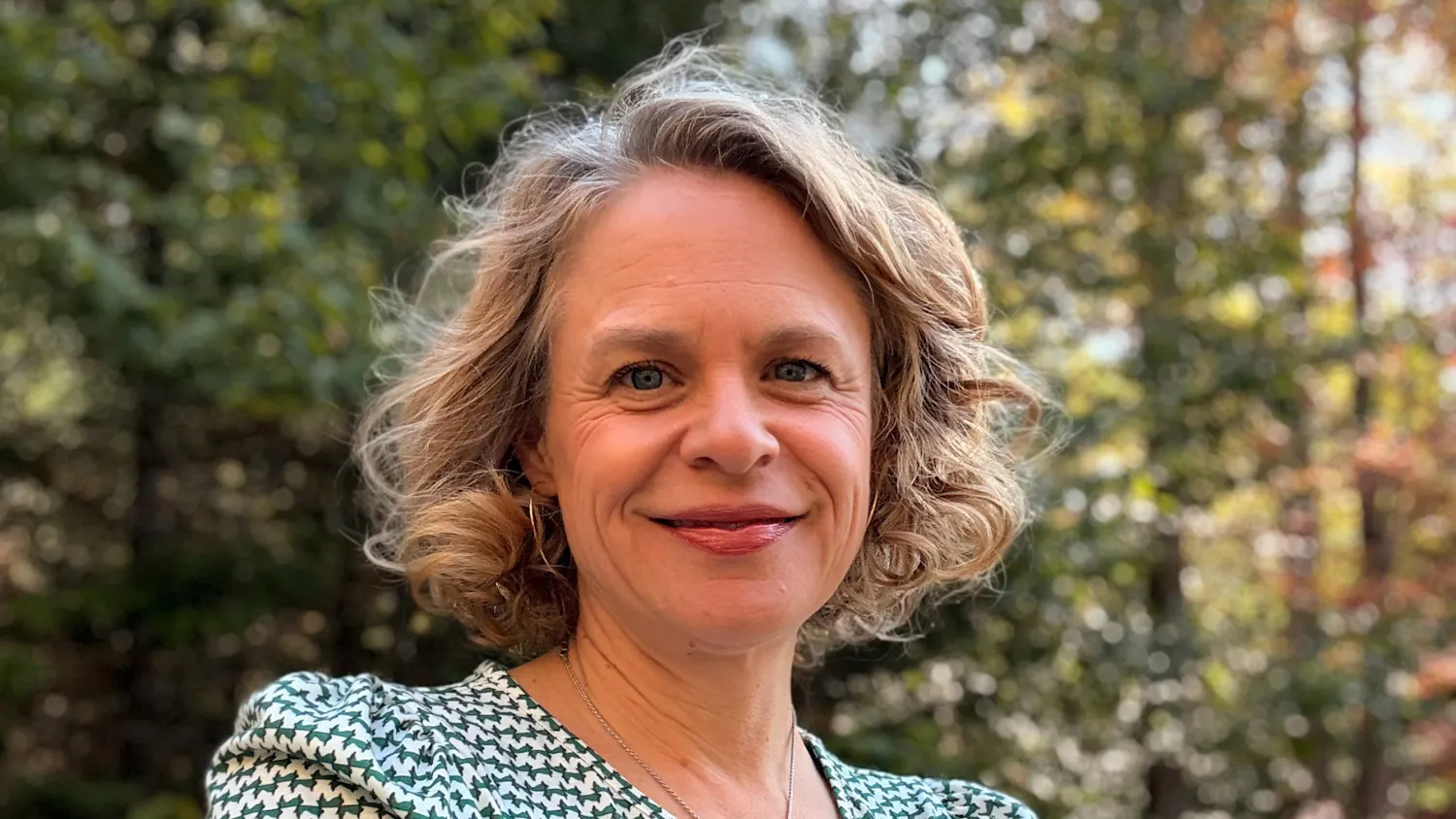
Wynona Ward, an attorney from Chelsea Vt. and founder of "Have Justice -- Will Travel," shared the multi-service model she designed for helping battered women through the legal system in Vermont and spoke about her own experience as a victim and witness of domestic abuse, in a speech yesterday afternoon.
Ward addressed over 70 students, faculty and community members in Rockefeller 2 as part of the Gender & Justice Series sponsored by the Dartmouth Lawyer's Association and the Women's Studies Institute for Women and Social Change.
In recognition of Vermont's rural landscape, where victims of domestic abuse often live on "isolated back roads," Ward has brought her legal practice into the homes of 38 women since the founding of "Have Justice -- Will Travel" two years ago. Setting out in her 1996 Ford Explorer, equipped with a cell phone, CB radio, laptop computer and printer, Ward said she meets her clients "in their own kitchens." In this setting, Ward's clients are much more comfortable than they would be in a stuffy law office, she said.
"Have Justice -- Will Travel" is a "holistic, multi-service approach to helping clients," Ward said. The service she provides does not stop at home legal consultations. Ward transports her clients to social service appointments and court dates, and even helps them apply for mortgages, subsidized housing, and driver's licenses, she added.
Ward said she is able to connect with her clients on a very personal level because she grew up in a home where wife-battering and childhood abuse were common and accepted events.
"In my work I am able to say to Vermont women, I have been where you are. I got out. Come walk with me. Not only will I help you legally to get out, but I will help you become a strong and independent woman for yourself, for your children and eventually for your children's children," she said.
Ward's father followed a pattern of committing domestic violence that was repeated for five generations within her family, Ward said. She shared a true story she wrote about an incident of physical abuse that occurred in her own rural Vermont home when she was six-years-old. She emphasized to a visibly shaken audience that domestic abuse is a community-wide problem and that it often goes unreported by others.
"When neighbors heard screaming from our house, they turned their heads, and frankly, when we heard screaming from their homes, we did the same," Ward said, adding that in the 1950s there was no help available to her mother and her mother's children.
Ward showed the audience a clip from the Lifetime Television network profiling her life and work. The segment reported that Ward's decision to leave her life as a truck driver and return to Vermont came after her brother was accused of sexual abuse. Ward recognized the cyclical nature of abusive behavior and came back to the area in order to be an advocate for the victim of her brother's abuse. She later put herself through college and law school.
Indeed, Ward's motivation for starting "Have Justice -- Will Travel" was stopping what she calls the generational cycle of domestic abuse. She went into the law profession, "to help victims of domestic violence become survivors," and end children's exposure to such violence. Her ultimate goal is to see "children learn that it is not okay for daddy to hit mommy," she said.
Violence in schools and violence that occurs on the streets has roots in domestic violence, adding to the importance of ending this cycle, Ward emphasized.
Ward shared many facts about the prevalence and pattern of domestic abuse in the United States. She claimed that between 90 and 95 percent of victims of domestic abuse are women and that a woman is beaten by her male partner every 15 seconds. Ward reported that boys who witness family violence are more likely to batter their female partners as adults and girls who witness abuse are more likely to be victims of abuse as adults.
Ward outlined some of the obstacles to receiving help that battered women face. She said that the legal definition of abuse places emphasis on physical abuse, abuse that can be seen in a court room, while victims' advocates add to the definition of abuse a pattern of coercive behavior used by one to gain power and control over another.
This power and control exerted by the abuser involves isolating the victim from her support network, threatening the victim with the potential loss of her children if she chooses to leave and placing economic restrictions on the victim that make her more dependent on the abuser, Ward reported.
Ward addressed the question of why a woman stays with her batterer. She first stressed that the question is part of a pattern of victim-blame and said responsibility should be put on the batterer. Abusers often promise to change and victims frequently suffer from low self-esteem, self-blame, depression, learned helplessness and post-traumatic stress disorder, Ward said.
In addition, social and economic reasons and uncertainty about the well-being of her children prevent a woman from coming forward. The legal process of obtaining a "relief from abuse order" involves many steps which can be frightening and intimidating to a victim, according to Ward. In addition, 50 percent of defendants violate such orders, Ward said.
Ward told the audience that she believes that her model of legal advocacy could be repeated across the country. She said that many victim advocacy groups, like Safeline, a domestic abuse hotline created in the 1970s, are started by friends of domestic abuse victims or victims themselves.
"Once women get away from abuse, they grow and blossom and want others to do the same," Ward said. She remains dedicated to her mission and has many plans for her practice's future growth.
"I will keep working until no child has to cry out, 'Please Daddy, don't hurt Mama no more,'" Ward concluded, referring back to her own words as a terrified six-year-old witnessing domestic abuse.