
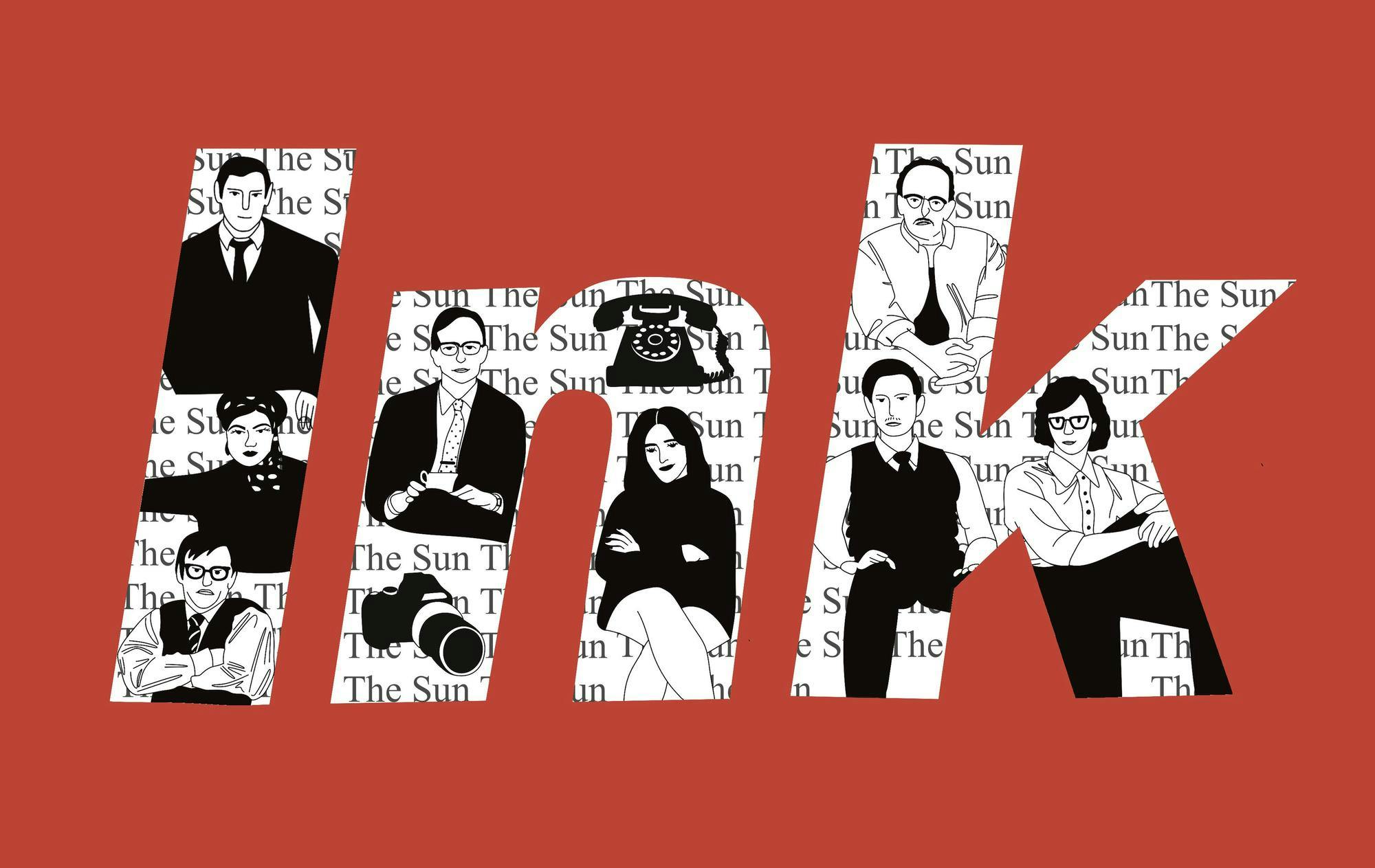
Before the algorithm in our internet age, there was The Sun. In 1969, then-CEO of News International Rupert Murdoch bought the struggling British newspaper and hired Larry Lamb as editor, setting out to build a populist kind of tabloid journalism that could provide accessible entertainment. This transformation formed the basis of James Graham’s 2017 Olivier-and-Tony-nominated stage play “Ink,” which documents the process through which Murdoch and Lamb reshaped the paper and the British media landscape at large. Directed by Danny Boyle, Graham has now adapted his own play for the screen with the 2026 film of the same name. After debuting as the opening film at the Venice International Film Festival in September, “Ink” was featured at the Telluride Film Festival a few days later. On Sept. 19, the film was screened by the Hopkins Center for the Arts as part of Telluride at Dartmouth.
“Ink” begins with Lamb (Jack O’Connell) gathering a group of misfits for the new version of the paper who go on to create something no one else has had the nerve to do: Give the people what they want, including sports, sex, scandals and crime. As the paper’s success grows, so does the chaos around it. Parties, debauchery and an increasingly reckless newsroom culture go hand-in-hand with the driving ethos of using sensationalism to win readership.
The energy of this progression bears comparison to “The Wolf of Wall Street.” In both films, the portrayed thrill and excitement of success sometimes threatens to overshadow the underlying moral critique. Part of the beauty and thematic complexity of “Ink,” however, is that it does not only revolve around this main story.
Instead, underneath the story of the paper runs a darker subplot around the kidnapping and killing of Muriel McKay, the wife of Murdoch’s deputy Alick McKay, whom the kidnappers mistook for Anna Murdoch and held for ransom. The plot has strong echoes of Kurosawa’s 1963 film “High and Low,” especially in its exploration of the moral cost of ambition. In both films, powerful men are forced to navigate a crisis in which the family of a subordinate or associate faces fatal consequences because of their wealth and public prominence.
This plot point, however, is abruptly subsumed by the main one. The kidnapping is forgotten disconcertingly quickly and becomes just another story for Lamb to exploit. The suddenness of the transition seems to be the point. In the world of The Sun, real people’s tragedies become fodder for other people’s perhaps schadenfreudian entertainment and the newspaper’s success. Accordingly, the film doesn’t allow audiences to merely indulge in the fun.
The film’s cinematography, which is very Boyle, cleverly parallels the story by embracing the same logic of excess that drives The Sun. When telling the team his vision for the paper, Lamb discusses slanting the newspaper’s typography to make it more eye-catching. Boyle takes that idea from the page into the film itself. His frequent use of slanted camera angles alongside bright, overwhelming colors, rapid transitions and loud editing creates the same heady, attention-grabbing spectacle that can make a viewer feel almost dizzy. Still, there’s an irony to this strategy that arguably adds to the sophistication of the film. “Ink” criticizes the paper for turning journalism into raw entertainment while using the same visual language to keep us watching.
In tracing the newspaper’s contradictory attitudes towards women and feminism, “Ink” reveals some of its hypocrisies. When the goal morphs into pure sensation and profit, all ideals of equality seem to go out the door. Initially, the women’s page editor Jules Davies (Claire Foy), who participates freely in discussions at the paper, resists the era’s conservative gender norms by arguing that women also want to read about sex.
This apparent liberalism, however, seems shamelessly sidelined when the paper’s increasing ruthlessness culminates in the model Stefanie Khan’s famous naked Page Three photograph — an unprecedented, shocking moment of boundary-crossing in Nov. 1970 that enraged even Murdoch. The same newspaper that presented itself as willing to give women a voice becomes guilty of commodifying a woman’s body to sell more copies.
“Ink” ends with cuts to contemporary media: Trump’s tweets, fake news and misinformation, the manosphere and archival videos of alt-right influencer and alleged sex trafficker Andrew Tate. While the film clearly seems to want to connect The Sun to these contemporary developments, the connection is not very convincing — no explanation is really given, and the jump feels too straightforward.
Nonetheless, one connection that could be inferred concerns the question of where one draws the line, ethically speaking. In the film, then-editor-in-chief of The Daily Mirror Hugh Cudlipp accuses the willingness of “The Sun” to weaponize scandals of a moral breach. He explains to Lamb that journalists had always known that scandal sells papers; at most mainstream outlets, though, they simply chose not to cross certain lines.
Lamb’s philosophy — “give the people what they want” — defies both the logic and boundary of those traditional lines. If achieving this goal of profit means taking advantage of a murder, objectifying women’s bodies and dumbing people down with entertainment and distraction, who or what decides where the line is?
Today, people support Donald Trump. Tate has millions of followers. But does popularity make the media they produce moral? If that is what the people want, what should be said about misinformation, misogyny or incitement to hate? The film does not answer these questions, but its final images leave us with them.


