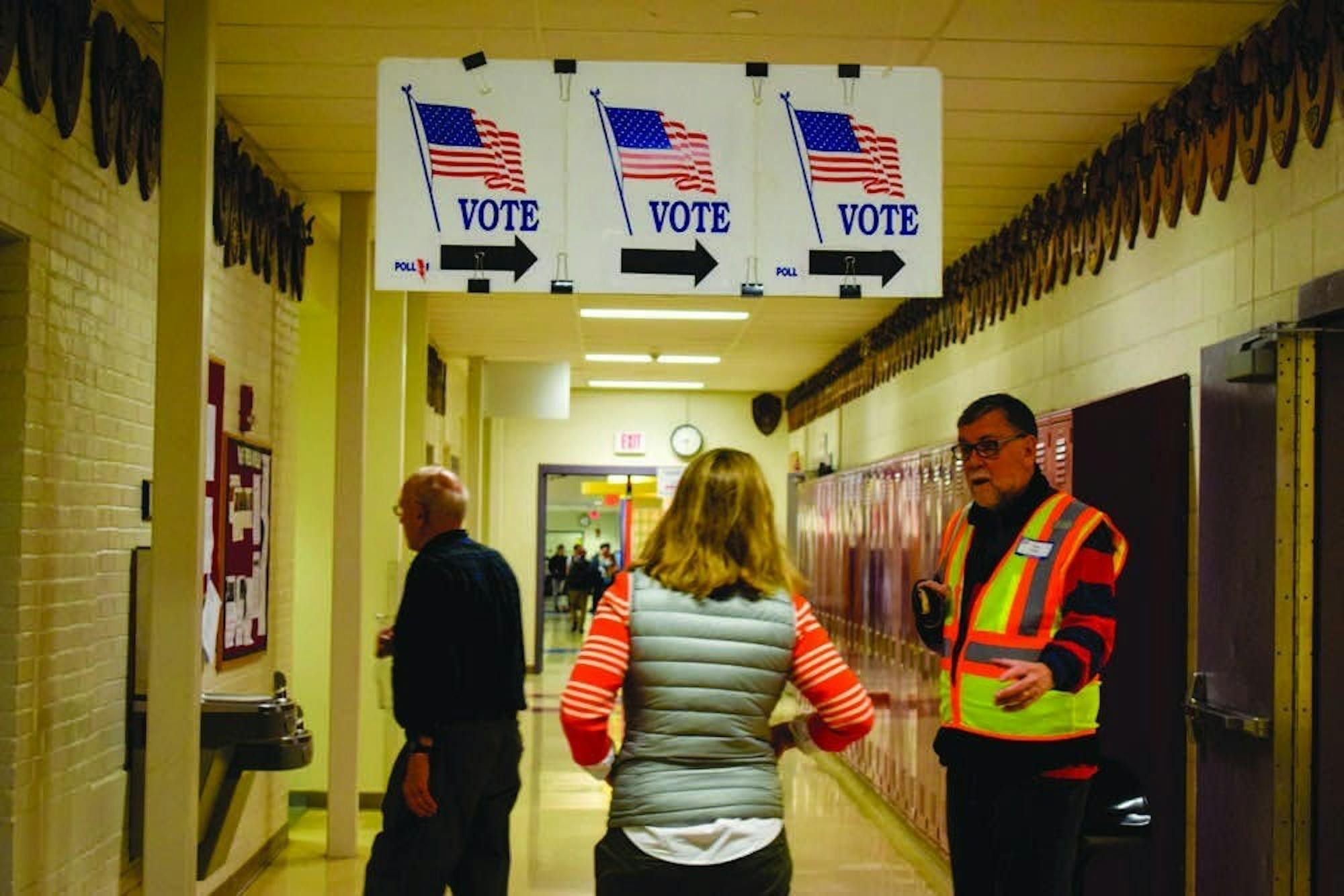
On July 24, the Democratic National Committee’s Rules and Bylaws Committee voted to hold the first presidential primary for the 2028 election in South Carolina, rebuking the 106-year-old tradition of New Hampshire hosting the nation’s first Democratic presidential primary election. The committee’s decision is part of a broader effort to shift focus to a state that more closely reflects the party’s racially diverse electorate. New Hampshire was voted to be the third primary after South Carolina and Nevada, according to a July 24 press release from the DNC.
The new DNC calendar conflicts with a New Hampshire state law, signed in 1979, which dictates that New Hampshire must hold its presidential primary at least seven days before any similar election in another state. Regardless of a political party’s official recognition, the New Hampshire secretary of state is required to schedule the primary before other states.
N.H. State Rep. and chair of the State House Election Law Committee Ross Berry, R-Hillsborough, said that the first-in-the-nation law may not “have the power people give it,” citing a 2000 court case in which the Supreme Court ruled that the government cannot control how private political parties select nominees.
“The state can provide a method of nomination for the parties,” Berry said. “The parties don’t have to use it.”
New Hampshire Secretary of State David Scanlan said that he will wait to set a date for the New Hampshire presidential primary until he is “confident” the national calendar is set, but that both the Democratic and Republican primary “will be held on the same day.”
“We will fight back, and we’ll follow the law and the tradition, and I expect we’ll be successful,” Scanlan said.
Scanlan added that the state should continue its role as the first-in-the-nation primary because it “has always stood for the people.” In the past, New Hampshire voters have “frustrated the elites” in the democratic party with their decisions in the first presidential primary by favoring “candidates that the party elites did not want to see as the nominee,” such as Sen. Bernie Sanders D-Vt., and former Sen. Paul Tsongas D-Ma. “The process we’re going through right now is all about parties controlling the nominating process,” Scanlan said.
Berry added that one response to the DNC that may be “worth exploring” would be to hold separate primaries for Democrats and Republicans. However, he expects that solution would “get a lot of pushback” because local elections officials would have to “set up basically two elections,” he said.
Dartmouth writing program lecturer and N.H. State Rep. Ellen Rockmore, D-Hanover, said that although the first-in-the-nation law exists, the state “has no ability to bind the DNC” and that the primary will depend on the candidates.
“I think the real test is just to wait and see what the candidates are going to do,” she added. “Are the candidates going to come to New Hampshire the way they once did, or are the candidates going to be so busy touring South Carolina that they don’t make it to New Hampshire?”
Government professor and State Rep. Russell Muirhead, D-Hanover, said that Democratic presidential nominees “are stronger” if they go through New Hampshire and “pass the ‘living room test,’” referring to the state’s tradition of intimate face-to-face campaigning with voters prior to competing on the national stage.
“Most states can’t really offer candidates a good ‘living room test’ because they’re too large, and their primaries basically take place in large media markets through advertising,” Muirhead explained. Furthermore, lesser-known candidates “have a lot to gain” in New Hampshire, partly because it’s “inexpensive to campaign in.”
“They just have to come in the top three” in New Hampshire to be competitive nationally?, he said. “They’ll get a lot of free media and a lot of attention, and that will create momentum that helps them in later larger states.”
Rockmore said that the “main benefit” of having the first primary in the nation is that it allows residents to be “a really important part” of choosing candidates.
“I think it does contribute to our culture of political engagement. New Hampshire is a state with pretty high voter turnout, and I think that’s in large part because we feel we played a special role in American politics,” Rockmore said.
Rockmore said that she “hope[s]” the primary being taken away is a “wake-up call” to the state to not “be left behind” or seen as “an aging, irrelevant state.”
“Democrats have been saying for a long time here in New Hampshire, ‘We need to fix the things that are preventing young people from moving into our state,’” she said. “We need better housing. We need better daycare. We need to be strengthening our public schools.”
Eliza Dorton '29 is a reporter from Washington, D.C. and is studying English and public policy. Outside the classroom, she enjoys reading and going on walks.