
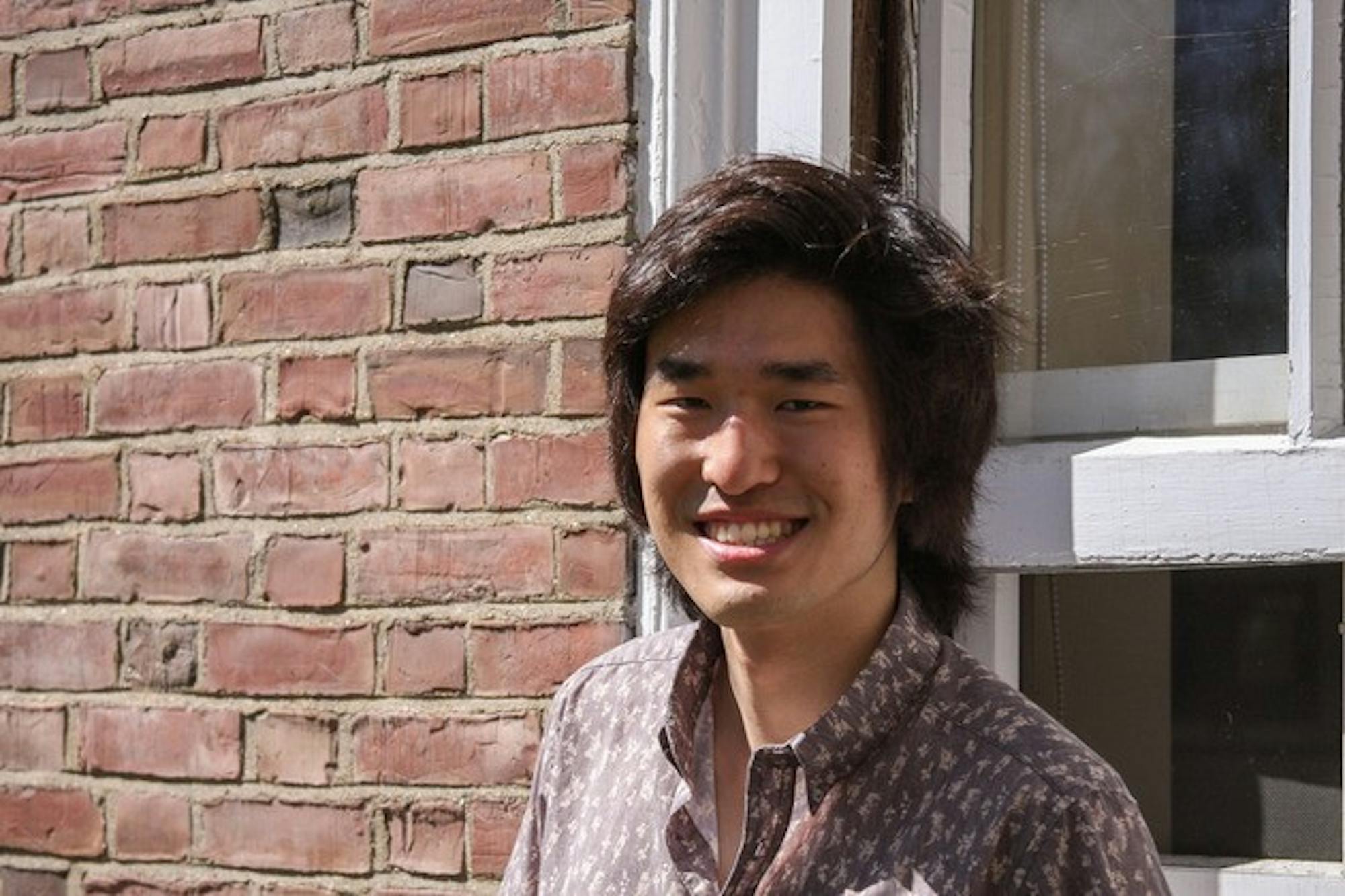
It didn't take long for me to realize that there was no such thing as the "real Dartmouth" either. A Dartmouth Dining Service employee's life seemed to have little in common with that of a fraternity bro; computer science majors lock themselves up half-underground in Sudikoff Hall while studio art majors get inspired in the Black Family Visual Arts Center. And needless to say, a rape survivor's Dartmouth is poles apart from a rapist's Dartmouth. Everyone has their own Dartmouth, and no Dartmouth is more "real" than others'.
My Dartmouth is as unique as everyone else's, but in a quite unusual way. I am not particularly "social" here. The set of rituals required to be "social" seemed very strange and foreign to me. I am from South Korea, where a student's job is, surprisingly, to study. Friday is just another day before Saturday and on Saturdays we have classes. I do not believe there is a Korean expression for "hanging out." I found it bizarre that my friends here felt the sacred duty to be out on Friday nights. Fraternity culture did not strike me as beautiful, and I never found pong fun or a good way to consume alcohol. This is not to say that all Koreans are like me, but many of us who come to Dartmouth straight from Korean high schools, or the so-called "FOBs," do feel this way.
As a result, I hardly went out and stayed unaffiliated. I knew I was missing out. But I did not want to be what I was not in order to be part of something that I did not really enjoy. On weekends, I jammed with my band, the Shas, went to movies and concerts at the Hop, chatted with a handful of my friends over a bottle of beer (literally, as I am a notorious lightweight) or Skyped my girlfriend in Korea. Naturally, I felt alienated from the Dartmouth social scene.
For the first time in my life, I was an outsider. But an outsider also has the most time to observe, philosophize and criticize. The most fundamental question in my mind was: Why did I come all the way here for a college education? What was so great about Dartmouth and America that made me leave my family and friends back home? The most obvious answer was that the U.S. is the most powerful country in the world, and it was very reasonable for me to attend one of the most prestigious schools in the country. The English language is power, and so is the Dartmouth diploma.
But why is the U.S. the most powerful country at all? If I were born in Korea 100 years ago, I would have applied to a university in Tokyo; 200 years ago, I would have gone to Beijing. Of course, my history classes have offered me many convincing explanations as to how the U.S. became so powerful. But military budgets, nuclear arsenals and a liberal-capitalist world order did not satisfy me. I wanted to be sure that I came to America not just because it possessed the greatest amount of wealth and capacity for mass destruction. I wanted to convince myself that I came to Dartmouth for something more than the diploma and a six-figure salary.
And, fortunately, I got the answer I wanted during my last term here at Dartmouth. The series of events that followed the protest against the Dimensions show, for me, proved the greatness of Dartmouth and America. One may think this ironic. Didn't the protesters declare that "Dartmouth has a problem"? Didn't the hateful comments on Bored at Baker reveal the ugliest side of Dartmouth?
Of course Dartmouth has a problem. But what matters is how the community deals with a problem, or whether it deals with it at all. And Dartmouth has shown some admirable reactions to the problems it faces. People cared. People spoke, wrote, cried and tried. Hundreds voluntarily came to the speeches and teach-ins last Wednesday to share their opinions. Students and faculties of all color, class, creed and culture gathered together to fix the community. The administration provided the environment in which discussions could take place. The newspapers reported, and people agreed and disagreed. In short, I saw American democracy at work.
Witnessing all this, I came to understand how such a vast, diverse country like the U.S. can still be one country. I finally felt the existence of the "Dartmouth community" which I had thought was purely imaginary. I realized how it was possible for an outsider like me to still feel part of the campus. It made sense how so many Korean immigrants, including some of my relatives, could find themselves at home in the States. If there was anything worth calling the "real Dartmouth" or the "real America," it is a culture of self-criticism, awareness and progress that keeps things from falling apart. On the soil of careful thoughts and concerns, love seemed to blossom. As a Dartmouth student, I was proud. As a non-American, I was envious.
The most amazing thing about Dartmouth for me is that I have emerged out of it a very different person than I used to be, although I hardly took an active part in it. To be honest, I came to Dartmouth a homophobe, a sexist and an ultra-nationalist. But three years of listening, observing and reflecting at Dartmouth set me free from such bigotry. I don't think I made much of an impact at Dartmouth, but surely Dartmouth has changed me a lot, hopefully for the better. To the voices of Dartmouth that kept me questioning myself Vox Clamantis in Deserto I am deeply grateful. This is my Dartmouth, and my America.


