
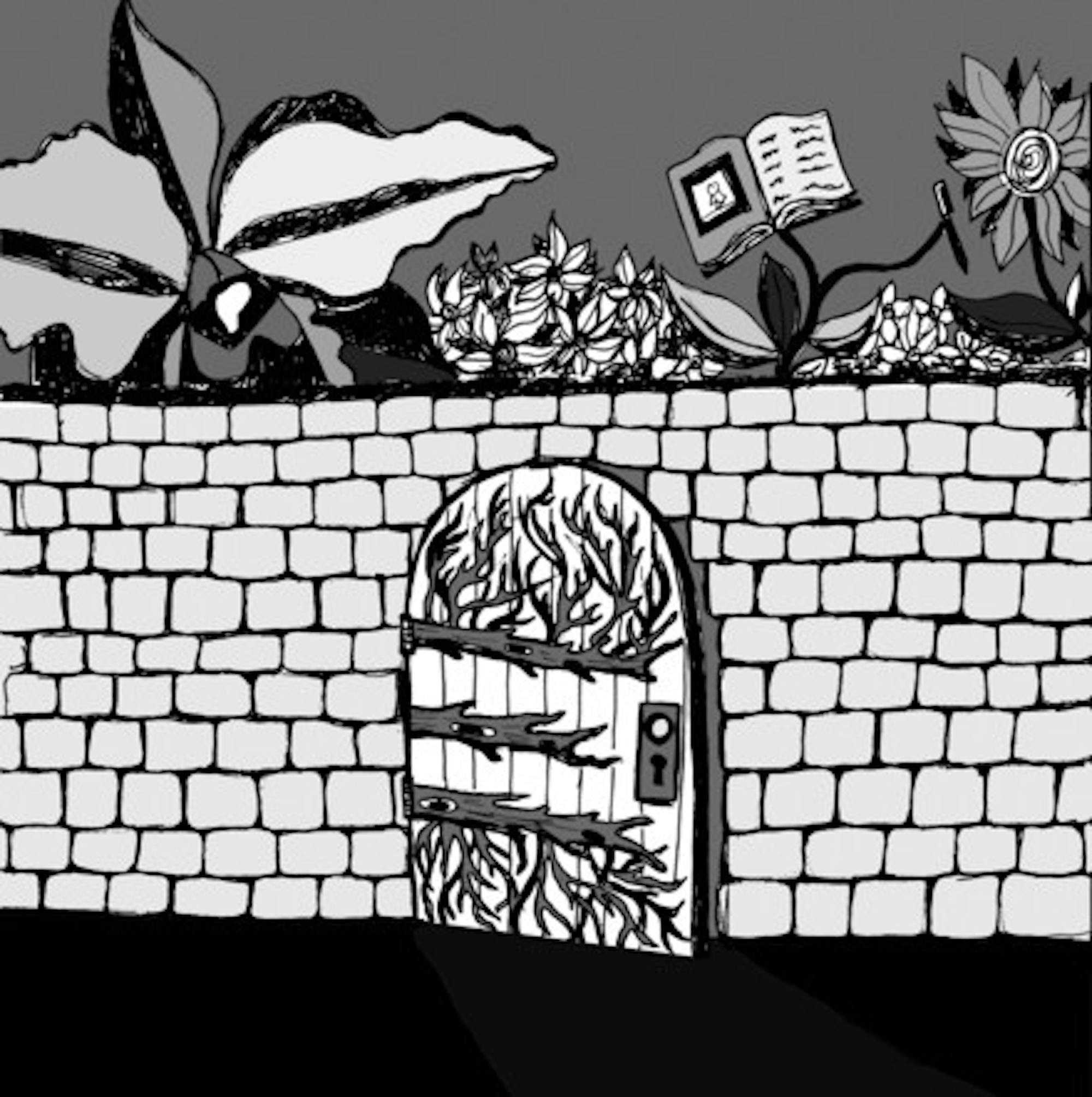
Many Dartmouth students have headed outside to bask in the newfound May sun. Whether students don them out on the Green on beach towels, or while sitting on a bench enjoying lunch, shorts, tank tops and flip flops have finally made a comeback. Although the sun is now out and the cold dark days of winter are a fast fading memory, there is one place on campus that has been green and sunny for the last 365 days. It is a little known fact that the greenhouse complex at the top of the center is open to the public. Despite having class there last term, it never once occurred to me to wander up to the fourth floor until my friend suggested it. I had given the greenhouse crowning the Life Sciences Center but a passing glance, as I had assumed that it was part of a lab and most certainly would be closed to public access. As you step off of the elevator and into the warm, balmy entrance, several tables are splayed out as a study and lunch space. Compared to the dreary stacks of Baker-Berry or the cubicle-like desks of Kresge, I can say that this verdant setting was a much welcome change, especially in late winter. No longer was I surrounded by ancient, dusty, almost-never-checked-out books, but by plants and flowers from all over the world, living and growing in one room. The tables were adorned with exotic orchids, so ornate that perhaps they served a bigger distraction than anything while studying in the space.
Moving deeper into the greenhouse, away from the lunch and study area, there are rooms that represent various biomes of the world. Breathing in the warm, organic air, it was as though I had been teleported to another hemisphere. I found the tropical and desert rooms to be particularly welcoming places after my walk in 10 degree weather. Although the greenhouse is confined to the roof of the Life Sciences Center, I found the variety in the mini biomes to rival the quality of all the larger conservatories that I have visited. My favorite object may have been a small tree in the tropical room, which would curl up upon being touched, like something out of a science-fiction movie. Those of you with backgrounds in biology will know that this is actually a defense mechanism to protect turgor pressure in the plant.
Another interesting room houses most of Dartmouth's Brout Orchid Collection of nearly 1,000 individual plants collected over 30 years by Alan Brout '51. Although I am no expert on orchids, the variety is astounding. Sprouting from every niche on the wall, hanging from baskets overhead and planted in pots of all sizes, the orchids dominate the space. An automated misting system keeps the room extremely humid and thoroughly tropical feeling.
Admittedly, about half of the greenhouse is closed to the public for science experiments. Nevertheless, this still leaves a large amount of space and rooms open to the public. What is perhaps the biggest shame is that the vast majority of students on campus do not seem to be aware of the greenhouse. So next time you are feeling sick of the cloudy or cold weather and wish you had chosen to go south for college, swing by the Life Sciences Greenhouse. The change in atmosphere is well worth the trek.


