
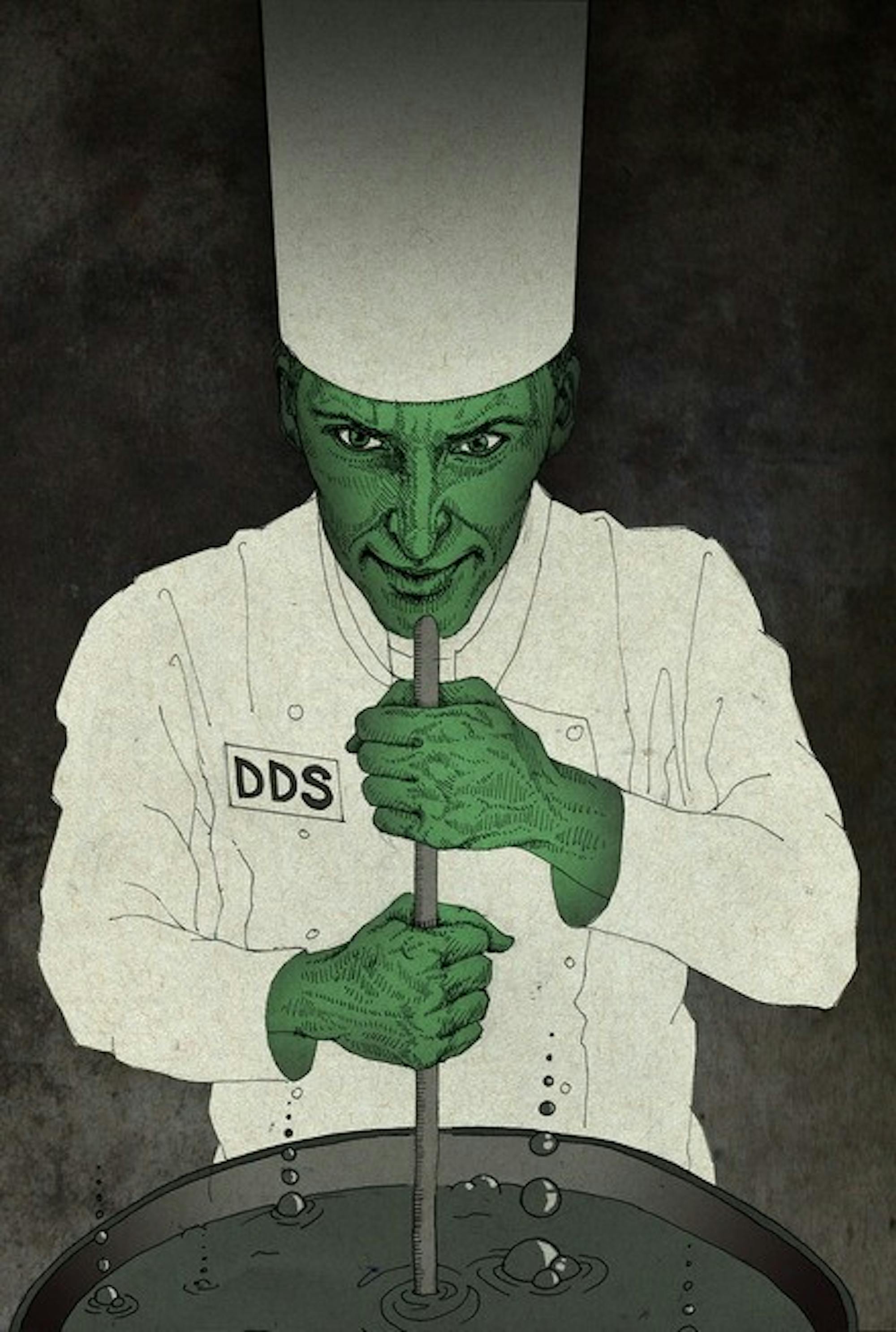
A jarring crash disrupts my reverie. As I reorient myself, I figure that another ungainly student has tripped up the Class of 1953 Commons stairs and fallen, food splattered everywhere like blood at a crime scene. I slowly open my eyes to an even more unfortunate sight. A plate of overcooked penne lathered in marinara sauce sits before me, taunting me with its sheer banality. I am not home anymore.
Food at Dartmouth is abysmal. The instant I step into a dining hall, I lose my appetite thank goodness for KAF, my only solace. Everything else, both the ambience and food itself, is so bland, so industrial, so sterile. Fine dining is an experience, an experience Dartmouth Dining Services fails to foster. In turn, we students entirely forgo the satiating experience of eating, often dining quickly in between events or alone while working. However, to live well, we must eat well.
I was asked what the greatest impediment to my learning experience at Dartmouth is. Without a moment's hesitation, I answered "The terrible food." Think about it. A lack of nutritious food affects every aspect of our lives. We lose the energy and high-functioning mental capacity necessary to survive the rigors of life at Dartmouth. Our immune systems are compromised, we fall sick easily and we are constantly fatigued, contributing to a vicious cycle of missed class and compounded stress. Salubrious food is central to our daily health and happiness and should never be sidelined or underestimated.
Research suggests that eating seasonal, locally grown food each day keeps the doctor away. Yet frozen produce dominates the shelves at Dartmouth. Much like winter weather, the vegetables show signs of frost; wilted salad and canned fruit are simply inedible. For vegetarians, eating well is even more taxing. DDS serves various kinds of meat, though unappealing in texture and appearance, for sustenance and protein. However, only one kind of tofu raw, soft and mushy is available. Additional vessels of protein do not help much: beans are uncooked, nuts are common allergens and excessive dairy gets to you. Because the only diet DDS satisfies is carb-rich, students' plates or to-go boxes feature one hue: the golden brown glow of pasta or bread.
A fitting, sadly all-too-familiar query came up in a game of "Would You Rather?" with my sorority sisters last week: "Would you rather eat the same meal every single day for the rest of your life or lose your ability to taste?" Woefully, my peers and I live both extremes. Not only do I eat the same, unpalatable food each day, but it has absolutely no taste. I am forced to douse every plate, from the narrow range of salad to pasta, with pounds of crushed red pepper, dried herbs and garlic powder. We students often eat the food we are offered because we have to, not because we enjoy it.
It is not even worth delving into the College's egregious swindling of students in terms of meal plan choices and the price value per meal; those valid criticisms already blanket the pages of The Dartmouth. Nevertheless, I can eat a substantially better meal off campus for less than the price of a meal swipe. The dining system is foul and twisted, so much so that student groups advertise free catered dinners, in block letters and adorned with special characters, as the main incentive for attending their events.
Embracing sustainability, serving local food and preparing a variety of nutrient-rich foods are non-negotiable practices that DDS must adopt. DDS should appropriate funds to import fresh food during winter months, broaden vegetarian options and accommodate students with special health needs. Greater access to nutritionists and the construction of healthy diet plans would be beneficial. Dartmouth has no excuses: food is the essence of culture, of living and must be honored as such.
