
OLE is an outdoors program for middle and high school students from Mascoma, founded to instill valuable leadership skills and strong community values at a young age. The weekly adventures with my fellow mentors and our OLE group have been some of my fondest memories of Dartmouth thus far, and I look forward to continuing my involvement in the OLE program for years to come. As a mentor, it is my job to teach these kids many important life lessons, imparting all of the infinite wisdom that an 18-year-old like myself has to offer. Yet in reality, the kids of Mascoma Middle School have taught me more about life than I could ever have taught them.
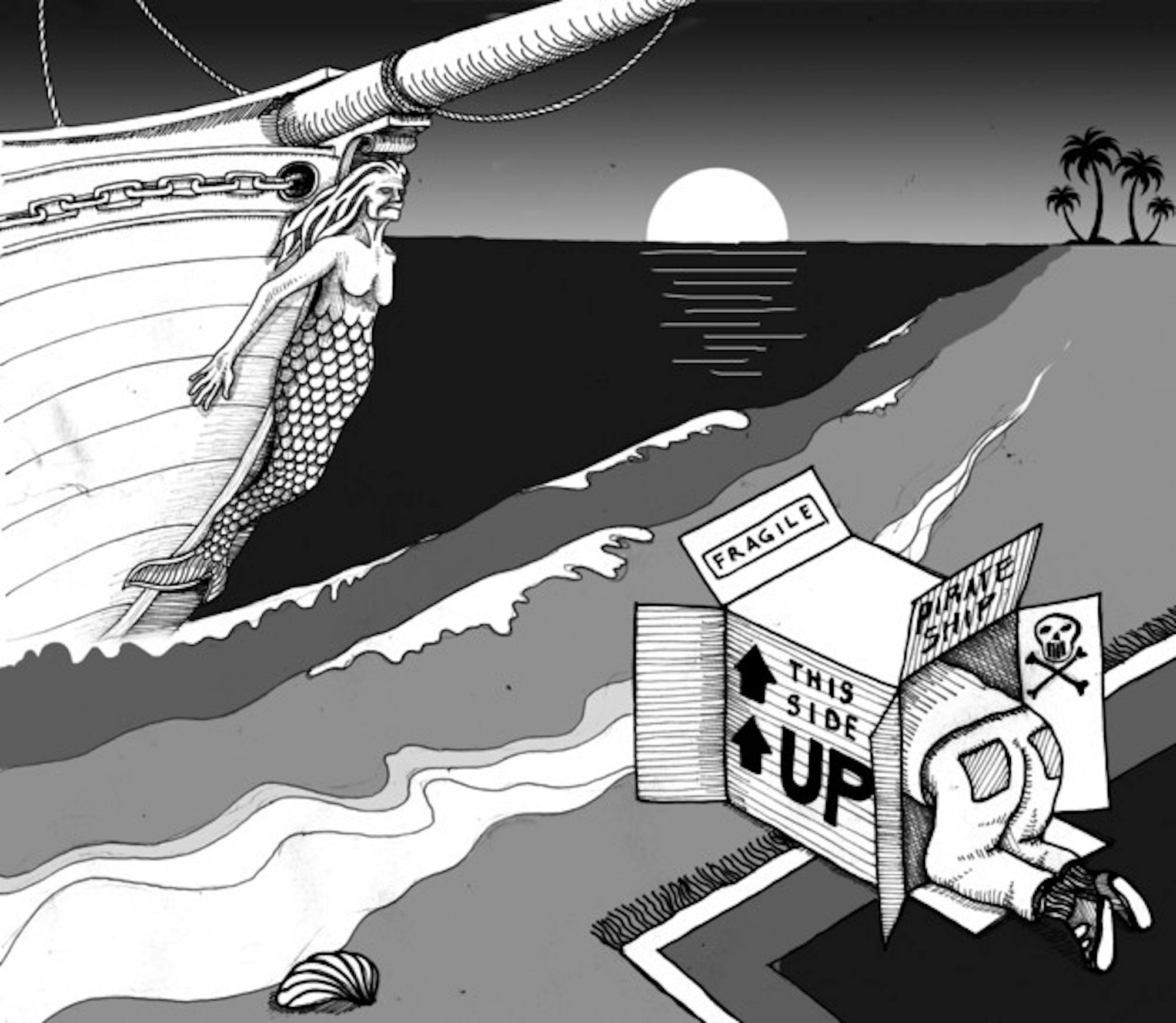
Human psychological maturity can be defined as the ability to respond to the environment in an appropriate manner. Maturity is a learned trait it is not instinctive, nor is it determined by one's age. It encompasses awareness of time, place and culture and knowing how to act appropriately in the context of each. Yet in the short time that we have here on Earth, who is to say what is appropriate and what is not? In a lifespan that already has an unavoidable limit, it does not make sense to add further inhibitions. Children, on the other hand, lack these inhibitions. I have watched kids turn cardboard boxes into pirate ships and water bottles into U.F.O's they allow their imaginations to run free, unfettered by the constraints of reality. It is not that children are more imaginative than adults; instead, children are not embarrassed to utilize the full breadth of imagination's power.
As infants, we are also born with an innate, all-encompassing trust of people. This is not because we want to, nor because we do not know any better, but because we are forced to rely on others for survival. Ultimately, independence kicks in; increased self-reliance leads to increased skepticism and decreased willingness to put our love and our lives in someone else's hands. Through disappointment and heartbreak, we come to believe that we should not allow ourselves to trust others because we are fearful of getting hurt. But in reality, that is no way to live life. While a child's trust in mankind seems juvenile at first glance, it is truly a unique and ephemeral phenomenon. When children look at people, they see people, not race, not class, not culture. They are uninfluenced by modern stereotypes, less prejudiced and more open-minded about making judgments due to their relative inexperience in the world. The bond of complete trust is one of the strongest human connections there is, and it is something that adults gradually come to believe does not exist.
Now, I am not arguing that we should all remain nave and simply believe everything that we are told, because believe it or not, there are also plenty of things that adults can do better than kids. However, there is much perspective to be gained from having a conversation with two Mascoma middle school students about a giant sand castle they built during recess the other day, especially as we head into a presumably stressful end to winter term. For one, wet sand makes the best sculpting material. But more importantly, "maturity" is not all that it's cracked up to be. So, kids, hold onto your imagination for as long as you can, because you won't have it forever. And adults, embrace your inner child, because the real world is just a bigger sandbox.
