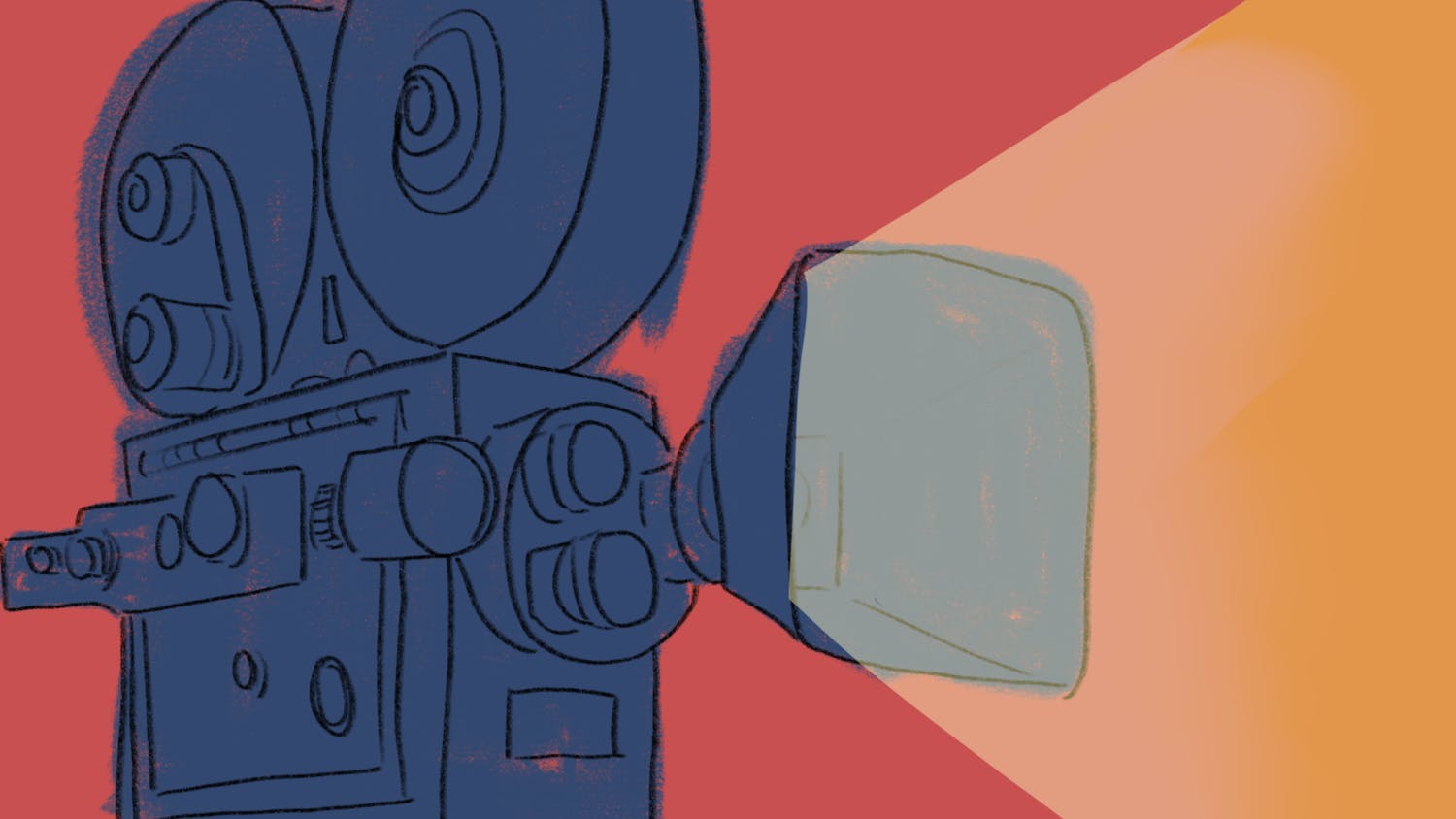
The students of Film and Media Studies 30: Documentary Filmmaking will present their final projects in Loew Auditorium tonight at 7 p.m. Under the guidance of professor Jeffrey Ruoff, the students in the class worked in groups throughout the term to create 10-minute documentaries.
Students in the class spent a significant amount of time creating their films during the term, film and media studies major Annie Munger '13 said. Students submitted topic proposals on the first day of class, and the class voted on which films they wanted to create, Munger said. The 15 students were then divided into three groups of five based on their interests.
"We came up with a rough cut, then a fine cut, then a final video," Munger said.
Many students in the class had to learn how to use filmmaking technology with no previous experience, Munger said.
"It was my first time working in the editing room and experiencing making a video," Ben Feeser '13, a member of Munger's project group, said. "It was great to have the opporunity to apply all the previous theoretical elements from prior film classes to making a documentary."
At the beginning of the term, the students performed exercises to practice filming and interviewing techniques to prepare them for making their documentaries. They also practiced filming events on campus Munger and Feeser's group filmed part of their "Reading Trees" documentary about a local wood turner in the Hanover Area Farmers Market.
The students chose a wide range of topics and subjects to cover in their films. One group documented a local logger in their documentary "The Logger"; another made a film about a local family in which five out of the nine children have serious hearing loss, titled "What?"; another covered a trained bear show in the Upper Valley, titled "The Bear Show"; and another focused on studio art professor Sunny Park, titled "Radiant."
"I encourage students to get off campus, to use the camera as a kind of passport into the larger community, to meet people they might not otherwise get to know in their day-to-day lives here in Hanover," Ruoff said in an email to The Dartmouth. "In this way, the films provide a kind of snapshot of life in the Upper Valley in the summer."
Group collaboration is a fundamental part of the course, according to Ruoff.
"I have never taken a class based entirely on group work, but it was really fun and a great opportunity to work on one project for an entire term," Robin Costello '13, who worked on "The Bear Story," said.
"[Working in groups] is important because film [and] videomaking is an intensely collaborative activity," Ruoff said in the email. "Also, it's challenging to record good quality images [and] sound, so by working together students can make high-quality documentaries."
Munger's group created a film about Dustin Coates, a local woodcarver. Coates, who lives in Etna, N.H., works by himself carving tree burls growths on trees in which the grain grows in an abnormal manner into ornamental wooden bowls.
Munger said she thought of the idea for this documentary when running by Coates's house in the spring.
"I saw a sign that said Gallery Open,' and thought, I guess I'll see who this person is and what he's doing,'" said Munger.
Munger said her project is a "character study."
"Coates is an interesting, quirky character," Munger said. "He has a unique philosophy when it comes to his work and his lifestlyle."
Many of the projects' subjects evolved as the term progressed, Munger said.
"A lot of projects started out as something and turned into something different," she said. "We just tried to look for interesting things in the community and nearby."
Costello's group idea for "The Bear Story" came from her partner Milo Johnson '13 who had noticed the trained bears in an advertisement for Clark's Trading Post while on a canoe trip this fall.
"After seeing a bear riding a Segway on their brochure, I became obsessed with the prospect of seeing the bear show," Johnson said. "When I decided to take this class, I thought it was a great opportunity to not only cover the show, but see the trainers working with the bears."
After reviewing their interviews and picking out major themes to convey in their documentaries, the students chose what images to pair with the sound clips of the interviews, Munger said.
"The most frustrating thing was probably when you get to the editing room and are like Oh, I wish we got a shot of this or that,'" she said.
Munger said she hopes that people will gain awareness of the artistic community at Dartmouth through the films.
"The arts at Dartmouth are often undervalued and unappreciated," Munger said. "There are students out there who are making things, so the arts are alive and well at Dartmouth."