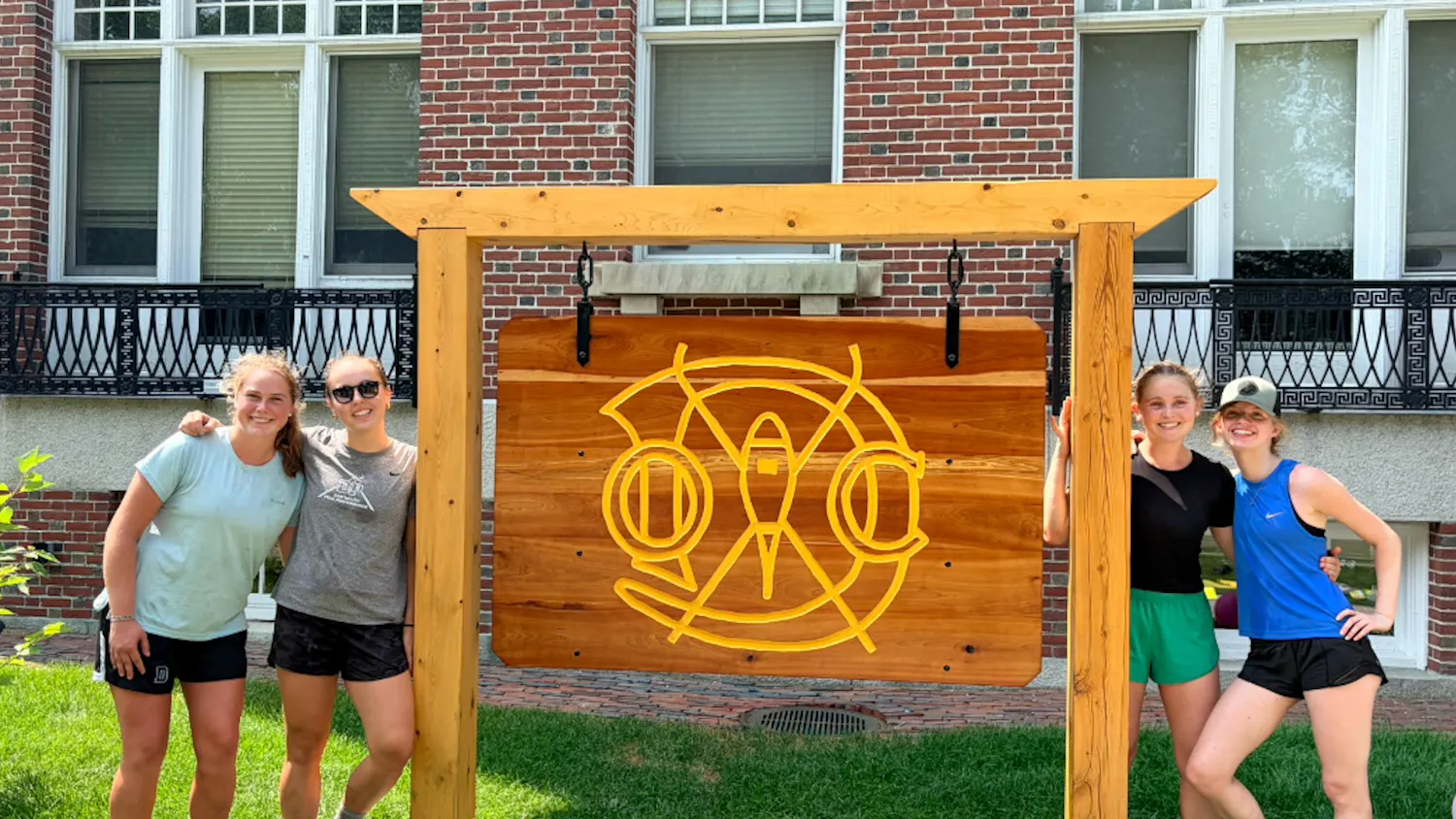
With 20 to 30 hours of practice a week in addition to school work, some Big Green student-athletes still find the time to give back to the community through Big Green Readers, a student-run program consisting of 25 athletes. The student-athletes travel to Mt. Lebanon Elementary School every Tuesday at 8 a.m. as elementary students in various classes read to them.
"It builds community relations," Assistant Athletic Director for Student Enhancement Mary Hudak said. "I know our athletes are always eager to give back to the people that come and support them at their competitions. They enjoy doing it."
Big Green Readers draws its members from a variety of teams with readers coming from 25 of Dartmouth's 34 Division I teams has been a Big Green Reader at some point in the last three years, according to co-leader Jesse Adler '10, a member of the women's tennis team.
"It's a very easy thing to get involved in," co-leader and baseball player Jake Pruner '11 said. "You don't need to stand up in front of anybody and read, so there's no stage fright."
The group's membership reshuffles every term with seasonal shifts in athlete availability, but leadership remains consistent throughout the year, ensuring the stability of the program.
"We like to have a junior and a senior run it simultaneously so there's always someone who knows the program really well and has contacts at the school, so there's never a fresh start," Adler said. "We find it runs really smoothly."
Mark Kissling '02, a basketball player, started Big Green Readers in 2002. Kissling wanted to give back to the community in a way that wouldn't conflict with his heavy athletic or academic schedule and knew that other athletes wanted the same opportunity, according to Adler.
The program receives money for travel through the Dartmouth athletic department with support from Hudak.
"The program helps the athletes as well," she said. "They get to go in and connect with these children. It's enjoyable to them. I think it's also helpful for the children to see our athletes off the playing field. Our athletes come in and students see them in the classroom and then see their names in the newspaper or on TV. They see them as student-athletes, not just athletes."
Since the program is capped at 25 student-athletes, Big Green Readers has a fairly selective application process. After 35 students applied this term, five athletes were designated as alternates and another five were told they would have to wait for another term.
"We try to make sure that if people have done the program before we give them first priority, and especially if people have applied and been turned down, we try to make sure that they are able to participate," Adler said.
When selecting the program's participants, Adler and Pruner seek to create a balanced group of men and women from all years.
"We like to have a good mix of everyone," he said. "If we know someone who'd be good for the program, we'll ask them. We usually have a good, diverse group."
There is no specific training program for the athletes because different teachers have different ways they want the program to work.
"Each teacher, each classroom organizes it a bit differently in how they rotate the kids through, what book the kids read and the amount of time they do it, so we just leave it to the teacher to give a little more instruction on how they want to run it and go from there," Adler said.
The first and second grade students eagerly anticipate the arrival of the readers, Pruner said.
"We come in and they all start cheering Big Green Readers!' he said. "It's that we're big kids. When we were little kids, kids were automatically cooler if they were big kids."
It's also an advantage to have athletes in the program because of the prominence of Dartmouth sports in the area, he added.
"Almost all of them are members of the Hanover community, and Dartmouth is a huge part of that," he said. "They go to all the hockey games, football games and baseball games, so for them to see these athletes, it's just a really cool, rewarding experience for them."
Hudak believes star power is only part of the reason why kids look forward to Tuesday mornings.
"They're giving the elementary school children somebody to look up to, somebody they feel comfortable with, somebody to talk to," she said. "[The athletes have] told me coming back that some students are not comfortable with reading out loud. They might be too shy or not comfortable with their skills. Our athletes can help them."
The program also provides an opportunity to get to know the students and connect with them on more than just an academic level, Pruner said.
"The most rewarding part is sitting down and talking to the kids," he said. "Like, Do you play a sport?' or, What are you going to be for Halloween?' Those 10 minute conversations with kids are the best part."
In addition to forging relationships with the athletes, the children also follow how the sports teams are doing.
"Last year, when we won Ivies and went down to UNC for Regionals, they knew before we even showed up that day," Pruner said. "They congratulated me and knew what was going on."
Big Green Readers is one of many ways Dartmouth athletes participate in community service. A variety of different organizations exist, and any athlete can propose a new group through the Student Athletic Advisory Council.
The SAAC is an elected board of athletes that maintains open dialogue between the athletic department and the athletes. Last term, the group met with College President Jim Yong Kim, acting Athletic Director Bob Ceplikas and many other members of the varsity sports administration to discuss the potential effects of impending budget cuts on athletics, Hudak said.
The Council also brings together athletes from different teams to create a more cohesive Dartmouth student-athlete group. One of the primary ways of doing this is the Big Green Cup competition during which teams earn points by attending each other's games, doing well academically and giving back to the community.
There is also an intern in the athletic department who finds volunteer activities for athletes who need unique opportunities that fit their schedules.
"A lot of our athletes are looking for different opportunities to go out and give back," Hudak said. "It's a lot of time management. Many of them take a lot of time to give back in order to say, Thanks for coming out and supporting us, now we want to support you as well.'"
Pruner said he believes that community service has been an integral part of the Dartmouth experience since the College's founding.
"It's a great sense of helping out the Dartmouth community," he said. "It's hard to pin down because we always talk about the Dartmouth community, but it's more than the Dartmouth community. From the start, Dartmouth and New Hampshire have been inseparably linked. The people who make up New Hampshire make up Dartmouth."
With a high demand for membership from student-athletes and clear appreciation of the program from the children of Mt. Lebanon Elementary School, the Big Green Readers program will continue to prosper, he said.
"It's a really good way to get connected with New Hampshire, with the Upper Valley and with Dartmouth to make a positive impact on these kids' lives that hopefully they'll remember forever," Pruner said.