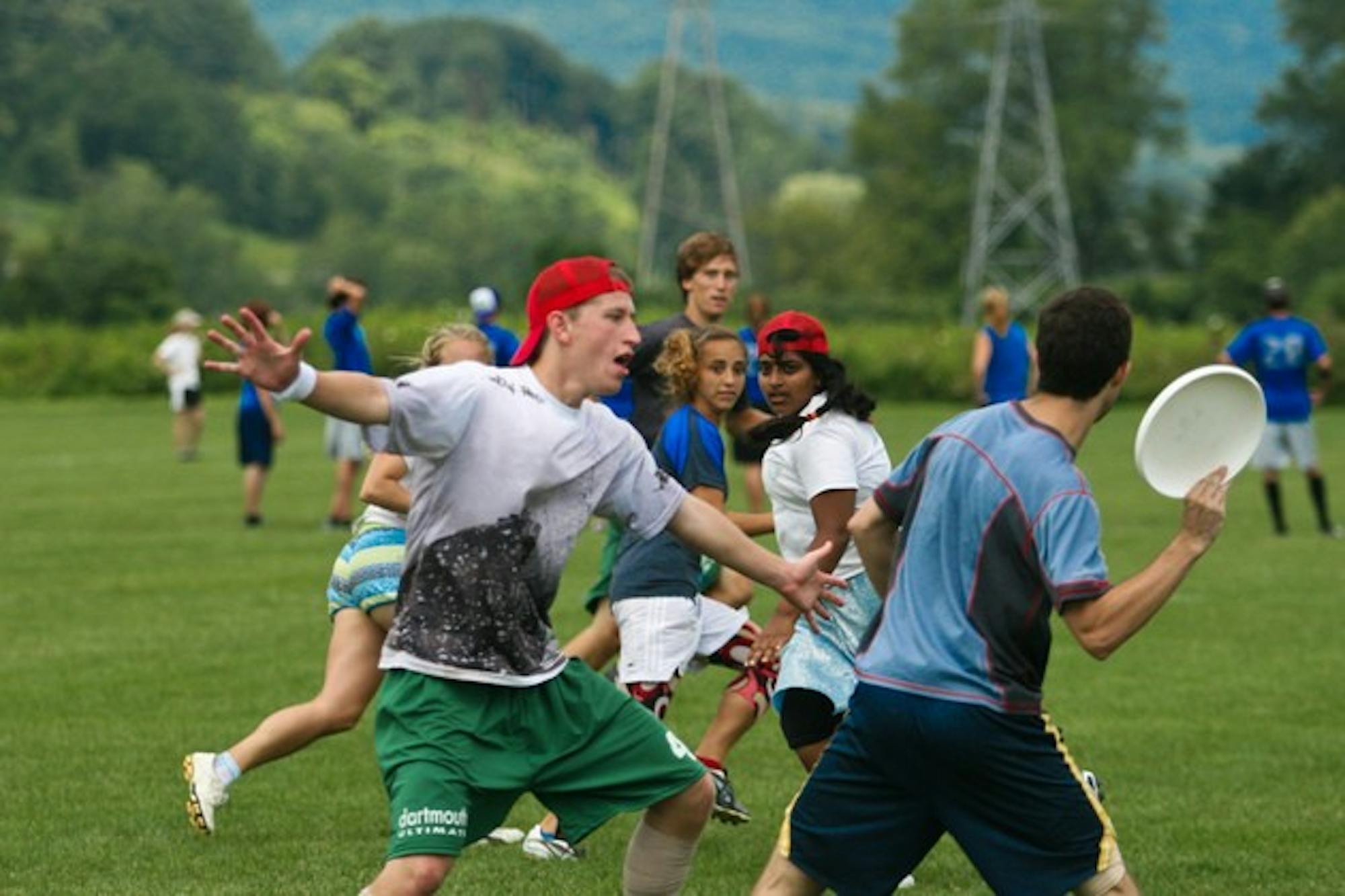
The team completed its regular season in May with the collegiate national tournament, but the summer team has continued to practice and compete in tournaments at the club level across the Northeast, according to team captain Alex Taylor '11.
The team took part last weekend in "Ow, My Knee," a club tournament named for its Albany, N.Y., location, Taylor said. The team won three of its seven games over the weekend, managing to rebound after winning only one of four on Saturday to triumph in two of three games on Sunday.
"We didn't even look like the same team on the second day," Taylor said. "We saw a lot of improvement, which is what we aim for, and I think we look good for the rest of the summer."
In one of the Saturday matches, the team lost to its opponents on the "Universe Point," the last point of a game between two tied teams that determines the winner, team member Lars Osterberg '11 said. The next day, however, the Big Green won against the same team with another tie-breaking "Universe Point," he said.
"It was really awesome, just to have a comeback like that," Osberberg said.
Osterberg's contributions in particular helped the team reach several of its victories, according to teammate Jason Mintz '11.
"[Osterberg] was astounding," Mintz said. "He was really running the show, made some key plays [and] kept everyone going."
Summer play has required some adjustments for the team due to the limited number of members on campus, Taylor said. Ultimate is usually divided into men's and women's teams, each with an A-team and B-team, but all players compete on the same team for the summer.
For players, the change required "a lot of getting used to each other," Mintz said, adding that the team performed better over the weekend than they had anticipated.
The team's smaller size also allows less experienced players to improve their skills by playing against members of the A-team in scrimmages during practice, Osterberg said. B-team players who have improved during the regular season are also given an opportunity to show their progress to captains, he said.
"That's one of the best learning experiences you can have getting beaten by somebody and learning from a very direct experience is very helpful," he said.
Throughout the summer, the team has continued its organized practices and team weightlifting schedule, Osterberg said.
"We've been doing drills in practice, which is a little organized for the summer," he said. "I'm actually pretty impressed I feel a lot of people are committed to getting better."
The drills are another opportunity for players who hope to move up to the A-team to improve their skills, Taylor said.
"We try and work on a lot of individual skills, a lot of team skills, specific defensive sets and offensive sets," Taylor said. "There are a lot of people who are on the bubble, and maybe want to make A-team next year, so we try and build on that as much as we can."
Ultimate Frisbee tends to be more physically rigorous than many people realize, Taylor said, referencing injuries his teammates have sustained. Ultimate teams may play seven games in each two-day tournament, each lasting an hour and a half, usually with little break in between.
"It's a grinding schedule, the way it's set up," Taylor said. "Hopefully, as the sport progresses and potentially becomes NCAA-recognized, there will be a more advantageous schedule for the players' health."