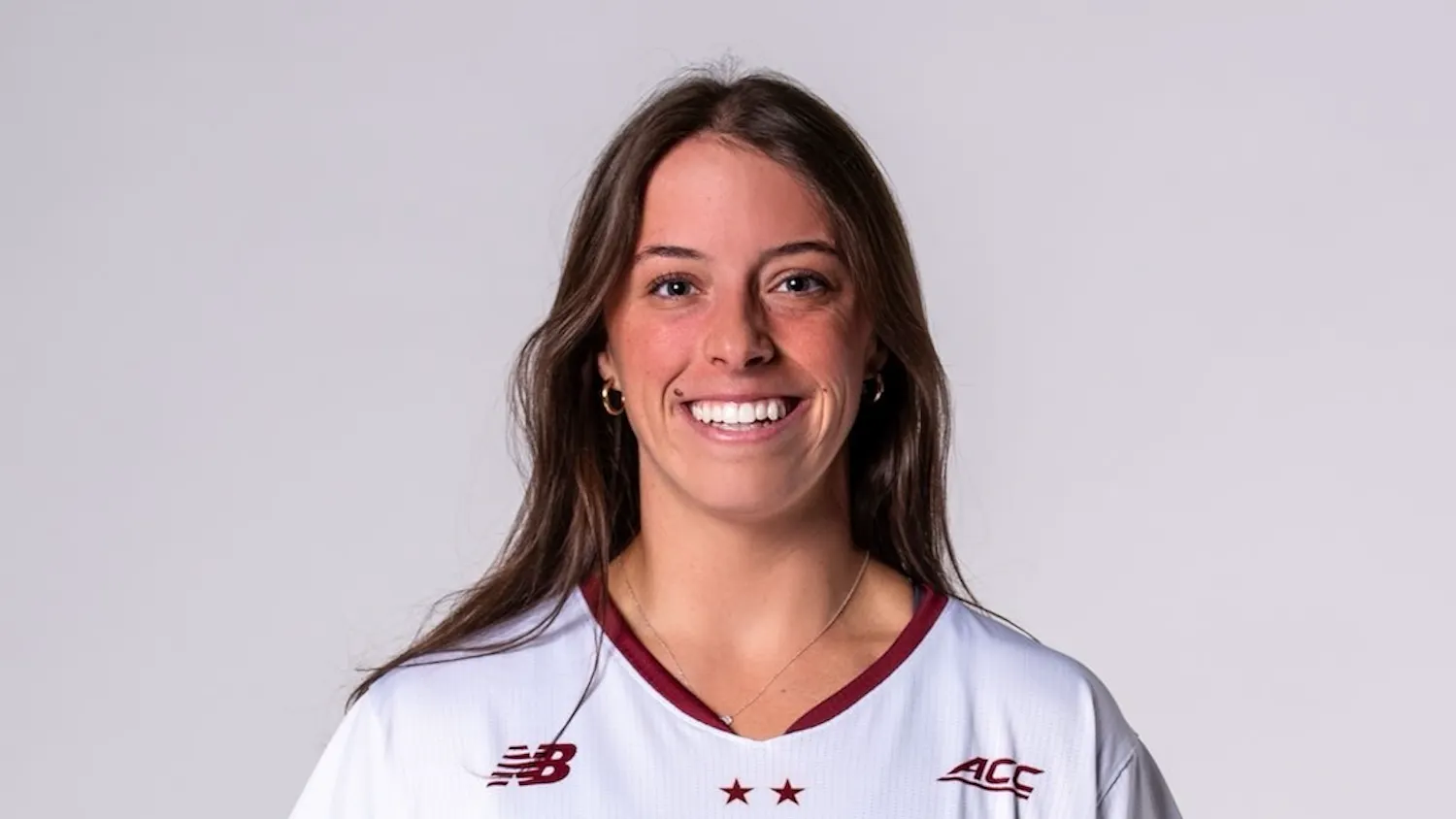
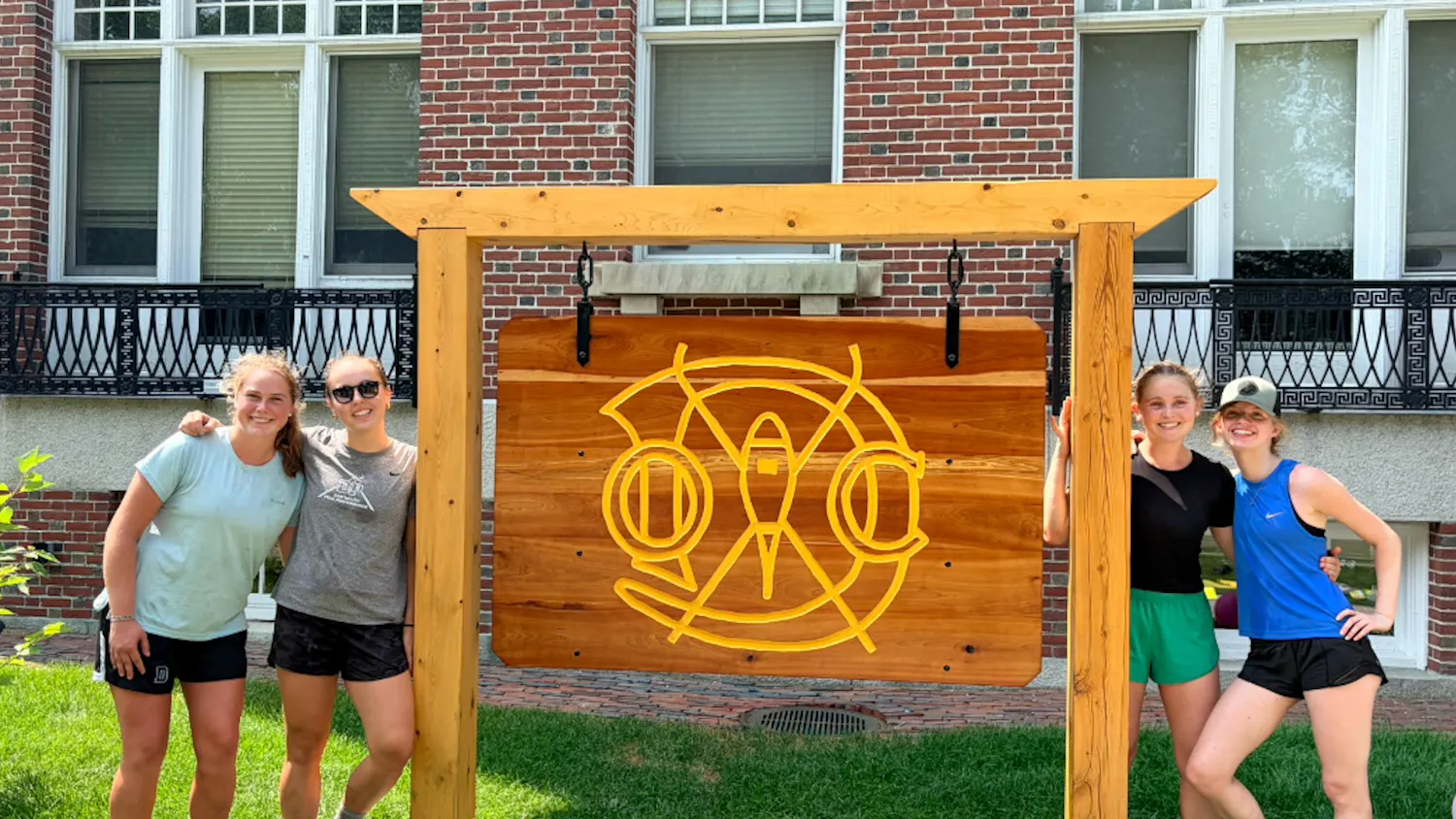
When not between the pipes for the Big Green, Lacina is now turning local kids' hockey fantasies into reality through her used-equipment redistribution program, Green Gear.
"We just went to skate with these kids who had an outdoor rink at the school," Dartmouth women's hockey goalie Mariel Lacina '10 said.
Alongside her teammate, Kelly Foley '12, Lacina quickly realized that skating lessons were the kids' last concern as they staggered around wearing worn-down equipment.
"Some of them didn't have skates," she said. "They were just running around on the ice."
Lacina, like most of her Big Green teammates, began playing hockey at a young age.
"Hockey is something that played a very large role in my life," she said. "The feeling of getting on the ice with that first pair of skates is something that every kid should experience."
Green Gear is just getting off the ground and the development of the program is not without its share of hurdles. While local established programs mainly swap used equipment, Lacina said the first step for her initiative involves collecting used gear from Dartmouth students and Hanover residents to give to underprivileged young people in the Upper Valley.
Still lacking a permanent donation drop-off site, the program offers to pick up any contributions.
The goaltender admitted that a problem with voluntary donations is that they limit the variety of sizes available for redistribution.
From personal experience, however, she added that any used helmets or skates as long as they were in functional condition can add to the overall experience.
"I grew up in used hockey equipment," she said. "[Equipment] is definitely something that's passed around a few times."
With a basic full suit running for about $500, Lacina said that the cost of pursuing the equipment-intensive sport can be hefty.
Registration fees, travel program expenses and transportation costs further jack up the price of playing hockey recreationally
According to the Upper Valley Hockey Association's web site, travel program fees range anywhere from $700 to $850.
And while the UVHA provides jerseys, select goalie gear and a bag of pucks to each squad, the Association also mandates that each registered player wear pads, a helmet, skates, a mouth guard, gloves and a neck protector when competing on the ice.
Recognizing that the Upper Valley has its share of underprivileged skaters with lofty dreams, the Association provides some financial assistance.
The Association's scholarship program covers only 50 percent of the charges for families earning $20,000 or less in gross income, however.
When taking into account the bigger economic challenges many Upper Valley communities face, Lacina said she is instead looking at the smaller picture when assessing the success of her program.
"There is a pretty serious drop off between the wealth of Hanover and the surrounding areas," she said. "We just want to give kids a pair of skates so that they can go out there and have something to do after school."
In an e-mail to The Dartmouth, Assistant Athletic Director for Compliance Carley Hrusovsky said that the recruiting section of the NCAA manual, Bylaw 13, confines the area in which Green Gear can give out equipment to a 30-mile radius around Hanover.
The restriction is meant to prevent Dartmouth from giving equipment to particular individuals who it might be looking to recruit, Hrusovsky explained.
As a means to expand the area of distribution, Lacina said that she hopes to partner up with a local organization, like the Listen Center, in order to reallocate her collected gear.
With the current hockey season on its tail end, Lacina said she will also solicit local youth clubs for any equipment that the players have outgrown.
Although the development of Green Gear has been a slow process, the work has been worthwhile for Lacina, as the program encourages kids to pick up the pastime that has had such a positive impact on her life, she said.
"It is a small way to give back to a community that has been so supportive of the team as well as of all Dartmouth athletics," Lacina said. "Improving just a couple kids' lives and getting them hooked on the game is what makes it all worth it."