Rachael Flatt, a 2009 U.S. silver medalist and 2008 World Junior Champion is one of the top contenders for the U.S. Olympic team for the 2010 Olympic Games. The high school senior is also among those considering coming to Dartmouth, head coach Jacki Smith said.
After being accepted into the class of 2013, star skater Armin Mahbanoozadeh '14 chose to defer a year before joining the Dartmouth community.
His induction into the club will be crucial as the Big Green vies for its sixth national crown next year.
Mahbanoozadeh shined in the junior ranks, notching a silver and a bronze medal in the Junior Grand Prix Finals in 2008 and 2007, respectively.
He will spend his gap year competing in the event for the third time, co-captain Natalie Falsgraf '10 said.
While most of the skaters on the team have skated competitively all their lives, Falsgraf said that the patience, time commitment and dedication needed to skate makes it nearly impossible to continue to competitively compete through college.
"We skate around five hours a week now, whereas before it was 15 or 20 hours," she said.
The team, however, has learned to capitalize on the scant time it spends on the ice, she added.
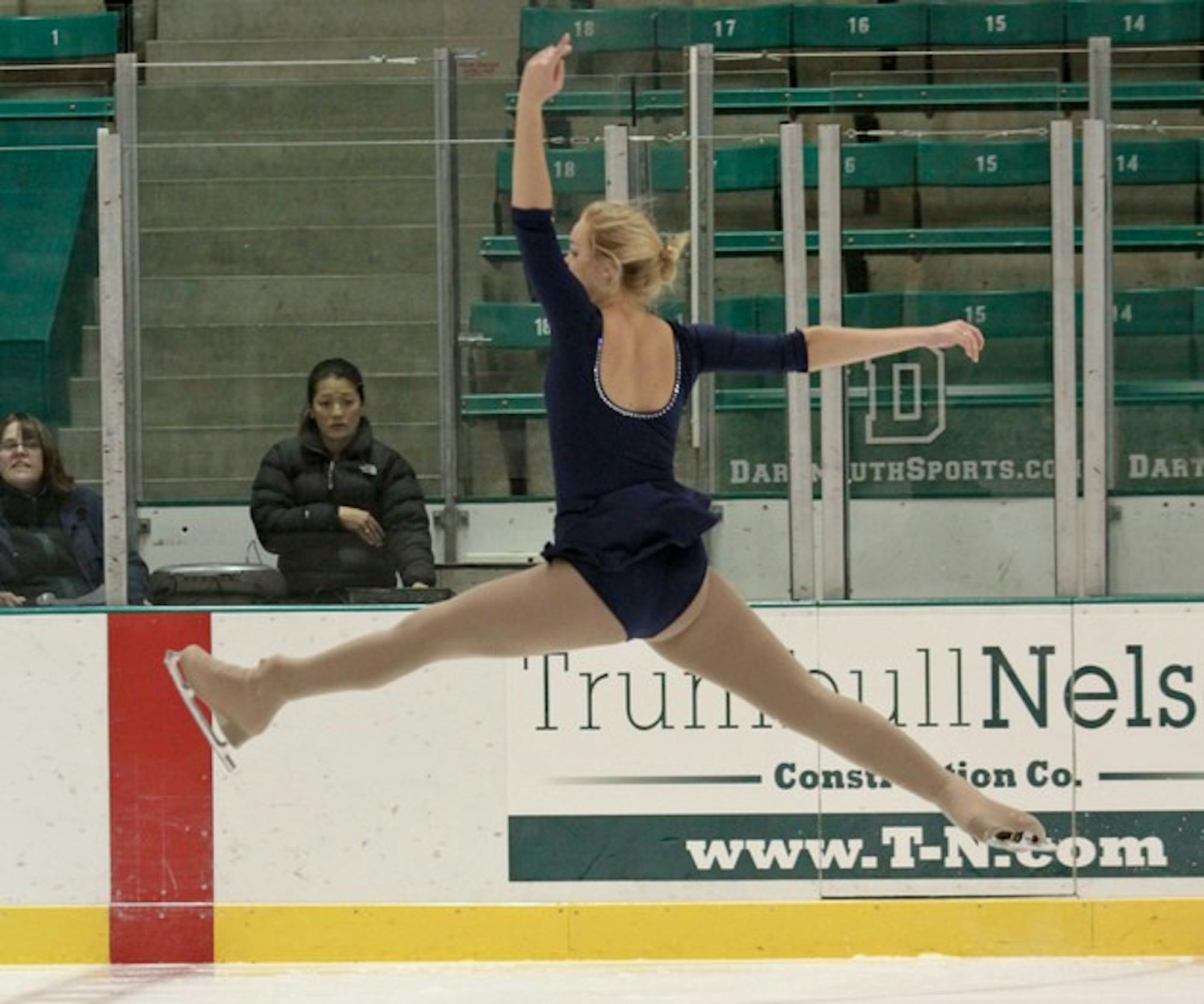
This past November, Dartmouth made strides at the 2009 Cornell Intercollegiate Competition, where the skaters notched a second place win, beating out skating powerhouses Cornell University and Boston University.
"Nationally, we are definitely regarded as one of the top contenders," Vanessa Szalapski '10 said. "No other school has won five national championships in a row."
Szalapski attributed Dartmouth's success to having high quality skaters at all levels of competition.
"It's just nice to know that you are contributing towards the team as a whole," she said. "You know that when you're skating well, you're not just skating well for yourself but for Dartmouth and the team."
Competitions are separated into freestyle and dance portions with each section containing various levels of difficulty.
"Freestyle is what you see on your television," Alina Everett '12 said. "Dance is essentially just ballroom dance on ice. It's less of an adrenaline thrill but it's all about the grace."
Besides their composure, skaters are judged on their ability to replicate compulsory dances on the ice, Everett explained.
Regardless of the level of competition, each skater can earn the same amount of total points for his or her team.
This scoring set-up changes the team dynamics and enhances camaraderie among the skaters, Smith added.
"The skaters have usually grown up skating individually," she said. "It's nice to see the support they each have for each other."
Although Dartmouth garners national attention for its figure skating team, Smith said that the club has yet to win over the crowds in Hanover, but hopes the upcoming Winter Olympics will generate more interest in the sport.
"All in all, the people who are still skating once they get to college are just passionate about it," Smith said.
As the team looks ahead to qualifying for the nationals, in order to receive a bid, it must first place in the top three teams at the Eastern Regional Competition, hosted by Boston University and Massachusetts Institute of Technology, on Feb. 27-28 in Boston, Mass.