The press release specifically cited an article entitled "Vitaminwater Runs Afoul of NCAA Banned-Substance Rule" posted on AdAge.com. The Brown Daily Herald also warned Brown student-athletes about the possible dangers of consuming certain VitaminWater flavors in an article printed last Friday.
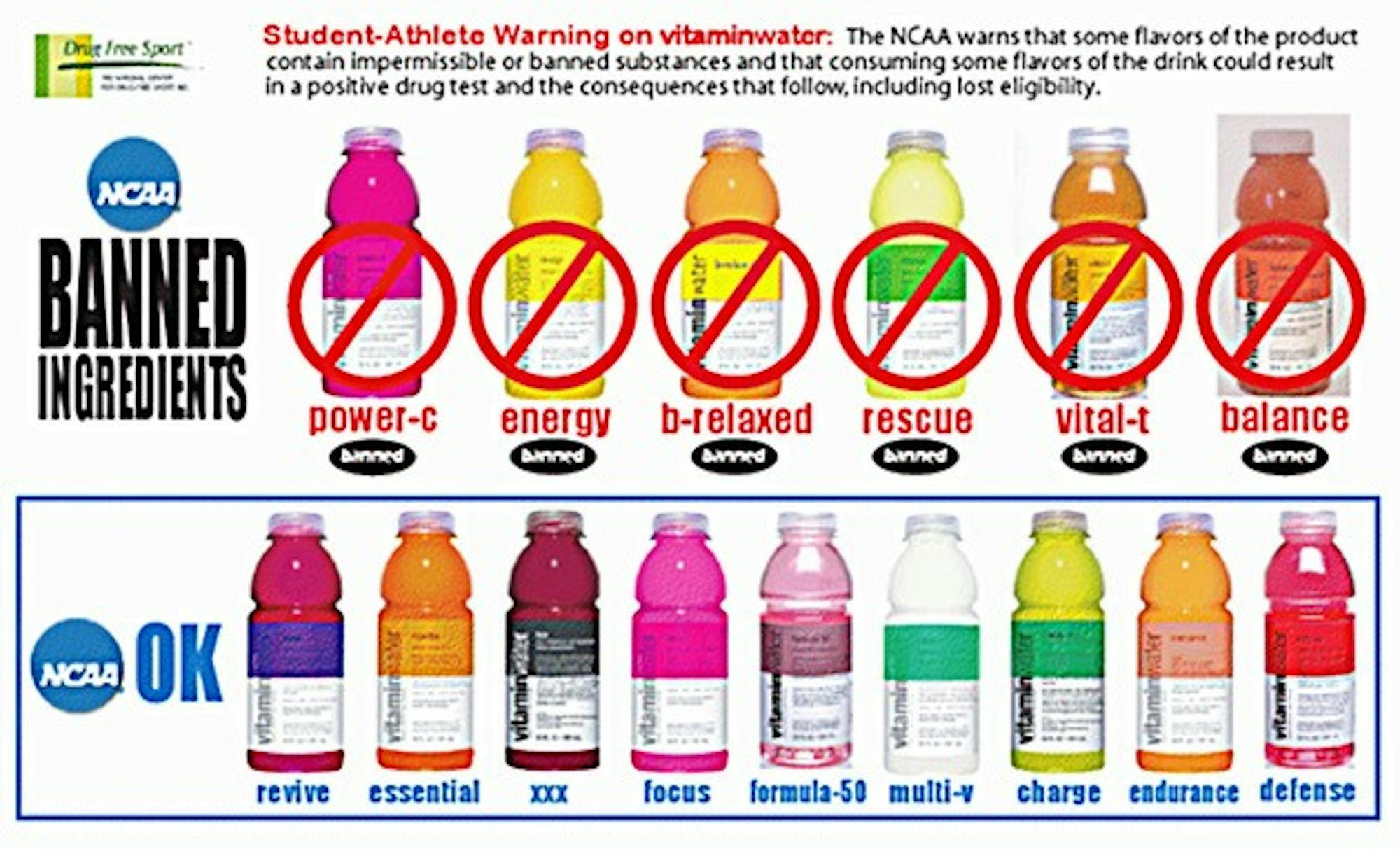
Some members of the Dartmouth athletic community have been questioning whether drinking VitaminWater might raise NCAA eligibility issues since since discovering that some flavors contained banned or impermissible substances. Two flavors, "Energy" and "Rescue," contain ingredients found on the NCAA's drug-testing list of banned substances. Those flavors both contain caffeine, and the "Energy" flavor also contains guarana seed extract.
An additional four flavors contain ingredients that are characterized as impermissible under NCAA extra benefit rules: "Power-C," "B-Relaxed" and "Balance" each contain either taurine, L-theanine or glucosamine, and "Vital-t" contains chemicals found in rooibos tea extract. Students can purchase these flavors on their own, but their impermissible status means that athletic programs cannot provide them as nutritional supplements. The remaining eight VitaminWater flavors contain no banned or impermissible substances.
Novack Cafe and the Pavilion both sell at least 10 flavors, including all of the flavors containing banned or impermissible substances.
Dartmouth athletes have little to worry about, however, according to the NCAA's press release.
"Normal daily consumption of any of the 13 VitaminWater varieties will not place a student athlete at risk for testing positive for banned substances," the release stated. "An average sized healthy man would have to drink 10 20 oz. bottles of VitaminWater "Energy" or "Rescue" within several hours of competition to reach the level that could potentially create a positive NCAA urine test."
Dartmouth head athletic trainer Jeff Frechette said that certain substances are banned by the NCAA because they are considered performance-enhancing at certain levels. A statement issued by the NCAA in October 2008 also cites "concern about the effects of stimulant use during intensive exercise" as another reason for the limit.
Chrissy Supino '12 said that the women's track team stopped drinking the Energy and Rescue flavors when one teammate discovered an article exposing their potentially illicit status. She added that many members of the team drink VitaminWater before or after practice.
"I'm not sure if I believe the NCAA after all this, so I drink the XXX flavor now," she said. "You have to be careful about this stuff."
If a student-athlete did test positive for a banned substance, he or she would be subject to a one-year ban from NCAA sports, Frechette said. The NCAA sends a team to Dartmouth at least once a year to test 26 randomly selected student-athletes. The organization contacts the athletic department a few days before its arrival to announce both its intention to drug test and the teams it will be testing, he added.
Men's track and field head coach Barry Harwick said that he would mention the issue to his team, but that he was "not going to call an emergency session or anything."
Instead, coaches and trainers stressed the importance of having a cautious attitude toward all substances.
"I don't think it's really a big deal," Harwick said. "It's probably much ado about nothing, but it's always important to educate yourself and your team about any substance."
Frechette agreed, saying that education "needs to be a collaborative effort right from the athletic administration to the sports medicine staff to the athletes and coaches."
Harwick said that the men's track team does not provide its athletes with any substances.
The NCAA is particularly sensitive to the issue because of its partnership with Coca-Cola, VitaminWater's parent company. The NCAA announced in October 2008 that the Revive flavor, which does not contain any banned or impermissible substances, would be featured as a sideline presence at NCAA championships.