Jim Hunter of Clark Construction Company, which is leading the project, said Dartmouth's age has played a role in the construction setbacks.
"Dartmouth is just so old that you never know what you're going to find underneath the ground," he said.
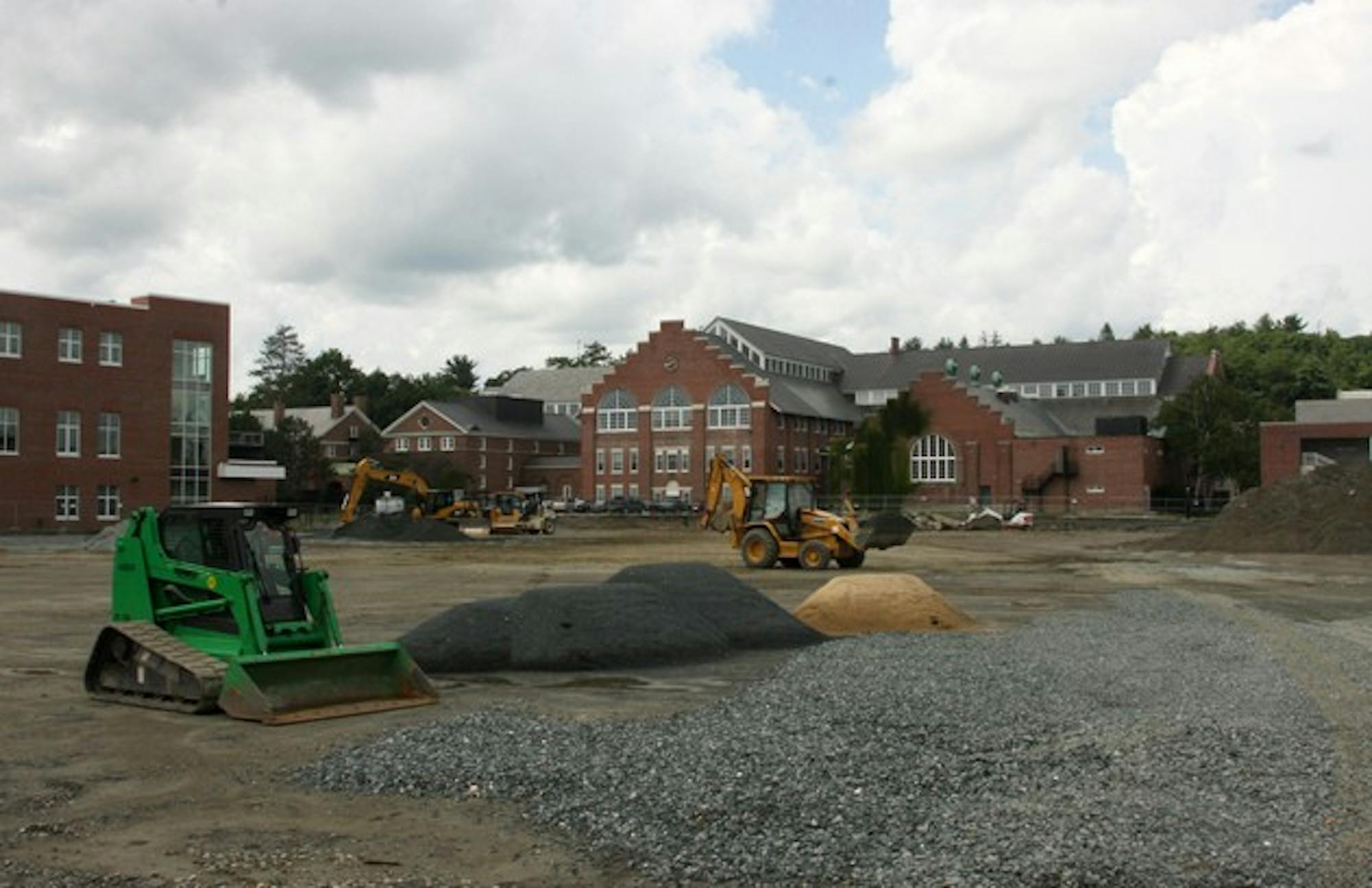
Demolition and removal have been the two foci of construction thus far, as the old field needed to be removed completely. A new drainage system has been installed and the field has been cut down to the sub-grade level.
Next on the agenda is to work on the new dugouts, brick backstop and full bleacher system behind home plate, Clark said.
The $3.5 million construction project will make Dartmouth's baseball facility the class of the Ivies. A symmetrical bleacher system extending from home plate past both dugouts will replace the separate home and away bleachers down the left and right field lines. A brick veneer is to be installed facing Memorial Stadium.
The new field will also boast artificial turf -- an addition which will likely prove to be an asset for the team. In the past, the Big Green baseball team has not been able to practice until well into the spring season, as it takes far longer for snow to melt on top of the grass and dirt than artificial turf. This has forced the baseball team to practice primarily indoors in Leverone Field House during the early part of the season -- a disadvantage for the Big Green, as most of its Ivy League competition is able to practice outdoors at this time.
While there is no new concession stand included in the plan, Hunter hypothesized that Dartmouth will use Memorial Field's dining facility in the northwest corner as a form of concession for Red Rolfe Field, as has been the practice for some years now.
The most difficult part of the construction project moving forward will be the bleacher system, Hunter said, as it is sitting above a system of steam tunnels. These steam tunnels will pose several problems to both the bleachers and dugouts which will need to be addressed through engineering, he said.
Cost-wise, the project is proceeding as anticipated, and Hunter still expects the project will be completed before the baseball season.
A minor controversy arose when Clark removed 18 pine trees that lined the old outfield fence off Park Street, Hunter said, though he defended his team's decisions.
"Those 18 pine trees were really bad," he said. "It was time for them to go."
The area will be replanted, and the oak tree beyond center field will remain, he said.
The basketball courts and tennis courts on the northeast corner of the old Red Rolfe facility will be removed and replaced with a single new basketball court and a tennis court, he said. Extra space there will be used for new batting cages.
Clark Construction has worked on numerous Dartmouth athletic facility construction projects in the last nine years, including work on Scully-Fahey, Burnham Field and Memorial Stadium.
"[Clark Construction] has pretty much done everything on campus," Hunter said.
For every project, Clark submits a discount proposal to the College, which Dartmouth checks against the prices of its competitors.
Clark usually comes out as the best deal, Hunter said.
Hunter praised the involvement of the College in the construction.
"Dartmouth works with us every minute of the project," Hunter said. "Coach Bob Whalen has come down every once in a while to check out the progress, as well."